MinuteRead
30 min
Book summary
Premium summary · Opens in the app · 30 min read
There is a quiet crisis happening in homes, offices, and coffee shops everywhere. It does not make headlines. It does not spark protests. But it erodes marriages, strains parent-child bonds, weakens friendships, and undermines professional relationships every single day.
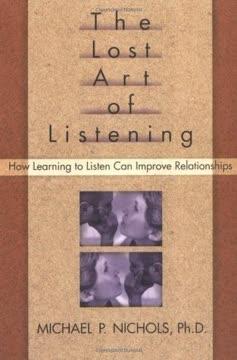
**Author:** Michael P. Nichols
**Estimated Reading Time:** 42 minutes
**What You'll Learn:**
* Why listening is the foundation of every meaningful relationship * How your own reactions and assumptions sabotage your ability to hear others * Practical techniques for listening that transforms conversations * How to apply deep listening with partners, children, friends, and colleagues * How to break the cycle of misunderstanding that keeps people apart
**Who This Book Is For:**
Anyone who has ever felt unheard in a conversation. Anyone who has walked away from an argument wondering how it escalated so quickly. Anyone who wants to be a better partner, parent, friend, or leader. If you have ever caught yourself planning your response while someone else was still speaking, this book is for you.
There is a quiet crisis happening in homes, offices, and coffee shops everywhere. It does not make headlines. It does not spark protests. But it erodes marriages, strains parent-child bonds, weakens friendships, and undermines professional relationships every single day. The crisis is this: most people do not know how to listen. Not really. Not in the way that makes another person feel understood. Not in the way that dissolves tension and builds trust. Most of us have learned how to wait for our turn to speak. We have learned how to nod at appropriate intervals. We have learned how to appear attentive while our minds race ahead to what we want to say next. But genuine listening, the kind that makes someone feel truly heard, remains rare. Michael P. Nichols wrote *The Lost Art of Listening* to address this gap. As a psychologist and family therapist with decades of experience, he has witnessed firsthand how poor listening destroys relationships. He has seen couples who love each other deeply but cannot hear each other. He has seen parents who want to connect with their children but drive them away with lectures and corrections. He has seen friendships wither because one person stopped feeling valued. The problem, Nichols argues, is not that people do not care. Most people genuinely want to understand the people they love. The problem is that listening is hard. It requires us to set aside our own needs, our own opinions, our own emotional reactions, and focus entirely on another person. That kind of self-suspension does not come naturally. It must be learned and practiced. Consider what happens when you feel truly heard. Your shoulders relax. Your breathing slows. The tightness in your chest eases. You feel a surge of warmth toward the person listening. You feel valued, respected, and understood. You feel less alone. Now consider what happens when you feel ignored. Your muscles tense. Your voice rises. You repeat…
Continue reading in the MinuteRead app
Get the complete 30-minute summary of The Lost Art of Listening
Get the complete summary in the app**Being heard is a fundamental human need.** When people feel heard, they feel valued and understood. When they feel ign
**Hearing is not listening.** Hearing is physiological. Listening is psychological. It requires attention, interpretatio
**Self-suspension is essential.** To listen well, you must set aside your own needs and opinions temporarily. This creat
**Your reactions reveal your insecurities.** We are most reactive to the things we secretly accuse ourselves of. Notice
**Empathy is understanding, not agreement.** You can understand someone's perspective without adopting it as your own. E
**Validate before you advise.** People often want to be heard, not fixed. Acknowledge feelings before offering solutions
"The Lost Art of Listening" is a strong fit if you want practical ideas around psychology, self help, relationships, especially themes like **being heard is a fundamental human need.** when people feel heard, they feel valued and understood. when they feel ign; **hearing is not listening.** hearing is physiological. listening is psychological. it requires attention, interpretatio. The MinuteRead summary distills these concepts into a focused read, whether you're deciding whether to buy the book or applying its lessons at work.
Michael P. Nichols is a psychologist, professor, and author specializing in family therapy and relationships. He has written extensively on communication, family dynamics, and therapeutic techniques. Michael P. Nichols is known for his practical approach to improving interpersonal relationships through better listening and communication skills. His work emphasizes the importance of empathy and understanding in both personal and professional contexts. Nichols has authored several books on relatio…
View all summaries by Michael P. NicholsContinue Reading
Access the complete 30-minute summary and thousands more nonfiction books in the MinuteRead app.

Continue reading the complete summary in the MinuteRead app.