MinuteRead
30 min
Book summary
by Alan Greenspan
Premium summary · Opens in the app · 30 min read
Every economic model rests on an assumption about human nature. For most of modern history, that assumption has been flattering: people are rational, markets are efficient, and risk can be measured with mathematical precision. The 2008 financial crisis shattered that assumption in spectacular fashion. Trillions of dollars in wealth evaporated. Major financial institutions collapsed or required government rescue. Millions of people lost homes, jobs, and savings. And the sophisticated risk managem
**Author:** Alan Greenspan
**Estimated Reading Time:** 45 minutes
**What You'll Learn:**
- Why the 2008 financial crisis was not an anomaly but a revelation about how economies actually work - How human emotions, not rational calculation, drive most economic decisions - Why productivity growth determines whether societies thrive or stagnate - The hidden trade-offs between social spending and long-term economic vitality - What must change in economic forecasting, regulation, and politics to prevent future crises
**Who This Book Is For:**
This book is for anyone who wants to understand why economic crises happen despite our best efforts to prevent them. It is for investors, policy makers, business leaders, and curious readers who sense that something is missing from conventional economic wisdom. If you have ever wondered why experts failed to see the 2008 crisis coming, or why income inequality keeps widening, or whether our political system can handle the economic challenges ahead, this book offers a clear-eyed and deeply informed perspective from someone who spent decades at the center of economic decision-making.
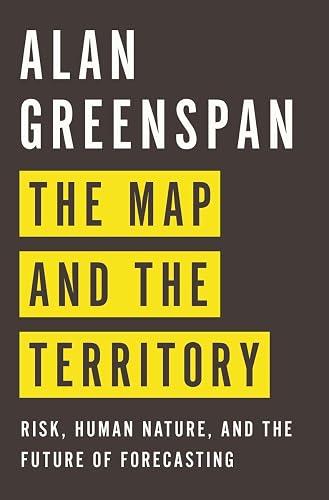
Every economic model rests on an assumption about human nature. For most of modern history, that assumption has been flattering: people are rational, markets are efficient, and risk can be measured with mathematical precision. The 2008 financial crisis shattered that assumption in spectacular fashion. Trillions of dollars in wealth evaporated. Major financial institutions collapsed or required government rescue. Millions of people lost homes, jobs, and savings. And the sophisticated risk management systems that were supposed to prevent such a catastrophe failed almost completely. Alan Greenspan spent eighteen and a half years as chairman of the Federal Reserve, guiding the American economy through booms, busts, and everything in between. He was known as "the Maestro," a figure so respected that his every utterance moved markets. Yet after the crisis, he found himself confronting an uncomfortable question: how could someone with his experience, his access to data, and his belief in the power of markets have missed the warning signs? This book is his answer. It is not a memoir in the traditional sense, though it draws heavily on his experiences. It is not an apology, though it contains moments of candid self-reflection. It is an attempt to understand what went wrong, not just in 2008 but in the broader architecture of economic thinking that made such a crisis possible. The central problem, Greenspan argues, is that we have been using the wrong map. The economic models that guided policy making for decades were built on the assumption that people behave rationally, that markets self-correct, and that risk can be quantified using historical data. But the territory of actual economic behavior is far messier. It is shaped by fear, euphoria,…
Continue reading in the MinuteRead app
Get the complete 30-minute summary of The Map and the Territory
Get the complete summary in the appAnimal spirits, not rational calculation, drive most economic decisions. Fear is more powerful than euphoria.
Risk models based on historical data systematically underestimate the probability of extreme events. The future does not
The 2008 crisis was caused by structural flaws in the financial system, including securitization, leverage, and inadequa
Productivity growth is the ultimate driver of rising living standards. Innovation is the most important source of produc
Globalization and technological change have widened income inequality. The best response is to improve education and tra
Social benefit spending has crowded out private savings and investment, reducing the capital available for productivity-
"The Map and the Territory" is a strong fit if you want practical ideas around economics, finance, business, especially themes like animal spirits, not rational calculation, drive most economic decisions. fear is more powerful than euphoria; risk models based on historical data systematically underestimate the probability of extreme events. the future does not. The MinuteRead summary distills these concepts into a focused read, whether you're deciding whether to buy the book or applying its lessons at work.
Motivated to help readers with 1) Animal spirits drive economic behavior, Alan Greenspan wrote “The Map and the Territory” to package those ideas for a fast, focused read. In “The Map and the Territory”, Alan Greenspan focuses on 1) Animal spirits drive economic behavior. Through “The Map and the Territory”, Alan Greenspan distills the core ideas on economics into lessons readers can absorb in a single short sitting. Readers turn to this work when they want Alan Greenspan's perspective on the su…
Continue Reading
Access the complete 30-minute summary and thousands more nonfiction books in the MinuteRead app.

Continue reading the complete summary in the MinuteRead app.