MinuteRead
30 min
Book summary
Premium summary · Opens in the app · 30 min read
There is a puzzle at the heart of human existence. We possess, in our skulls, an organ divided into two halves. These halves are connected, yet they attend to the world in profoundly different ways. For centuries, scientists and philosophers have debated what this division means. Some have dismissed the differences as trivial. Others have built elaborate myths around them. But few have asked the question that matters most: what happens when one half of the brain comes to dominate the other, not
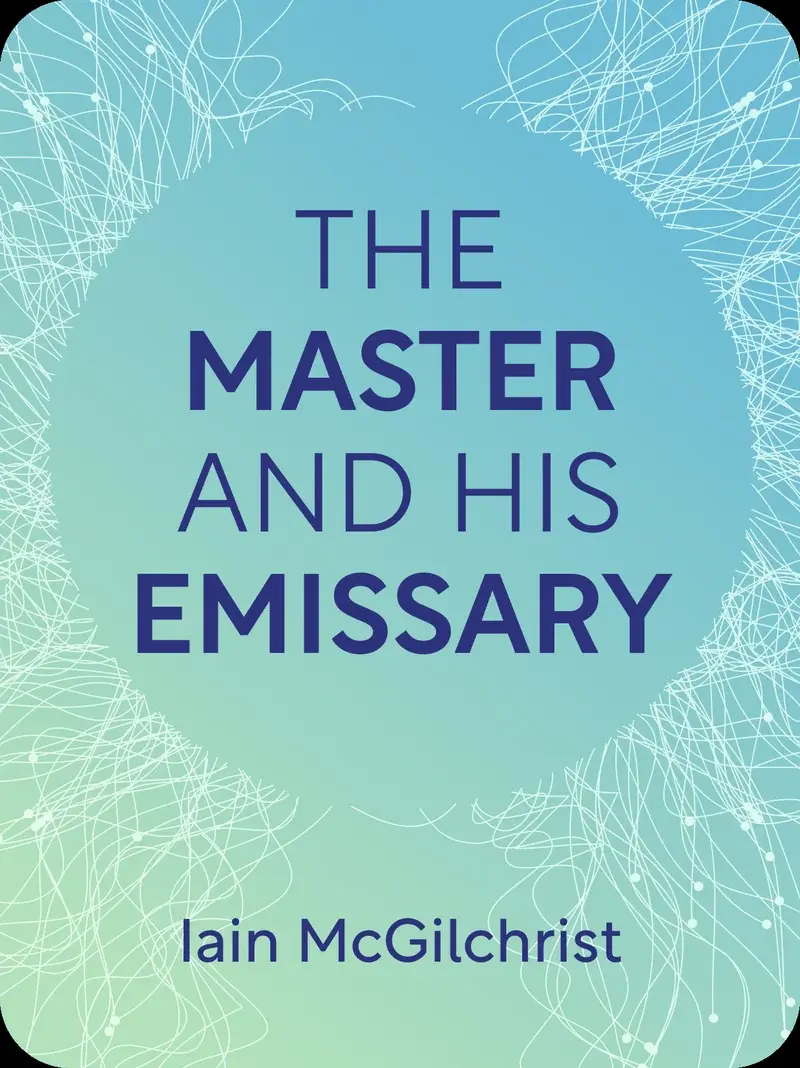
**Author:** Iain McGilchrist
**Estimated Reading Time:** 45 minutes
**What You'll Learn:**
Why the two hemispheres of your brain create two entirely different worlds, how Western civilization gradually fell under the spell of the narrower of these worlds, and what this imbalance means for how you think, live, and relate to others. You will learn to recognize the hidden dominance of abstraction over experience, and discover practical ways to restore a fuller, richer engagement with reality.
**Who This Book Is For:**
This book is for anyone who has sensed that something is missing from modern life. It is for readers who feel that our culture's obsession with data, efficiency, and control has come at the cost of meaning, connection, and wonder. It is for those who want to understand why we think the way we do, and how we might think more wisely.
There is a puzzle at the heart of human existence. We possess, in our skulls, an organ divided into two halves. These halves are connected, yet they attend to the world in profoundly different ways. For centuries, scientists and philosophers have debated what this division means. Some have dismissed the differences as trivial. Others have built elaborate myths around them. But few have asked the question that matters most: what happens when one half of the brain comes to dominate the other, not just in an individual, but across an entire civilization? Iain McGilchrist, a psychiatrist and former Oxford literary scholar, spent twenty years exploring this question. The result is a book of extraordinary scope, one that moves from the microscopic details of brain anatomy to the sweeping arc of Western intellectual history. His argument is both simple and unsettling. The two hemispheres of the brain do not merely perform different tasks. They construct different realities. And over the past several centuries, Western culture has increasingly fallen under the sway of the left hemisphere's reality, a world of abstraction, fragmentation, and control, while losing touch with the right hemisphere's world of lived experience, context, and connection. This is not a book about pop psychology. It is not a rehash of the tired claim that logical people are left-brained and creative people are right-brained. McGilchrist's argument is far more radical. He contends that the left hemisphere's way of seeing the world, while enormously powerful, is fundamentally unsuited to understanding the whole of reality. When it operates in service to the right hemisphere, it is an invaluable tool. But when it usurps the role of master, it creates a world that is increasingly lifeless, fragmented, and ultimately self-destructive. The problem McGilchrist identifies is not new. He traces it through the history of philosophy, art, music, and science, showing how the…
Continue reading in the MinuteRead app
Get the complete 30-minute summary of The Master and His Emissary
Get the complete summary in the appThe two hemispheres of your brain create two different worlds: one of context and connection, one of abstraction and con
The right hemisphere is the master; the left hemisphere is the emissary. The emissary has forgotten his place.
The right hemisphere sees the whole; the left hemisphere sees the parts. Both are necessary, but the whole must come fir
Language evolved from music. Abstract language is powerful, but it can detach us from lived experience.
Imitation is a deeply empathic process that drives human learning and culture.
Western history has shifted between hemispheric balance and imbalance. The Enlightenment tipped the scales toward the le
"The Master and His Emissary" is a strong fit if you want practical ideas around psychology, science, philosophy, especially themes like the two hemispheres of your brain create two different worlds: one of context and connection, one of abstraction and con; the right hemisphere is the master; the left hemisphere is the emissary. the emissary has forgotten his place. The MinuteRead summary distills these concepts into a focused read, whether you're deciding whether to buy the book or applying its lessons at work.
Iain McGilchrist is a psychiatrist, writer, and former Oxford literary scholar. He is a Fellow of the Royal College of Psychiatrists and has been elected a Fellow of All Souls College, Oxford three times. McGilchrist's background spans multiple disciplines, including literature, medicine, and psychiatry. He gained prominence with the publication of "The Master and His Emissary," which took him 20 years to research and write. Known for his interdisciplinary approach, McGilchrist combines knowledg…
View all summaries by Iain McGilchristContinue Reading
Access the complete 30-minute summary and thousands more nonfiction books in the MinuteRead app.

Continue reading the complete summary in the MinuteRead app.