MinuteRead
30 min
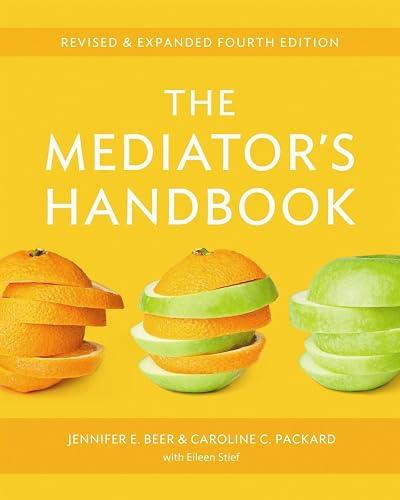
Book summary
by Jennifer E. Beer
Premium summary · Opens in the app · 30 min read
Every day, people find themselves locked in disputes that drain their energy, damage their relationships, and consume their time. A business partnership dissolves into accusations. Neighbors stop speaking over a property line. A family fractures over how to care for an aging parent. Two employees cannot work together after a miscommunication spirals into resentment. In most of these situations, the people involved share a common wish: they want the conflict to end. What they cannot agree on is h
**Author:** Jennifer E. Beer
**Estimated Reading Time:** 42 minutes
**What You'll Learn:**
- The core structure of a mediation session and why each phase matters - How to create emotional safety that allows hostile parties to speak and listen - The critical difference between positions and interests, and how to move from one to the other - Specific techniques for reframing, questioning, and managing difficult moments - How to help parties generate options and reach agreements that actually last - Ways to adapt mediation principles to everyday conflicts in your own life
**Who This Book Is For:**
This book is for anyone who has ever found themselves caught between two people who cannot seem to hear each other. It is for managers who dread workplace disputes, for family members tired of repeating the same arguments at every holiday gathering, for community leaders navigating competing interests, and for professionals who want to add mediation skills to their toolkit. It is also for anyone who simply wants to become better at handling conflict in their own relationships. You do not need a law degree or formal training to benefit from these ideas. You need curiosity, patience, and a willingness to see conflict differently.
Every day, people find themselves locked in disputes that drain their energy, damage their relationships, and consume their time. A business partnership dissolves into accusations. Neighbors stop speaking over a property line. A family fractures over how to care for an aging parent. Two employees cannot work together after a miscommunication spirals into resentment. In most of these situations, the people involved share a common wish: they want the conflict to end. What they cannot agree on is how. The default response to serious conflict in most societies is to hand the problem to someone else. We call lawyers. We file complaints. We ask a manager to decide who is right. We appeal to a judge, an arbitrator, or some other authority figure who will listen to both sides and declare a winner. This approach has its place. Some disputes genuinely require a ruling. But the adversarial model has a fundamental limitation: it treats conflict as a contest rather than a problem to be solved together. It produces winners and losers, and it rarely leaves anyone satisfied. Even the winner often pays a heavy price in time, money, and damaged relationships. Mediation offers a different path. It is a process where an impartial third party helps people in conflict have a structured conversation. The mediator does not decide who is right. The mediator does not impose a solution. Instead, the mediator creates conditions where the parties themselves can understand each other, identify what they actually need, and craft their…
Continue reading in the MinuteRead app
Get the complete 30-minute summary of The Mediator's Handbook
Get the complete summary in the appMediation is a structured conversation where an impartial third party helps people in conflict find their own solution.
The mediator controls the process, not the outcome. The parties own the solution.
Positions are stated demands. Interests are underlying needs. Move from positions to interests.
Listening is the most powerful tool in conflict resolution. Give each party an uninterrupted opportunity to be heard.
Separate brainstorming from evaluation. Generate options before judging them.
The best solutions address multiple interests, not just one party's demands.
"The Mediator's Handbook" is a strong fit if you want practical ideas around psychology, business, law, especially themes like mediation is a structured conversation where an impartial third party helps people in conflict find their own solution; the mediator controls the process, not the outcome. the parties own the solution. The MinuteRead summary distills these concepts into a focused read, whether you're deciding whether to buy the book or applying its lessons at work.
Motivated to help readers with 1) Mediation: A Powerful Tool for Resolving Disputes 2) The Mediator's Role: Impartial Guide, Jennifer E. Beer wrote “The Mediator's Handbook” to package those ideas for a fast, focused read. In “The Mediator's Handbook”, Jennifer E. Beer focuses on 1) Mediation: A Powerful Tool for Resolving Disputes 2) The Mediator's Role: Impartial Guide. Through “The Mediator's Handbook”, Jennifer E. Beer distills the core ideas on psychology into lessons readers can absorb in …
Continue Reading
Access the complete 30-minute summary and thousands more nonfiction books in the MinuteRead app.

Continue reading the complete summary in the MinuteRead app.