MinuteRead
30 min
Book summary
by John Perkins
Premium summary · Opens in the app · 30 min read
There is a story we tell ourselves about how the world works. It goes something like this: wealthy nations help poorer ones through generous loans and development aid. The World Bank and the International Monetary Fund exist to lift struggling countries out of poverty. Global capitalism, whatever its flaws, has spread prosperity and opportunity across the planet. The system may be imperfect, but it is fundamentally benevolent.
**Author:** John Perkins
**Estimated Reading Time:** 45 minutes
**What You'll Learn:**
- How a hidden network of financial operatives shaped the modern global order - Why trillions of dollars in development aid created poverty instead of prosperity - What happens when economic manipulation fails and more forceful measures follow - How the same tactics used abroad are now being deployed against citizens in wealthy nations - What a fundamentally different economic system could look like and how to build it
**Who This Book Is For:**
Readers who want to understand the hidden forces behind global inequality, the true purpose of international development lending, and the relationship between corporate power and foreign policy. This book is for anyone who has ever wondered why poverty persists despite decades of aid, why resource-rich countries remain poor, and what ordinary people can do to change the system.
There is a story we tell ourselves about how the world works. It goes something like this: wealthy nations help poorer ones through generous loans and development aid. The World Bank and the International Monetary Fund exist to lift struggling countries out of poverty. Global capitalism, whatever its flaws, has spread prosperity and opportunity across the planet. The system may be imperfect, but it is fundamentally benevolent. John Perkins spent years helping to construct that story. He was, by his own account, one of its architects. And he says the story is a lie. Perkins worked as an economic hit man, a highly paid professional whose job was to convince leaders of developing nations to accept enormous loans for infrastructure projects. These projects, he explains, were never really about development. They were designed to enrich American corporations, to make a handful of wealthy families in the receiving countries very happy, and to saddle entire nations with debts they could never repay. That debt burden then became the leverage through which the United States could extract resources, control political decisions, and maintain global dominance without firing a shot. The system worked beautifully for those at the top. It worked terribly for almost everyone else. Perkins was recruited into this world in the late 1960s, trained by a mysterious woman named Claudine who taught him how to use economic projections as weapons of manipulation. He traveled to Indonesia, Panama, Ecuador, Saudi Arabia, and beyond. He sat across from presidents and finance ministers, presenting rosy forecasts that he knew were fraudulent. He watched as the projects he promoted displaced indigenous communities, destroyed rainforests, and funneled billions into corporate coffers. Over time, the weight of what he was doing became unbearable. He saw the poverty his work created. He formed relationships with people whose lives were destroyed by the projects he…
Continue reading in the MinuteRead app
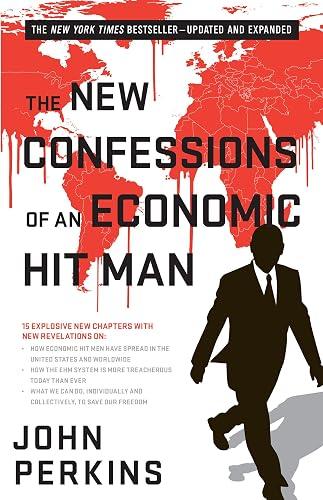
Get the complete 30-minute summary of The New Confessions of an Economic Hit Man
Get the complete summary in the appEconomic hit men use fraudulent financial projections to convince countries to accept loans that create dependency and c
Debt is the primary weapon of the system, turning loans into leverage for extracting resources and political loyalty.
The corporatocracy is a network of aligned interests among corporations, banks, and governments, not a formal conspiracy
Development aid is often a Trojan horse for exploitation, not genuine assistance.
When economic manipulation fails, the jackals are deployed: coups, assassinations, and military interventions.
The same tactics used against developing nations are now being used against citizens of wealthy countries.
"The New Confessions of an Economic Hit Man" is a strong fit if you want practical ideas around economics, politics, business, especially themes like economic hit men use fraudulent financial projections to convince countries to accept loans that create dependency and c; debt is the primary weapon of the system, turning loans into leverage for extracting resources and political loyalty. The MinuteRead summary distills these concepts into a focused read, whether you're deciding whether to buy the book or applying its lessons at work.
Motivated to help readers with "Economic hit men (EHMs) are highly paid professionals who cheat countries around the globe out of trillions, John Perkins wrote “The New Confessions of an Economic Hit Man” to package those ideas for a fast, focused read. In “The New Confessions of an Economic Hit Man”, John Perkins focuses on "Economic hit men (EHMs) are highly paid professionals who cheat countries around the globe out of trillions. Through “The New Confessions of an Economic Hit Man”, John Perk…
View all summaries by John PerkinsContinue Reading
Access the complete 30-minute summary and thousands more nonfiction books in the MinuteRead app.

Continue reading the complete summary in the MinuteRead app.