MinuteRead
30 min
Book summary
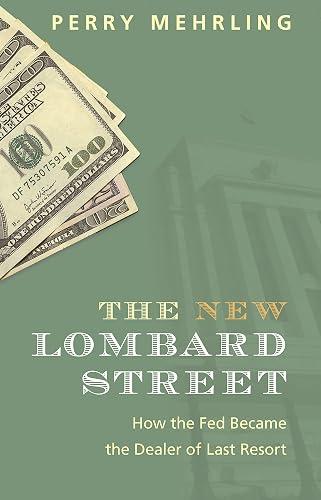
by Perry G. Mehrling
Premium summary · Opens in the app · 30 min read
In the autumn of 2008, the world watched as the global financial system came closer to collapse than at any point since the Great Depression. Banks that had seemed invincible failed overnight. Markets that had functioned smoothly for decades seized up. The Federal Reserve and other central banks took actions that would have been unthinkable just months earlier, buying assets directly, guaranteeing money market funds, and extending credit to institutions far beyond the traditional banking system.
**Author:** Perry G. Mehrling
**Estimated Reading Time:** 2 hours 15 minutes
**What You'll Learn:**
- Why the daily flow of cash through the money market determines the stability of the entire financial system - How the Federal Reserve evolved from a lender of last resort to a dealer of last resort - What the 2008 crisis revealed about the hidden plumbing of modern finance - How swaps and shadow banking transformed the nature of money and credit - What a modern "money view" of the economy looks like and why it matters
**Who This Book Is For:**
This book is for anyone who wants to understand how the financial system actually works beneath the surface of headlines and economic models. It is for investors, policymakers, students of economics and finance, and curious readers who sensed that something important was missing from conventional explanations of the 2008 crisis. If you have ever wondered why central banks matter so much, why liquidity crises happen, or how the promise to pay became the foundation of the modern economy, this book will give you a new lens through which to see the world.
In the autumn of 2008, the world watched as the global financial system came closer to collapse than at any point since the Great Depression. Banks that had seemed invincible failed overnight. Markets that had functioned smoothly for decades seized up. The Federal Reserve and other central banks took actions that would have been unthinkable just months earlier, buying assets directly, guaranteeing money market funds, and extending credit to institutions far beyond the traditional banking system. Most explanations of the crisis focused on greed, deregulation, or the complexity of modern financial instruments. But Perry Mehrling saw something deeper. He saw a crisis that revealed the true nature of the financial system, a nature that had been obscured for decades by economic theories that looked through money rather than at it. The problem, Mehrling argues, is that we forgot how to think about money. Economics, as it developed in the twentieth century, treated money as a veil over the real economy, a convenient medium of exchange that could be largely ignored when analyzing production, consumption, and growth. Finance, for its part, focused on asset prices and returns, treating money as a numeraire, a measuring stick for value. Both disciplines looked past the actual mechanics of the monetary system, the daily flow of cash that keeps the entire credit system alive. This book is an attempt to recover what Mehrling calls the "money view." It is a perspective that places the money market at the center of economic analysis, recognizing that the financial system is, at its core, a vast web of promises…
Continue reading in the MinuteRead app
Get the complete 30-minute summary of The New Lombard Street
Get the complete summary in the appThe financial system is a web of promises to pay, held together by the daily flow of cash in the money market.
The survival constraint, the need for cash inflows to match cash outflows, is the fundamental discipline of the financia
The central bank is unique because it can create money and therefore does not face the survival constraint.
Central banking is about balancing discipline and elasticity, preventing bubbles without stifling growth.
Liquidity is not the same as solvency. An institution can be solvent but still fail if it cannot meet its cash commitmen
Market liquidity can evaporate suddenly, leaving institutions unable to sell assets when they need cash.
"The New Lombard Street" is a strong fit if you want practical ideas around economics, finance, history, especially themes like the financial system is a web of promises to pay, held together by the daily flow of cash in the money market; the survival constraint, the need for cash inflows to match cash outflows, is the fundamental discipline of the financia. The MinuteRead summary distills these concepts into a focused read, whether you're deciding whether to buy the book or applying its lessons at work.
Motivated to help readers with it is in the daily operation of the money market that the coherence of the credit system, Perry G. Mehrling wrote “The New Lombard Street” to package those ideas for a fast, focused read. In “The New Lombard Street”, Perry G. Mehrling focuses on it is in the daily operation of the money market that the coherence of the credit system. Through “The New Lombard Street”, Perry G. Mehrling distills the core ideas on economics into lessons readers can absorb in a single …
Continue Reading
Access the complete 30-minute summary and thousands more nonfiction books in the MinuteRead app.

Continue reading the complete summary in the MinuteRead app.