MinuteRead
30 min
Book summary
Premium summary · Opens in the app · 30 min read
In 1991, a group of researchers at Massachusetts General Hospital made a discovery that would transform our understanding of the human brain. They found that when neurons in the brain become active, blood flow to that region increases in a predictable way. By tracking these changes with magnetic resonance imaging, they could create maps of brain activity in living, thinking humans. For the first time in history, scientists could watch the brain at work without opening the skull.
**Author:** Russell A. Poldrack **Estimated Reading Time:** 45 minutes
**What You'll Learn:**
- How the brain works as a biological computer fundamentally different from any machine humans have built - What fMRI actually measures and why it revolutionized neuroscience - What scientists can and cannot currently decode from brain activity - How your brain physically changes throughout your entire life - What neuroimaging reveals about mental illness and addiction - The real limitations of brain scanning technology - The ethical dilemmas emerging as mind-reading technology advances - Where neuroimaging is heading and what it means for society
**Who This Book Is For:**
Anyone who has ever wondered how a wrinkled mass of tissue can produce consciousness, memory, emotion, and thought. This book is for curious readers who want to understand what brain scans actually show, what they cannot show, and why the distinction matters more than most people realize. If you have seen colorful brain images in the news and wondered what they really mean, this book will give you the tools to think critically about them.
In 1991, a group of researchers at Massachusetts General Hospital made a discovery that would transform our understanding of the human brain. They found that when neurons in the brain become active, blood flow to that region increases in a predictable way. By tracking these changes with magnetic resonance imaging, they could create maps of brain activity in living, thinking humans. For the first time in history, scientists could watch the brain at work without opening the skull. The technique became known as functional magnetic resonance imaging, or fMRI. Within a decade, it had spread to research institutions around the world. Today, thousands of studies using fMRI are published every year. The colorful brain images produced by these studies have become cultural icons, appearing in news stories, courtrooms, and popular media. They have shaped how we think about everything from love to addiction to political beliefs. But here is the problem. Most people, including many scientists, do not fully understand what these images actually show. An fMRI scan is not a photograph of the brain thinking. It is an indirect measurement, a shadow of neural activity captured through the sluggish response of blood vessels. The path from a person lying in a scanner to a glowing blob on a brain map involves dozens of steps, each with its own assumptions, limitations, and potential for error. Russell Poldrack has spent his career at the center of this field. He has watched fMRI grow from an experimental curiosity into a dominant force in neuroscience. He has also watched it be misunderstood, misused, and overhyped. In writing this book, he set out to explain what brain…
Continue reading in the MinuteRead app
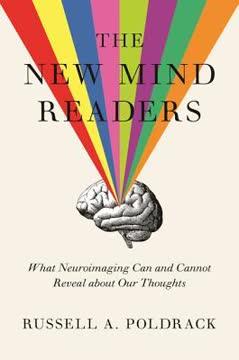
Get the complete 30-minute summary of The New Mind Readers
Get the complete summary in the appThe brain is a biological computer that processes information in parallel across billions of neurons, using less energy
fMRI measures the BOLD signal, a slow, indirect proxy for neural activity based on changes in blood oxygenation.
The dead salmon study showed that without proper statistical correction, fMRI can find brain activity in a dead fish.
Every experience changes your brain through neural plasticity, the mechanism of learning and adaptation.
London taxi drivers have enlarged hippocampi, proving that intensive learning produces measurable structural changes in
Mental illnesses are brain disorders, but neuroimaging findings are group-level differences, not diagnostic tests for in
"The New Mind Readers" is a strong fit if you want practical ideas around science, neuroscience, psychology, especially themes like the brain is a biological computer that processes information in parallel across billions of neurons, using less energy; fmri measures the bold signal, a slow, indirect proxy for neural activity based on changes in blood oxygenation. The MinuteRead summary distills these concepts into a focused read, whether you're deciding whether to buy the book or applying its lessons at work.
Russell Poldrack is a Stanford University professor and neuroscientist specializing in fMRI technology and neuroimaging. He demonstrates a strong commitment to scientific research, having scanned his own brain 104 times over 18 months to study brain functioning changes. Poldrack is known for his ability to explain complex neuroscientific concepts in an accessible manner, though some readers find his writing style too technical for a general audience. His work focuses on understanding brain physi…
View all summaries by Russell A. PoldrackContinue Reading
Access the complete 30-minute summary and thousands more nonfiction books in the MinuteRead app.

Continue reading the complete summary in the MinuteRead app.