MinuteRead
30 min
Book summary
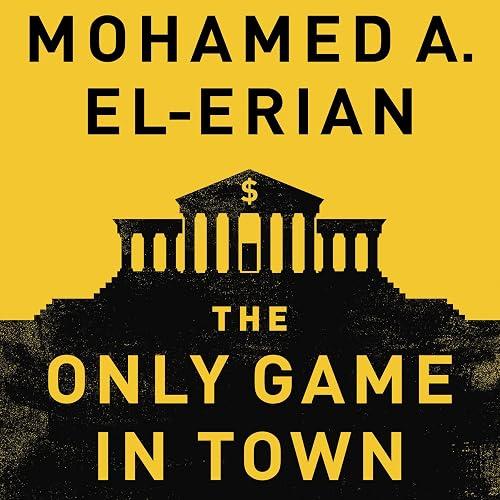
by Mohamed El-Erian
Premium summary · Opens in the app · 30 min read
In the autumn of 2008, the global financial system came closer to collapse than at any point since the Great Depression. Banks stopped lending to one another. Money market funds, long considered as safe as cash, faced runs. Major financial institutions disappeared overnight or survived only through government rescue. The machinery of global finance, which had hummed along for decades with only occasional hiccups, simply seized up.
**Author:** Mohamed El-Erian **Estimated Reading Time:** 45 minutes
**What You'll Learn:**
- Why central banks became the most powerful economic actors in the world - How their unprecedented interventions created new risks even as they prevented disaster - What the critical "T-junction" means for the future of the global economy - Why financial risks have migrated to places few people are watching - How to build optionality, resilience, and agility in an uncertain world
**Who This Book Is For:**
This book is for anyone trying to understand why the global economy feels so strange. It is for investors wondering why markets keep rising despite weak fundamentals. It is for professionals trying to navigate a world where the old rules no longer apply. It is for citizens concerned about inequality, political dysfunction, and the growing gap between Wall Street and Main Street. Most of all, it is for people who sense that something fundamental has shifted in the global economic order and want to understand what comes next.
In the autumn of 2008, the global financial system came closer to collapse than at any point since the Great Depression. Banks stopped lending to one another. Money market funds, long considered as safe as cash, faced runs. Major financial institutions disappeared overnight or survived only through government rescue. The machinery of global finance, which had hummed along for decades with only occasional hiccups, simply seized up. What happened next changed the world. Central banks, led by the Federal Reserve, stepped into the breach with a scale and speed that had never been attempted. They cut interest rates to zero. They created new lending facilities overnight. They purchased trillions of dollars of government bonds and mortgage securities. They promised to do whatever it took, and they meant it. It worked. The global economy did not collapse. A second Great Depression was avoided. But the story does not end there. The interventions that saved the system also transformed it. Central banks, once modest institutions operating quietly in the background, became the dominant force in global markets. Their decisions moved trillions of dollars. Their words could send stock prices soaring or crashing. They became, in El-Erian's phrase, "the only game in town." This book is about what that transformation has meant. It is about the gap between what central banks can do and what they cannot do. It is about the unintended consequences of extraordinary policies that have now persisted far longer than anyone anticipated. It is about an economic recovery that has been real but deeply uneven, lifting asset prices while leaving many people behind. El-Erian writes from a unique vantage point. He has spent decades at the intersection of economics, policy, and markets.…
Continue reading in the MinuteRead app
Get the complete 30-minute summary of The Only Game in Town
Get the complete summary in the appCentral banks saved the global economy in 2008 but have become overextended, creating dependency and delaying necessary
The global economy is approaching a T-junction with two very different possible futures: inclusive growth or stagnation
Central bank policies have amplified inequality by pushing up asset prices while wages stagnate.
Risk has migrated from banks to the shadow banking system, where it is less visible and less regulated.
Liquidity is an illusion. It exists in normal times but disappears in times of stress.
Global coordination has declined, making the world more vulnerable to future crises.
"The Only Game in Town" is a strong fit if you want practical ideas around economics, business, money, especially themes like central banks saved the global economy in 2008 but have become overextended, creating dependency and delaying necessary; the global economy is approaching a t-junction with two very different possible futures: inclusive growth or stagnation. The MinuteRead summary distills these concepts into a focused read, whether you're deciding whether to buy the book or applying its lessons at work.
Motivated to help readers with "Central banks have been considered the only game in town." Bold policy actions, Mohamed El-Erian wrote “The Only Game in Town” to package those ideas for a fast, focused read. In “The Only Game in Town”, Mohamed El-Erian focuses on "Central banks have been considered the only game in town." Bold policy actions. Through “The Only Game in Town”, Mohamed El-Erian distills the core ideas on economics into lessons readers can absorb in a single short sitting. Readers t…
Continue Reading
Access the complete 30-minute summary and thousands more nonfiction books in the MinuteRead app.

Continue reading the complete summary in the MinuteRead app.