MinuteRead
30 min
Book summary
by Bina Venkataraman
Premium summary · Opens in the app · 30 min read
Every day, we make choices that shape the future. We decide whether to save money or spend it. We decide whether to invest in relationships or let them wither. We decide whether to protect natural resources or extract them for immediate gain. And yet, despite knowing that our choices matter, we repeatedly act against our own long-term interests.
**Author:** Bina Venkataraman
**Estimated Reading Time:** 45 minutes
**What You'll Learn:** Why humans so often choose immediate rewards over long-term benefits, and how individuals, organizations, and societies can build the capacity for genuine foresight. You will discover practical strategies for making better decisions that honor both the present and the future.
**Who This Book Is For:** Anyone who has ever wondered why we struggle to save for retirement, protect the environment, or plan for crises we know are coming. This book is for leaders, parents, investors, policymakers, and citizens who want to think beyond the next quarter, the next election, or the next news cycle.
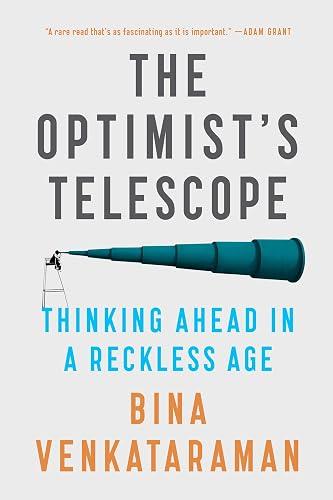
Every day, we make choices that shape the future. We decide whether to save money or spend it. We decide whether to invest in relationships or let them wither. We decide whether to protect natural resources or extract them for immediate gain. And yet, despite knowing that our choices matter, we repeatedly act against our own long-term interests. The problem is not ignorance. We know we should save more, eat better, plan for disasters, and reduce our carbon footprint. The problem is that the future feels distant and abstract while the present feels vivid and demanding. A dollar today feels more real than a dollar next year. A dessert tonight feels more satisfying than a healthy body in ten years. A quarterly earnings report feels more urgent than a stable climate in fifty years. Bina Venkataraman argues that this tendency toward shortsightedness is not our inevitable fate. It is a choice, and more importantly, it is a choice we can learn to make differently. Drawing on research from psychology, economics, anthropology, and her own experience as a climate policy advisor in the Obama administration, Venkataraman shows that foresight is a skill that can be cultivated through deliberate practice, thoughtful institutional design, and cultural change. The book's title comes from a metaphor: an optimist's telescope is not a device for seeing a rosy future that will arrive on its own. It is an instrument for looking ahead clearly, acknowledging the challenges that lie before us, and taking action today to create the future we want. It is a tool for seeing far enough to steer wisely. What makes this book different from typical self-help advice about planning is its insistence that individual willpower is not enough. We live inside systems that shape our choices. Our institutions reward short-term thinking. Our metrics mislead us. Our culture tells us that the future is someone else's problem. To become better ancestors, we must redesign these systems, not just try harder as individuals. The stakes could not be higher. Climate change, public health, economic inequality, technological disruption: all of these…
Continue reading in the MinuteRead app
Get the complete 30-minute summary of The Optimist's Telescope
Get the complete summary in the appForesight is a skill that can be cultivated through practice, culture, and institutional design.
Imagination makes the future feel real and motivates action.
Immediate rewards can be linked to long-term choices to make them more appealing.
Metrics shape behavior. Measure what matters, not just what is easy to measure.
Institutions can be designed to encourage long-term thinking and accountability to future generations.
Games and simulations allow us to explore potential futures and prepare for contingencies.
"The Optimist's Telescope" is a strong fit if you want practical ideas around science, psychology, business, especially themes like foresight is a skill that can be cultivated through practice, culture, and institutional design; imagination makes the future feel real and motivates action. The MinuteRead summary distills these concepts into a focused read, whether you're deciding whether to buy the book or applying its lessons at work.
Motivated to help readers with "What appears our doomed fate is, Bina Venkataraman wrote “The Optimist's Telescope” to package those ideas for a fast, focused read. In “The Optimist's Telescope”, Bina Venkataraman focuses on "What appears our doomed fate is. Through “The Optimist's Telescope”, Bina Venkataraman distills the core ideas on science into lessons readers can absorb in a single short sitting. Readers turn to this work when they want Bina Venkataraman's perspective on the subject witho…
Continue Reading
Access the complete 30-minute summary and thousands more nonfiction books in the MinuteRead app.

Continue reading the complete summary in the MinuteRead app.