MinuteRead
30 min
Book summary
Premium summary · Opens in the app · 5 min read
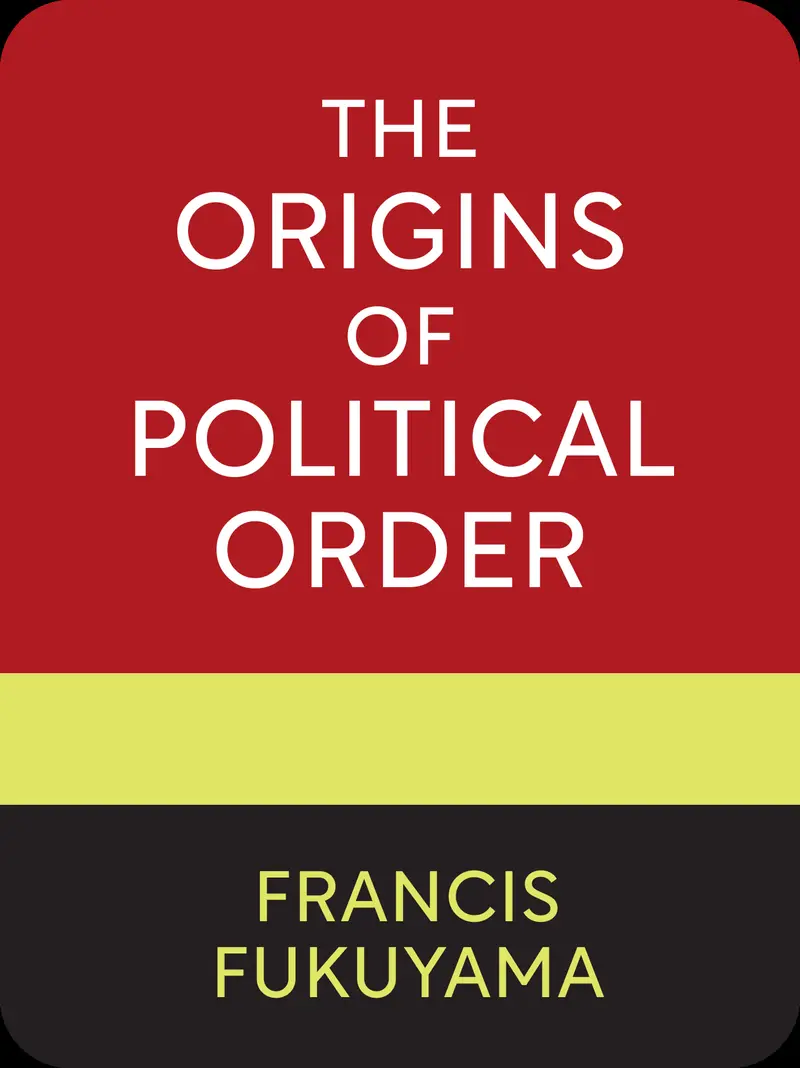
The Origins of Political Order emphasizes how the historical development of political systems worldwide can be traced back to the natural inclination of humans to favor blood relationships.
The Origins of Political Order emphasizes how the historical development of political systems worldwide can be traced back to the natural inclination of humans to favor blood relationships.
Humans are social creatures. From the beginning of time, people have been looking for ways to cooperate and live with each other. That will never change. We thrive in social cooperation, and that is how the complex social layers of today came to life.
However, the way we interact with each other is subject to a very interesting principle, and that is the inclination to choose blood ties over other individuals. Even inside our family circle, we tend to help close members more than distant relatives.
The feeling of belongingness and kinship rules over rationality. For this purpose, humans formed strong social structures such as communities, tribes, or states. These complex formations became almost unbreakable, and as rulers tried to fight them, they would sooner or later fail in their endeavors.
Alongside favoring family, people also tend to prefer those who have been nice to them previously over new and unknown individuals. In other words, humans value family and friends, and they’re bound to these relationships by instinct.
As these relationships became more complex and defined, politics were born, and with them, governance, law, and accountability as well.
Throughout time, societal layers and roles developed. In tribes, there was no ruler, but families and third parties solved disputes about property ownership or justice matters.
As tribes grow, conflicts appear, and a more centralized authority becomes imperative for maintaining order. For example, there were 23 states in China by 770 BC. And so the two main parties, Confucianism (kin-based) and Legalism (merit-based), initiated a fight over authority and power.
Although Legalism initially won, it wasn’t long until it collapsed and Confucianism took over. The reason? People prefer to be ruled by laws that favor family and their natural inclination for it.
India and the Middle East followed a similar evolution. Although Hindu emperors managed to unite parts of the subcontinent, people preferred to be close to their local ties. As such, these unions didn’t last very long.
Middle Eastern dictators seemed to be one step ahead, as they hindered family connections and prevented slave-soldiers from having successors. Against all odds, the servicemen still managed to have heirs and even put them in key positions, creating confusion and weak links in the state. This ultimately led to another empire decline.
Europe met a distinctive evolution once the Catholic religion spread and the church represented one of the greatest authorities. It valued family ties, and so it diminished the desire of people to rise against their states. However, for some countries, a revolution was inevitable.…
Continue reading in the MinuteRead app
Get the complete 5-minute summary of The Origins of Political Order
Get the complete summary in the appHumans are naturally inclined to favor their families over anything else.
States that seek long-term survival must always adapt to the people and the political environment.
The masses will always win in the long run and favoritism for the rich can only last so much.
"The Origins of Political Order" is a strong fit if you want practical ideas around culture, history, leadership, especially themes like humans are naturally inclined to favor their families over anything else; states that seek long-term survival must always adapt to the people and the political environment. The MinuteRead summary distills these concepts into a focused read, whether you're deciding whether to buy the book or applying its lessons at work.
Francis Fukuyama is Olivier Nomellini Senior Fellow at the Freeman Spogli Institute for International Studies (FSI) at Stanford University, and Mosbacher DIrector of FSI's Center on Democracy, Development, and the Rule of Law. Dr. Fukuyama has writtenon questions concerning governance, democratization, and international political economy. His book, The End of History and the Last Man, was published by Free Press in 1992 and has appeared in over twenty foreign editions. His most recent books are…
View all summaries by Jonathan DavisContinue Reading
Access the complete 5-minute summary and thousands more nonfiction books in the MinuteRead app.

Continue reading the complete summary in the MinuteRead app.