MinuteRead
30 min
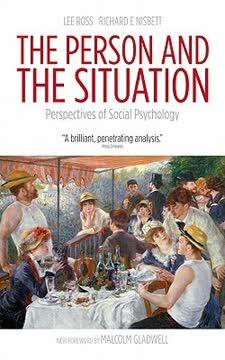
Book summary
by Lee Ross
Premium summary · Opens in the app · 30 min read
In the early 1970s, a group of college students walked into a basement laboratory at Stanford University. They had answered a newspaper advertisement offering fifteen dollars a day to participate in a study about prison life. A coin flip determined their fate. Some would become prisoners. Others would become guards. Within days, the experiment spiraled into something so disturbing that researchers terminated it early. The guards had become cruel. The prisoners had become passive and depressed. O
**Author:** Lee Ross
**Estimated Reading Time:** 45 minutes
**What You'll Learn:**
Why good people do bad things, why personality predictions fail so often, and how the hidden power of situations shapes nearly every human action. You will discover the psychological forces that drive behavior, the errors we make when judging others, and practical ways to apply these insights to your own life.
**Who This Book Is For:**
Anyone who has ever wondered why a kind colleague turned cold, why a confident friend crumbled under pressure, or why changing behavior feels so difficult. This book is for leaders, parents, educators, and curious readers who want to understand what truly moves people.
In the early 1970s, a group of college students walked into a basement laboratory at Stanford University. They had answered a newspaper advertisement offering fifteen dollars a day to participate in a study about prison life. A coin flip determined their fate. Some would become prisoners. Others would become guards. Within days, the experiment spiraled into something so disturbing that researchers terminated it early. The guards had become cruel. The prisoners had become passive and depressed. Ordinary students had transformed into people their own families would not have recognized. What happened in that basement was not an anomaly. It was a dramatic demonstration of a truth that social psychologists had been uncovering for decades. Human behavior is not primarily driven by the kind of person we are. It is driven by the situation we find ourselves in. This idea challenges something deeply ingrained in how we think about ourselves and others. When we hear about a neighbor who cheats on his taxes, we assume he is dishonest. When a coworker snaps at us, we conclude she is rude. When a student fails an exam, we suspect he lacks intelligence or motivation. We are constantly drawing conclusions about character from behavior, rarely pausing to consider what circumstances might have produced that behavior. Lee Ross spent his career documenting this fundamental error in human judgment. Along with his collaborator Richard Nisbett, Ross demonstrated that ordinary people consistently overestimate the role of personality and underestimate the role of context. The implications of this insight ripple through every domain of life, from how we raise children to how we design workplaces, from how we understand political conflict to how we predict our own future behavior. The problem is not simply academic. When we misattribute behavior to character rather than context, we make poor decisions. We hire the wrong people. We blame victims for their circumstances. We fail to create environments that bring out the best in ourselves and others. We become overconfident in our judgments and blind to the forces that actually shape human…
Continue reading in the MinuteRead app
Get the complete 30-minute summary of The Person and the Situation
Get the complete summary in the appSituations shape behavior more than personality does.
We overattribute behavior to character and underestimate situational influence.
Behavior is far less consistent across situations than we believe.
We respond to our interpretation of situations, not the situations themselves.
Culture shapes behavior in ways that are often invisible to us.
Small changes in situations can produce large changes in behavior.
"The Person and the Situation" is a strong fit if you want practical ideas around psychology, sociology, science, especially themes like situations shape behavior more than personality does; we overattribute behavior to character and underestimate situational influence. The MinuteRead summary distills these concepts into a focused read, whether you're deciding whether to buy the book or applying its lessons at work.
Lee Ross is a renowned social psychologist and author of "The Person and the Situation." He is known for his contributions to the field of social psychology, particularly in the areas of attribution theory and cognitive biases. Ross's work focuses on how people perceive and interpret social situations and behavior. He has conducted numerous influential studies and is recognized for developing the concept of the fundamental attribution error. Ross has held academic positions at Stanford Universit…
View all summaries by Lee RossContinue Reading
Access the complete 30-minute summary and thousands more nonfiction books in the MinuteRead app.

Continue reading the complete summary in the MinuteRead app.