MinuteRead
30 min
Book summary
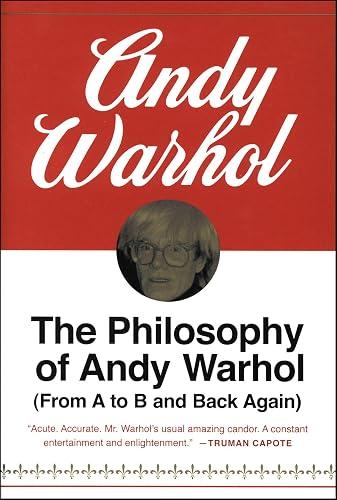
by Andy Warhol
Premium summary · Opens in the app · 30 min read
I try to think of what time is and all I can think is.
**Author:** Andy Warhol
**Estimated Reading Time:** 2 hours 15 minutes
**What You'll Learn:**
- Why time feels different to different people and how to live more fully in the present - How "nothingness" can become a surprising source of freedom - What Warhol really thought about love, beauty, fame, and money - Why business can be art and art can be business - How observation and documentation change the way you experience life - Why the mundane and the absurd deserve your attention
**Who This Book Is For:**
This book is for anyone curious about how one of the most influential artists of the twentieth century actually thought. It is for people who sense that conventional wisdom about success, love, and happiness might be incomplete. It is for those who want to see the world through a different lens, one that finds meaning in soup cans, beauty in McDonald's, and freedom in not wanting anything at all.
Andy Warhol spent his life confusing people. That was, in many ways, the point. When he painted Campbell's Soup Cans in 1962, critics did not know whether to take him seriously. When he made an eight-hour film of the Empire State Building, audiences walked out. When he gave interviews, he often answered questions with a shrug, a mumble, or a single word. People wanted to know what his art meant. Warhol seemed to want to know why they were asking. But beneath the silver wigs and the deadpan delivery, Warhol was engaged in a serious project. He was trying to understand how modern life actually works. Not how it should work, not how we wish it worked, but how it really functions when you strip away the pretensions and look at it directly. This book, first published in 1975, is the closest thing Warhol ever produced to a memoir or a philosophy. It is not a conventional autobiography. It is not a manifesto. It is something stranger and more interesting: a collection of observations, stories, and reflections that reveal how Warhol's mind operated. The book moves from A to B and back again, just as its subtitle promises. It circles around big ideas without ever landing on a single conclusion. It is funny, contradictory, insightful, and occasionally profound. The problem Warhol addresses is one that most people do not even realize they have. We live in a world that constantly tells us what to want. Advertisements tell us what to buy. Movies tell us what love should look like. Magazines tell us what success requires. Social media, though Warhol never lived to see it, would have seemed to him like a logical extension of everything he observed. We are trained from birth to…
Continue reading in the MinuteRead app
Get the complete 30-minute summary of The Philosophy of Andy Warhol
Get the complete summary in the app**Time is subjective.** It feels different to different people. Live in the present moment rather than dwelling on the p
**Nothingness is freedom.** When you want nothing, you cannot be disappointed. When you expect nothing, everything becom
**Fantasy is often better than reality.** The anticipation of an event is usually more exciting than the event itself.
**Cleanliness is the foundation of beauty.** Well-groomed people are the real beauties, regardless of their physical app
**Fame is a perception, not a quality.** It exists in the minds of others. You cannot control it. You can only experienc
**Business is the best art.** Making money is a creative act. Work is life. There is no separation.
"The Philosophy of Andy Warhol" is a strong fit if you want practical ideas around art, philosophy, memoir, especially themes like **time is subjective.** it feels different to different people. live in the present moment rather than dwelling on the p; **nothingness is freedom.** when you want nothing, you cannot be disappointed. when you expect nothing, everything becom. The MinuteRead summary distills these concepts into a focused read, whether you're deciding whether to buy the book or applying its lessons at work.
Motivated to help readers with i try to think of what time is and all I can think is, Andy Warhol wrote “The Philosophy of Andy Warhol” to package those ideas for a fast, focused read. In “The Philosophy of Andy Warhol”, Andy Warhol focuses on i try to think of what time is and all I can think is. Through “The Philosophy of Andy Warhol”, Andy Warhol distills the core ideas on art into lessons readers can absorb in a single short sitting. Readers turn to this work when they want Andy Warhol's per…
Continue Reading
Access the complete 30-minute summary and thousands more nonfiction books in the MinuteRead app.

Continue reading the complete summary in the MinuteRead app.