MinuteRead
30 min
Book summary
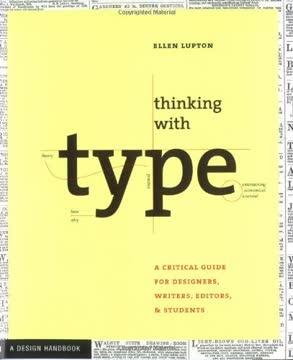
by Ellen Lupton
Premium summary · Opens in the app · 30 min read
Typography surrounds us. It appears on the street signs we pass, the cereal boxes we open, the screens we scroll, and the books we read. Yet most people never notice it. When typography works well, it becomes invisible, quietly shaping how we absorb information without calling attention to itself. When it fails, we feel the friction immediately: a menu we cannot read, a sign that confuses us, a website that makes our eyes tired.
**Author:** Ellen Lupton
**Estimated Reading Time:** 45 minutes
**What You'll Learn:** How typography actually works as a system of visual communication. You will learn why typefaces carry cultural meaning, how spacing shapes reading, why grids create order without killing creativity, and how hierarchy guides attention. You will learn to think with type rather than simply select fonts.
**Who This Book Is For:** Designers, writers, students, marketers, and anyone who works with words in visual form. If you have ever stared at a font menu feeling overwhelmed, or wondered why some documents feel effortless to read while others feel like work, this book is for you.
Typography surrounds us. It appears on the street signs we pass, the cereal boxes we open, the screens we scroll, and the books we read. Yet most people never notice it. When typography works well, it becomes invisible, quietly shaping how we absorb information without calling attention to itself. When it fails, we feel the friction immediately: a menu we cannot read, a sign that confuses us, a website that makes our eyes tired. Ellen Lupton wrote Thinking with Type to pull back the curtain on this invisible art. The book emerged from her years of teaching graphic design at the Maryland Institute College of Art, where she noticed something consistent among her students. They arrived knowing how to use software. They could open a font menu and scroll through hundreds of options. But they lacked a framework for understanding what those options meant and how to use them with intention. The problem is not limited to design students. The digital revolution turned everyone into a typographer. We choose fonts for our resumes, our presentations, our newsletters, our websites. We adjust spacing, set margins, and select type sizes. We make typographic decisions every day, often without realizing we are doing it. And most of us make these decisions based on vague intuition or default settings. Lupton argues that typography is not decoration. It is a tool for shaping meaning. The way text looks changes how we understand it. A wedding invitation set in a heavy industrial typeface communicates something entirely different from the same words set in an elegant script. A legal document set in a playful display font undermines its own authority. The visual form of language carries meaning before we read a single word. This book addresses a fundamental gap in how we learn about type. Most people learn to read and write without ever learning how text works as a visual system. We learn grammar, spelling, and punctuation. We learn how to structure sentences and paragraphs. But we rarely learn about letterforms, spacing, grids, or hierarchy. These elements shape our reading experience…
Continue reading in the MinuteRead app
Get the complete 30-minute summary of Thinking with Type
Get the complete summary in the appTypography is about thinking with type, not just choosing fonts.
Spacing matters as much as the letters themselves.
Typefaces have histories and cultural meanings.
Text is a fluid system, not a static block.
Grids provide structure while enabling flexibility.
Hierarchy guides readers and expresses information structure.
"Thinking with Type" is a strong fit if you want practical ideas around design, art, art design, especially themes like typography is about thinking with type, not just choosing fonts; spacing matters as much as the letters themselves. The MinuteRead summary distills these concepts into a focused read, whether you're deciding whether to buy the book or applying its lessons at work.
Ellen Lupton is a renowned graphic designer, curator, and writer. She serves as director of the Graphic Design MFA program at Maryland Institute College of Art and as curator of contemporary design at Cooper Hewitt, Smithsonian Design Museum. Ellen Lupton has authored numerous books on design, including "Thinking with Type," which has become a staple in design education. Her work focuses on making design principles accessible to a wider audience, bridging the gap between professional designers a…
View all summaries by Ellen LuptonContinue Reading
Access the complete 30-minute summary and thousands more nonfiction books in the MinuteRead app.

Continue reading the complete summary in the MinuteRead app.