MinuteRead
30 min
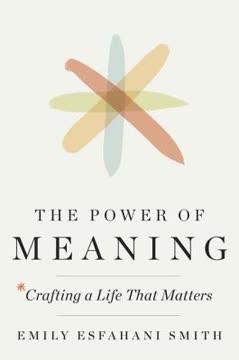
Book summary
Premium summary · Opens in the app · 30 min read
For decades, the message has been clear. Pursue happiness. Optimize your life for pleasure. Eliminate discomfort. Smile. Count your blessings. Think positive. And yet, despite unprecedented material comfort and endless self-help advice, rates of depression, anxiety, and loneliness continue to climb. Something is not working.
**Author:** Emily Esfahani Smith **Estimated Reading Time:** 45 minutes
### What You'll Learn
The difference between chasing happiness and building a meaningful life. Why the modern obsession with feeling good leaves so many people feeling empty. The four pillars that support a life of depth and purpose: belonging, purpose, storytelling, and transcendence. How ordinary people find extraordinary meaning through connection, contribution, and making sense of their experiences. Practical ways to cultivate each pillar in your own life, starting today.
### Who This Book Is For
Anyone who has achieved what society promised would bring happiness and still felt something missing. Anyone navigating a difficult season and searching for a reason to keep going. Anyone who suspects that a good life requires more than good feelings. And anyone who wants to understand what actually sustains human beings through suffering, loss, and the ordinary challenges of being alive.
For decades, the message has been clear. Pursue happiness. Optimize your life for pleasure. Eliminate discomfort. Smile. Count your blessings. Think positive. And yet, despite unprecedented material comfort and endless self-help advice, rates of depression, anxiety, and loneliness continue to climb. Something is not working. Emily Esfahani Smith noticed this paradox early in her life. As a child growing up in a Sufi meetinghouse in Montreal, she watched people gather weekly to meditate, chant, and seek connection with something beyond themselves. They were not there to feel happy. They were there to find meaning. Later, as a journalist studying psychology and philosophy, she began to see a pattern in the research. People who pursued happiness directly often ended up less happy. But people who pursued meaning, who connected to something larger than their own feelings, who contributed to others, who made sense of their lives, these people reported something deeper than happiness. They reported satisfaction. Resilience. A sense that their lives mattered. The problem is not that happiness is bad. The problem is that happiness, defined narrowly as feeling good and avoiding pain, is a fragile foundation for a life. It depends on circumstances. It fades. It can be taken away by illness, loss, or disappointment. Meaning is different. Meaning can coexist with suffering. Meaning can grow stronger through difficulty. Meaning connects you to other people, to your past and future, to something that transcends your individual existence. Smith draws on research from positive psychology, philosophy, literature, and dozens of interviews with people from all walks of life. She introduces four pillars of meaning: belonging, purpose, storytelling, and transcendence. These are not abstract concepts. They are practical, buildable dimensions of life that anyone can strengthen. The book is not an argument against happiness. It is an argument for something more substantial, something that holds…
Continue reading in the MinuteRead app
Get the complete 30-minute summary of The Power of Meaning
Get the complete summary in the appHappiness is about feeling good. Meaning is about connecting to something beyond yourself. They are not the same.
The four pillars of meaning are belonging, purpose, storytelling, and transcendence.
Belonging requires vulnerability. You must let yourself be seen.
Purpose is about contribution, not achievement. Ask what you can give, not what you can get.
Your life story is an interpretation. You can revise it to find redemption and growth.
Transcendence is the experience of connecting to something larger than yourself. It shifts perspective and restores mean
"The Power of Meaning" is a strong fit if you want practical ideas around psychology, self help, philosophy, especially themes like happiness is about feeling good. meaning is about connecting to something beyond yourself. they are not the same; the four pillars of meaning are belonging, purpose, storytelling, and transcendence. The MinuteRead summary distills these concepts into a focused read, whether you're deciding whether to buy the book or applying its lessons at work.
Emily Esfahani Smith is a journalist and author who explores the human experience through psychology, philosophy, and literature. Her book "The Power of Meaning" challenges the pursuit of happiness in favor of finding life's meaning. Smith's writing has appeared in prestigious publications, and she is an editor at Stanford University's Hoover Institution. Born in Switzerland and raised in Canada, she holds degrees from Dartmouth College and the University of Pennsylvania. Smith currently resides…
View all summaries by Emily Esfahani SmithContinue Reading
Access the complete 30-minute summary and thousands more nonfiction books in the MinuteRead app.

Continue reading the complete summary in the MinuteRead app.