MinuteRead
30 min
Book summary
Premium summary · Opens in the app · 30 min read
Imagine spending your entire career diligently saving for retirement. You contribute faithfully to your 401(k). You take the tax deduction every year. You watch your account balance grow. You feel good about your financial discipline. Then retirement arrives, and you discover something unsettling: the government owns a significant portion of everything you have saved.
**Author:** David McKnight
**Estimated Reading Time:** 45 minutes
**What You'll Learn:**
* Why the United States is heading toward a historic tax crisis * How to structure your retirement savings across three distinct tax buckets * The strategy for reaching the 0% tax bracket in retirement * How to use Roth IRAs and Life Insurance Retirement Plans effectively * Why the window between now and 2026 represents a once-in-a-lifetime opportunity * How to build a personalized Tax-Free Road Map
**Who This Book Is For:**
This book is for anyone who has money in a 401(k), traditional IRA, or other tax-deferred retirement account. It is especially relevant for people who are 10 to 15 years away from retirement, those who are concerned about future tax rates, and anyone who wants to protect their retirement income from the fiscal challenges facing the United States. If you have ever wondered whether your retirement savings will be enough after taxes, this book provides a clear framework for thinking differently about your financial future.
Imagine spending your entire career diligently saving for retirement. You contribute faithfully to your 401(k). You take the tax deduction every year. You watch your account balance grow. You feel good about your financial discipline. Then retirement arrives, and you discover something unsettling: the government owns a significant portion of everything you have saved. This is not a hypothetical scenario. It is the reality facing millions of Americans who have placed the bulk of their retirement savings in tax-deferred accounts. The premise is simple: you received a tax break when you contributed, but you owe taxes on every dollar you withdraw. The question is not whether you will pay taxes on that money. The question is what the tax rate will be when you do. David McKnight wrote The Power of Zero to answer that question. His answer is uncomfortable. He argues that tax rates in the future will almost certainly be higher than they are today, and possibly much higher. The reason is not political ideology or partisan prediction. It is mathematics. The United States has made promises it cannot keep. Social Security, Medicare, and other entitlement programs were designed for a demographic reality that no longer exists. In 1935, when Social Security was created, there were 42 workers for every retiree. Today, that ratio has fallen to approximately 3 workers for every retiree. By 2030, it is projected to drop to 2 workers for every retiree. This demographic shift, driven by the retirement of the Baby Boomer generation and declining birth rates, has created a structural imbalance that cannot be solved by modest adjustments. The national debt has ballooned to over $21 trillion. More alarming, the unfunded liabilities for…
Continue reading in the MinuteRead app
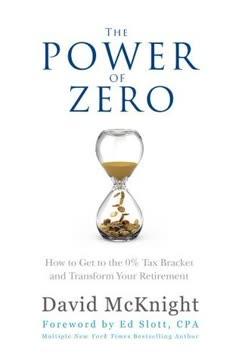
Get the complete 30-minute summary of The Power of Zero, Revised and Updated
Get the complete summary in the app**The United States faces a fiscal crisis driven by demographics.** The worker-to-retiree ratio has fallen from 42:1 to
**Tax rates are historically low and likely to rise.** The top rate of 37% compares to 94% in 1943 and 70% in the 1970s.
**The window of opportunity expires in 2026.** The Tax Cuts and Jobs Act reductions are scheduled to expire, making now
**There are three tax buckets: taxable, tax-deferred, and tax-free.** Most Americans are overinvested in the tax-deferre
**Tax-deferred accounts are a loan from the government.** The deduction you receive today must be repaid at future tax r
**Aim for the 0% tax bracket in retirement.** If tax rates double, two times zero is still zero.
"The Power of Zero, Revised and Updated" is a strong fit if you want practical ideas around finance, business, money, especially themes like **the united states faces a fiscal crisis driven by demographics.** the worker-to-retiree ratio has fallen from 42:1 to; **tax rates are historically low and likely to rise.** the top rate of 37% compares to 94% in 1943 and 70% in the 1970s. The MinuteRead summary distills these concepts into a focused read, whether you're deciding whether to buy the book or applying its lessons at work.
David McKnight is a financial advisor and author specializing in retirement planning and tax-free income strategies. He gained recognition for his book "The Power of Zero," which advocates for achieving a zero percent tax bracket in retirement. McKnight's approach focuses on utilizing tax-advantaged investment vehicles and life insurance products to minimize future tax liabilities. He frequently speaks at industry events and has appeared on various financial media outlets. McKnight's work has in…
View all summaries by David McKnightContinue Reading
Access the complete 30-minute summary and thousands more nonfiction books in the MinuteRead app.

Continue reading the complete summary in the MinuteRead app.