MinuteRead
30 min
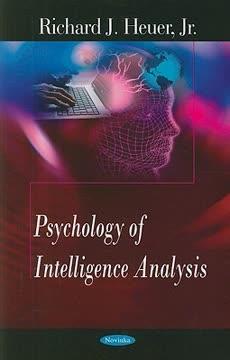
Book summary
Premium summary · Opens in the app · 30 min read
In 1941, the United States possessed intelligence indicating that Japan was preparing for military action somewhere in the Pacific. The signals were numerous and, in retrospect, clear. Japanese naval movements had been tracked. Diplomatic communications had been intercepted. War warnings had been issued. Yet when the attack came at Pearl Harbor, it arrived as a devastating surprise. The information was there. The interpretation was not.
**Author:** Richards J. Heuer Jr.
**Estimated Reading Time:** 45 minutes
**What You'll Learn:**
- Why even experienced analysts make predictable mental errors - How cognitive biases distort judgment without awareness - The structured techniques that improve analytical accuracy - Why more information often leads to worse decisions - How to communicate uncertainty effectively - The mental habits that separate exceptional analysts from average ones
**Who This Book Is For:**
This condensed edition is for anyone whose work involves making judgments under conditions of uncertainty. Intelligence analysts, policy makers, investigators, researchers, executives, and decision makers in any field will find value here. It is also for anyone curious about how the human mind processes ambiguous information and why smart people sometimes reach badly wrong conclusions.
In 1941, the United States possessed intelligence indicating that Japan was preparing for military action somewhere in the Pacific. The signals were numerous and, in retrospect, clear. Japanese naval movements had been tracked. Diplomatic communications had been intercepted. War warnings had been issued. Yet when the attack came at Pearl Harbor, it arrived as a devastating surprise. The information was there. The interpretation was not. This failure was not the result of lazy analysts or incompetent leadership. It was the product of something far more troubling: the systematic ways in which the human mind fails to process information that contradicts its expectations. The analysts at Pearl Harbor were intelligent, dedicated professionals. They simply could not believe that Japan would attack American territory directly. That belief shaped what they saw and what they dismissed. Richards J. Heuer Jr. spent forty-five years working for the Central Intelligence Agency, much of that time wrestling with a fundamental question: why do smart, experienced analysts make predictable errors? His answer, developed through decades of practical experience and study of cognitive psychology, forms the foundation of this book. The central problem, Heuer argues, is that the human mind evolved for a different kind of world. Our cognitive machinery developed to help our ancestors make quick decisions in relatively simple environments. We needed to recognize predators, identify food sources, and judge the intentions of small groups of people. We did not evolve to analyze complex geopolitical situations involving multiple actors, incomplete information, deliberate deception, and long time horizons. When we apply our intuitive mental processes to intelligence problems, we encounter systematic failures. We see patterns that do not exist. We ignore information that contradicts our beliefs. We become overconfident in our judgments. We attribute complex outcomes to simple causes. We assume that others think as we do. These are not random errors. They are predictable, systematic biases built into the structure of human cognition. Heuer's insight was that understanding these biases is not…
Continue reading in the MinuteRead app
Get the complete 30-minute summary of The Psychology of Intelligence Analysis
Get the complete summary in the app**Perception is constructive, not passive.** You see what you expect to see. Your mental models shape what you notice, h
**Mental models resist change.** Once formed, they filter out contradictory information. Make your assumptions explicit
**Confidence is not accuracy.** You are systematically overconfident in your judgments. Adjust your stated confidence do
**More information does not mean better judgment.** Beyond a minimum threshold, additional information increases confide
**Evaluate multiple hypotheses simultaneously.** The analysis of competing hypotheses forces you to consider alternative
**Seek disconfirming evidence.** Ask what would prove you wrong, then look for that evidence. This is the most effective
"The Psychology of Intelligence Analysis" is a strong fit if you want practical ideas around psychology, science, philosophy, especially themes like **perception is constructive, not passive.** you see what you expect to see. your mental models shape what you notice, h; **mental models resist change.** once formed, they filter out contradictory information. make your assumptions explicit. The MinuteRead summary distills these concepts into a focused read, whether you're deciding whether to buy the book or applying its lessons at work.
Richards "Dick" J. Heuer, Jr. was a veteran CIA officer with 45 years of experience. He is best known for his work on the analysis of competing hypotheses and his influential book, Psychology of Intelligence Analysis. Heuer's expertise in intelligence analysis and cognitive psychology led him to develop innovative approaches for improving analytical thinking and decision-making processes. His book, which originated from a series of articles written between 1978 and 1986, has become a foundationa…
View all summaries by Richards J. Heuer Jr.Continue Reading
Access the complete 30-minute summary and thousands more nonfiction books in the MinuteRead app.

Continue reading the complete summary in the MinuteRead app.