MinuteRead
30 min
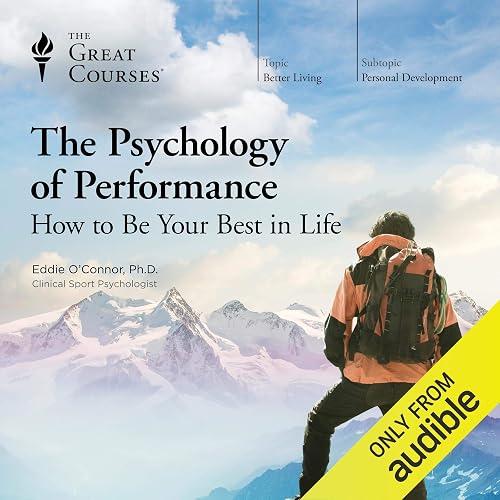
Book summary
by Eddie O'Connor
Premium summary · Opens in the app · 30 min read
Every performer has experienced the gap between what they can do in practice and what they actually do when it counts. The musician who plays flawlessly in the practice room but freezes on stage. The athlete who executes perfectly in training but tightens up during competition. The executive who communicates brilliantly with colleagues but stumbles during the board presentation. This gap is not a mystery. It is not a character flaw. It is not something you are born with or without. It is the res
**Author:** Eddie O'Connor
**Estimated Reading Time:** 45 minutes
**What You'll Learn:** The science behind peak performance, why deliberate practice matters more than talent, how mindfulness and acceptance transform your relationship with pressure, and the specific mental skills that separate elite performers from everyone else.
**Who This Book Is For:** Athletes, performers, professionals, coaches, parents of young athletes, and anyone who wants to understand the psychological foundations of excellence and apply them to their own pursuits.
Every performer has experienced the gap between what they can do in practice and what they actually do when it counts. The musician who plays flawlessly in the practice room but freezes on stage. The athlete who executes perfectly in training but tightens up during competition. The executive who communicates brilliantly with colleagues but stumbles during the board presentation. This gap is not a mystery. It is not a character flaw. It is not something you are born with or without. It is the result of psychological processes that can be understood, trained, and mastered. For most of human history, we treated exceptional performance as something almost magical. We called it talent, genius, or natural ability. We assumed that great performers were simply born different, blessed with gifts the rest of us could only admire from a distance. This belief was comforting in a way. If excellence was something you were born with, then you were not responsible for your own mediocrity. You could shrug and say, "I just don't have it." But this belief was wrong. Over the past several decades, researchers have systematically dismantled the myth of innate talent. They have studied chess masters, concert violinists, Olympic athletes, and elite performers across dozens of domains. What they found was not a collection of genetic lottery winners. They found people who practiced differently. People who trained their minds as rigorously as their bodies. People who had learned specific psychological skills that allowed them to access their abilities when it mattered most. This book is about those skills. The field of sport psychology emerged in the late nineteenth century, when researchers first began studying how psychological factors influence athletic performance. Early pioneers like Coleman Griffith established laboratories dedicated to understanding the mental side of sport. What began as a niche academic pursuit has evolved into a comprehensive science of human performance, with applications extending far beyond athletics. Today, performance psychology informs how musicians prepare for concerts, how surgeons train for complex procedures, how business leaders handle high-stakes negotiations, and how first responders maintain composure during emergencies. The central insight of this science is both simple and profound: excellence is not something you are born with. It is something you build. And the building process follows…
Continue reading in the MinuteRead app
Get the complete 30-minute summary of The Psychology of Performance
Get the complete summary in the appDeliberate practice, not talent, is the primary driver of expertise.
Values provide the why. Goals provide the how. Both are essential.
Mindfulness means paying attention to the present moment without judgment.
Cognitive defusion means recognizing thoughts as mental events, not facts.
Acceptance means being willing to feel what you feel without fighting it.
Commitment is behavior, not feeling. Act on your values regardless of your internal state.
"The Psychology of Performance" is a strong fit if you want practical ideas around psychology, self help, sports, especially themes like deliberate practice, not talent, is the primary driver of expertise; values provide the why. goals provide the how. both are essential. The MinuteRead summary distills these concepts into a focused read, whether you're deciding whether to buy the book or applying its lessons at work.
Motivated to turn hard-won expertise into something readers can use every day, Eddie O'Connor wrote “The Psychology of Performance” to distill the ideas behind the work into clear, actionable lessons. Through “The Psychology of Performance”, Eddie O'Connor distills the core ideas on psychology into lessons readers can absorb in a single short sitting. Readers turn to this work when they want Eddie O'Connor's perspective on the subject without working through the entire original volume. The book …
Continue Reading
Access the complete 30-minute summary and thousands more nonfiction books in the MinuteRead app.

Continue reading the complete summary in the MinuteRead app.