MinuteRead
30 min
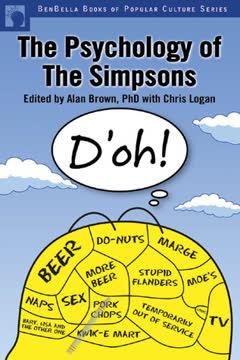
Book summary
Premium summary · Opens in the app · 30 min read
There is a moment in The Simpsons when Homer, faced with a difficult decision, turns to his brain and asks for advice. His brain, a separate entity with its own personality, responds with a mixture of wisdom and exasperation. The scene is funny because it feels familiar. We all talk to ourselves. We all experience that strange sensation of arguing with our own thoughts, as if some part of us is separate from the part doing the arguing.
**Author:** Alan S. Brown **Estimated Reading Time:** 42 minutes
How a cartoon family from Springfield became one of the most psychologically revealing shows on television. You'll discover what Homer's conversations with his brain tell us about consciousness, why Bart and Lisa face very different risks for alcohol problems, how the Big Five personality traits play out in animated form, and what the residents of Springfield reveal about conformity, decision-making, and the human mind.
Anyone who has ever laughed at The Simpsons and wondered why it feels so true. Psychology students looking for accessible examples of complex concepts. Fans of popular culture who want to understand what their favorite shows reveal about human nature. And anyone curious about how a satirical cartoon can illuminate the deepest questions about who we are.
There is a moment in The Simpsons when Homer, faced with a difficult decision, turns to his brain and asks for advice. His brain, a separate entity with its own personality, responds with a mixture of wisdom and exasperation. The scene is funny because it feels familiar. We all talk to ourselves. We all experience that strange sensation of arguing with our own thoughts, as if some part of us is separate from the part doing the arguing. This is not just comedy. It is psychology in action. The Simpsons has entertained audiences for decades, but beneath the satire and slapstick lies something remarkable: a surprisingly accurate portrait of how human beings actually think, feel, and behave. The show's writers may not have set out to create a primer on cognitive science, but they have produced one anyway. Every episode contains lessons about memory, personality, social influence, addiction, gender roles, and the nature of consciousness itself. Alan S. Brown, a psychologist with a deep appreciation for the show, recognized this hidden curriculum. In The Psychology of The Simpsons, he brings together insights from academic psychology and examples from the show to create something rare: a book that is both scientifically rigorous and genuinely entertaining. The central insight is that The Simpsons works because it reflects our folk psychology, the intuitive understanding of the mind that all humans share. We naturally believe that minds and bodies are separate. We instinctively attribute personalities to other people. We automatically make judgments about character, motivation, and intention. The Simpsons takes these intuitions and exaggerates them, making visible the hidden assumptions that shape our everyday experience. This matters because our intuitive understanding of psychology often conflicts with scientific reality. We believe we make rational decisions when we actually rely on mental shortcuts. We think we understand our own motivations when we are often strangers to ourselves. We assume our personalities are fixed when they are…
Continue reading in the MinuteRead app
Get the complete 30-minute summary of The Psychology of the Simpsons
Get the complete summary in the appThe Simpsons reflects our folk psychology, the intuitive understanding of the mind that all humans share.
The divided self we experience is an illusion produced by a single integrated cognitive system.
Belief in the soul is a natural intuition that emerges early in development.
Alcohol use exists on a spectrum, and risk for problems is shaped by both genetics and environment.
The Big Five personality model captures the major dimensions of human personality.
Social influence can lead to bad decisions, but it can be resisted through independent thinking.
"The Psychology of the Simpsons" is a strong fit if you want practical ideas around psychology, pop culture, tv, especially themes like the simpsons reflects our folk psychology, the intuitive understanding of the mind that all humans share; the divided self we experience is an illusion produced by a single integrated cognitive system. The MinuteRead summary distills these concepts into a focused read, whether you're deciding whether to buy the book or applying its lessons at work.
Alan Brown PhD is the author of "The Psychology of the Simpsons." As an academic with a doctorate in psychology, Brown brings his expertise to analyze the popular animated series through a psychological lens. While specific details about the author are not provided in the given information, it can be inferred that Brown has a deep understanding of both psychology and The Simpsons. His approach in the book appears to be using examples from the show to illustrate psychological principles, making c…
View all summaries by Alan S. BrownContinue Reading
Access the complete 30-minute summary and thousands more nonfiction books in the MinuteRead app.

Continue reading the complete summary in the MinuteRead app.