MinuteRead
30 min
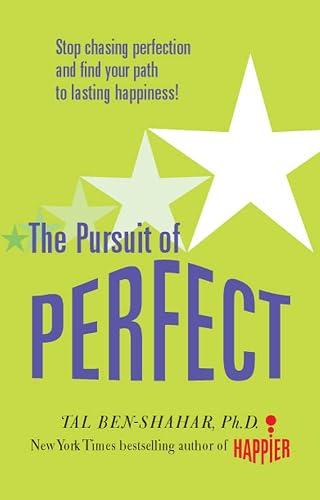
Book summary
Premium summary · Opens in the app · 30 min read
There is a quiet epidemic running through modern life. It does not announce itself with dramatic symptoms. It wears a suit to work, raises children, earns promotions, and posts carefully curated photographs online. It looks, from the outside, like ambition, discipline, and high standards. But on the inside, it feels like never being enough.
**Author:** Tal Ben-Shahar
**Estimated Reading Time:** 45 minutes
**What You'll Learn:** Why the relentless chase for perfection is making you miserable, how to distinguish between perfectionism and optimalism, and practical strategies for embracing imperfection in your work, relationships, and inner life.
**Who This Book Is For:** Anyone who has ever felt that their best was not good enough, who struggles with the fear of failure, who postpones happiness until everything is flawless, or who suspects that their high standards are costing them more than they realize.
There is a quiet epidemic running through modern life. It does not announce itself with dramatic symptoms. It wears a suit to work, raises children, earns promotions, and posts carefully curated photographs online. It looks, from the outside, like ambition, discipline, and high standards. But on the inside, it feels like never being enough. This epidemic is perfectionism, and Tal Ben-Shahar has spent decades studying its hidden costs. As a lecturer at Harvard University, where his courses on positive psychology became among the most popular in the institution's history, Ben-Shahar encountered thousands of high-achieving students who seemed to have everything going for them. They had gained admission to one of the world's most selective universities. They had impressive records, bright futures, and the admiration of their peers. Yet many of them were deeply unhappy. The pattern Ben-Shahar observed was not limited to Harvard students. He saw it in executives, artists, parents, and professionals across cultures and industries. People were achieving more than ever before, yet feeling less satisfied. They were setting goals, reaching them, and immediately moving the target. They were terrified of making mistakes, exhausted by the effort of appearing flawless, and isolated by the belief that everyone else had it figured out. The problem, Ben-Shahar came to understand, was not ambition. Ambition is healthy. The desire to improve, to grow, to contribute, to create: these are among the most fulfilling aspects of being human. The problem was the specific way in which people were pursuing their goals. They were pursuing perfection, and perfection is not a goal. It is a refusal to accept reality. Perfectionism, as Ben-Shahar defines it, is not simply having high standards. It is the rejection of anything that falls short of an idealized vision. The perfectionist rejects failure, rejects painful emotions, rejects the constraints of time and energy, rejects the flaws in themselves and others. In doing so, they reject reality itself. And reality, as it turns out, does not negotiate. The alternative Ben-Shahar proposes is not mediocrity. It is not lowering your standards or giving up on excellence. It is optimalism: the pursuit of the best possible life given the constraints of reality. The optimalist accepts that…
Continue reading in the MinuteRead app
Get the complete 30-minute summary of The Pursuit of Perfect
Get the complete summary in the appPerfectionism is the rejection of reality; optimalism is the acceptance of it.
Failure is feedback, not a verdict on your worth. Learn to fail or fail to learn.
Allow painful emotions to flow through you. Suppressing them makes them stronger and blocks joy.
Success will not bring lasting happiness. Appreciate what you have now.
You cannot have it all. Focus fully on one thing at a time.
Praise effort, not intelligence. Cultivate a growth mindset.
"The Pursuit of Perfect" is a strong fit if you want practical ideas around psychology, self help, personal development, especially themes like perfectionism is the rejection of reality; optimalism is the acceptance of it; failure is feedback, not a verdict on your worth. learn to fail or fail to learn. The MinuteRead summary distills these concepts into a focused read, whether you're deciding whether to buy the book or applying its lessons at work.
Motivated to help readers with the key difference between the Perfectionist and the Optimalist is that the former essentially rejects, Tal Ben-Shahar wrote “The Pursuit of Perfect” to package those ideas for a fast, focused read. In “The Pursuit of Perfect”, Tal Ben-Shahar focuses on the key difference between the Perfectionist and the Optimalist is that the former essentially rejects. Through “The Pursuit of Perfect”, Tal Ben-Shahar distills the core ideas on psychology into lessons readers can…
View all summaries by Tal Ben-ShaharContinue Reading
Access the complete 30-minute summary and thousands more nonfiction books in the MinuteRead app.

Continue reading the complete summary in the MinuteRead app.