MinuteRead
30 min
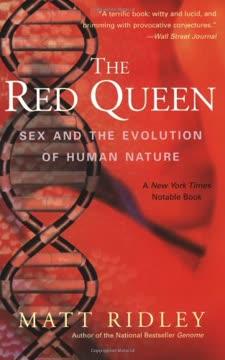
Book summary
by Matt Ridley
Premium summary · Opens in the app · 30 min read
Imagine a creature that reproduces without a mate. Every individual produces offspring. Every offspring carries the mother's exact genes. The population grows twice as fast as any sexual species. In a single generation, asexual reproduction should outcompete sex entirely. By every measure of efficiency, sex makes no sense.
**Sex and the Evolution of Human Nature**
By Matt Ridley
**Estimated Reading Time:** 3 hours
Why sex exists at all, when asexual reproduction is twice as efficient. How parasites drive the entire evolutionary dance of life. Why peacocks have tails that nearly kill them. What human mating strategies reveal about our deepest nature. How sexual selection shaped the human mind. Why beauty standards are not arbitrary cultural inventions but signals of biological fitness. And why we must keep running just to stay in place.
This book is for anyone who has wondered why men and women approach sex and relationships so differently. For readers curious about the evolutionary roots of human behavior. For those who want to understand why intelligence, art, and humor might be the human equivalent of a peacock's tail. And for anyone willing to confront the uncomfortable truth that much of what we call human nature was shaped by the relentless logic of reproduction.
Imagine a creature that reproduces without a mate. Every individual produces offspring. Every offspring carries the mother's exact genes. The population grows twice as fast as any sexual species. In a single generation, asexual reproduction should outcompete sex entirely. By every measure of efficiency, sex makes no sense. Yet here we are. Nearly every complex organism on Earth reproduces sexually. Birds do it. Bees do it. Flowers do it. Humans certainly do it. The question is why. Charles Darwin himself found sex puzzling. Natural selection favors traits that help organisms survive and reproduce. But sex seems to undermine both goals. Finding a mate costs time and energy. Mating exposes animals to predators and disease. Sexual reproduction passes only half an organism's genes to each offspring. An asexual female passes all of them. By the cold logic of natural selection, sex should have vanished long ago. Matt Ridley's answer to this puzzle gives the book its title. The Red Queen hypothesis, borrowed from evolutionary biologist Leigh Van Valen, takes its name from Lewis Carroll's *Through the Looking-Glass*. The Red Queen tells Alice, "Now, here, you see, it takes all the running you can do, to keep in the same place." This, Ridley argues, is the fundamental reason sex exists. Sex is about disease. It is a defense against parasites. Parasites evolve rapidly. A bacterium can go through hundreds of thousands of generations in the time it takes a human to produce one. If hosts reproduced asexually, producing identical copies of themselves, parasites would quickly evolve to exploit their defenses. A parasite that cracked the genetic code of one host would crack the code of all its descendants. The entire lineage would be doomed. Sex shuffles the genetic deck every generation. Each offspring is a…
Continue reading in the MinuteRead app
Get the complete 30-minute summary of The Red Queen
Get the complete summary in the appSex exists primarily to defend against parasites by creating genetically unique offspring every generation.
The Red Queen principle means you must keep adapting just to stay in the same place, because competitors and enemies are
Sexual selection produces extravagant traits like the peacock's tail because reproductive success matters more than surv
Costly displays are honest signals. Only healthy, high-quality individuals can afford them.
Human intelligence likely evolved through social and sexual selection, not just for survival needs.
Beauty standards reflect honest signals of health and fertility. They are not arbitrary cultural inventions.
"The Red Queen" is a strong fit if you want practical ideas around science, biology, evolution, especially themes like sex exists primarily to defend against parasites by creating genetically unique offspring every generation; the red queen principle means you must keep adapting just to stay in the same place, because competitors and enemies are. The MinuteRead summary distills these concepts into a focused read, whether you're deciding whether to buy the book or applying its lessons at work.
Matthew White Ridley, 5th Viscount Ridley is an English science writer, businessman, and aristocrat born in 1958. Educated at Eton and Oxford, he earned a doctorate in zoology before pursuing journalism. Ridley served as science editor for The Economist from 1984 to 1987, later becoming its Washington correspondent and American editor. Known for his popular science writing, Ridley has authored several books on genetics, evolution, and human nature. His work often explores the intersection of bio…
View all summaries by Matt RidleyContinue Reading
Access the complete 30-minute summary and thousands more nonfiction books in the MinuteRead app.

Continue reading the complete summary in the MinuteRead app.