MinuteRead
30 min
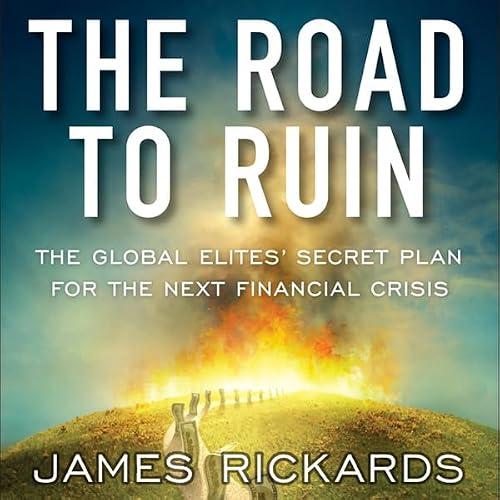
In the autumn of 2008, the world's financial system came within hours of complete collapse. Banks stopped lending to one another. Money market funds broke the buck. Major financial institutions vanished overnight. Only unprecedented government intervention prevented a global depression. Yet in the years since, the official narrative has been one of recovery, resilience, and reform. The system was fixed. The safeguards were strengthened. The lessons were learned.
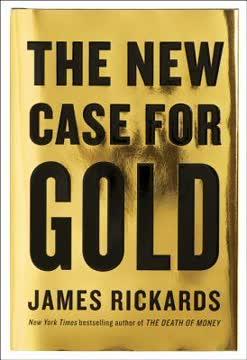
**Author:** James Rickards
**Estimated Reading Time:** 45 minutes
**What You'll Learn:** Why the global financial system is more fragile than most people realize, how complexity theory explains the inevitability of crises, why central banks are out of ammunition, and how to position your wealth for the turbulent period ahead.
**Who This Book Is For:** Investors who want to protect their assets, readers concerned about government overreach and financial surveillance, anyone curious about the hidden forces shaping the international monetary system, and those who sense that the next crisis will be different from the last one.
In the autumn of 2008, the world's financial system came within hours of complete collapse. Banks stopped lending to one another. Money market funds broke the buck. Major financial institutions vanished overnight. Only unprecedented government intervention prevented a global depression. Yet in the years since, the official narrative has been one of recovery, resilience, and reform. The system was fixed. The safeguards were strengthened. The lessons were learned. James Rickards does not believe any of that. His argument is stark and uncomfortable. The interventions that saved the system in 2008 did not eliminate risk. They concentrated it. The reforms that were supposed to make finance safer actually made it more interconnected and more fragile. The central banks that rode to the rescue now find themselves exhausted, their balance sheets bloated, their policy tools depleted. The next crisis, when it comes, will not be a rerun of the last one. It will be larger, faster, and far more difficult to contain. This is not a book written for people who want reassurance. It is a book written for people who want to understand how systems actually fail. Rickards brings an unusual set of credentials to this argument. He is a lawyer, an economist, and a former advisor to the U.S. intelligence community. He worked on the rescue of Long-Term Capital Management in 1998, the hedge fund whose collapse nearly triggered a global crisis a decade before the one everyone remembers. He has spent years studying complexity theory, the branch of science that examines how large systems behave when they are pushed far from equilibrium. And he has concluded that most economists, most policymakers, and most investors are operating with a dangerously incomplete model of how the financial world actually works. The conventional view assumes that markets are efficient, that risk can be measured, and that crises are exceptional events caused by identifiable errors. Rickards argues the opposite. Financial markets are complex systems, not equilibrium systems. They exhibit feedback loops, tipping points, and cascading failures. They do not produce normal distributions of outcomes. They produce power laws, where small events are common and catastrophic events are rare…
Continue reading in the MinuteRead app
Get the complete 30-minute summary of The Road to Ruin
Get the complete summary in the appThe global financial system is a complex system, and complex systems inevitably collapse.
The system is more fragile now than it was before the 2008 crisis.
Central banks have exhausted their traditional tools for fighting crises.
The dollar's dominance as the global reserve currency is ending.
Gold is the ultimate store of value because it is no one's liability.
Governments are expanding their control through surveillance and financial regulation.
"The Road to Ruin" is a strong fit if you want practical ideas around economics, finance, money, especially themes like the global financial system is a complex system, and complex systems inevitably collapse; the system is more fragile now than it was before the 2008 crisis. The MinuteRead summary distills these concepts into a focused read, whether you're deciding whether to buy the book or applying its lessons at work.
Motivated to turn hard-won expertise into something readers can use every day, James Rickards wrote “The Road to Ruin” to distill the ideas behind the work into clear, actionable lessons. Through “The Road to Ruin”, James Rickards distills the core ideas on economics into lessons readers can absorb in a single short sitting. Readers turn to this work when they want James Rickards's perspective on the subject without working through the entire original volume. The book is structured so each chapt…
View all summaries by James RickardsContinue Reading
Access the complete 30-minute summary and thousands more nonfiction books in the MinuteRead app.

Continue reading the complete summary in the MinuteRead app.