MinuteRead
30 min
Book summary
Premium summary · Opens in the app · 30 min read
Imagine you are standing in a dark forest at night. A twig snaps behind you. Your heart pounds. Your muscles tense. Your mind floods with images of predators, of danger, of all the terrible things that could be lurking in the shadows. You do not stop to calculate probabilities. You do not consult statistics about wildlife attacks. You simply feel fear, and that fear prepares you to run or fight.
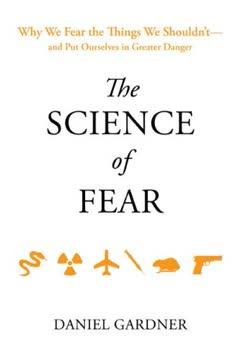
**Author:** Daniel Gardner
**Estimated Reading Time:** 45 minutes
**What You'll Learn:**
- Why your brain systematically distorts your perception of risk - How the media and marketers exploit your deepest fears for profit - Why you are safer than ever yet more anxious than ever - The hidden mental shortcuts that shape your judgments about danger - Practical tools for assessing risk with clarity instead of panic
**Who This Book Is For:**
This book is for anyone who has ever felt a knot of anxiety after watching the evening news, hesitated to let their children walk to school alone, or wondered why they fear flying more than driving. It is for people who suspect their fears may not match reality but cannot quite explain why. It is for those who want to understand the machinery of fear itself, not just its symptoms, and who are ready to reclaim their judgment from the forces that profit from their anxiety.
Imagine you are standing in a dark forest at night. A twig snaps behind you. Your heart pounds. Your muscles tense. Your mind floods with images of predators, of danger, of all the terrible things that could be lurking in the shadows. You do not stop to calculate probabilities. You do not consult statistics about wildlife attacks. You simply feel fear, and that fear prepares you to run or fight. Now imagine you are sitting in your living room, watching a news report about a terrorist attack in a city thousands of miles away. The images are vivid. The anchors speak in grave tones. Experts warn that another attack could happen anywhere, at any time. Your heart pounds. Your muscles tense. Your mind floods with images of danger. You feel the same fear you felt in the forest, even though the actual threat to you is vanishingly small. This is the central puzzle of modern life. We have built a world that is safer, healthier, and more secure than anything our ancestors could have imagined. And yet we are more afraid than ever. We worry about chemicals in our food, predators on the internet, and dangers lurking around every corner. We buy alarm systems, avoid public spaces, and demand that politicians protect us from threats that, statistically speaking, are almost nonexistent. Why does this happen? Why do we fear things that are unlikely to harm us while ignoring things that kill millions of people every year? Why do we worry about shark attacks while driving without a seatbelt? Why do we panic about terrorism while smoking cigarettes? The answer, as Daniel Gardner explains in this remarkable book, lies in the way our brains are built. We are not rational calculating machines. We…
Continue reading in the MinuteRead app
Get the complete 30-minute summary of The Science of Fear
Get the complete summary in the appYour brain has two systems for assessing risk: fast, emotional Gut and slow, analytical Head. Gut is usually in charge.
The Example Rule leads you to overestimate risks that are vivid and memorable, even when they are rare.
The Good-Bad Rule leads you to fear things that feel bad and trust things that feel good, regardless of evidence.
The media focuses on rare and dramatic events because they attract attention, not because they are important.
You are safer than ever, yet more anxious than ever, because your Stone Age brain struggles with modern risks.
Confirmation bias makes you seek out information that supports your beliefs and ignore information that contradicts them
"The Science of Fear" is a strong fit if you want practical ideas around psychology, science, politics, especially themes like your brain has two systems for assessing risk: fast, emotional gut and slow, analytical head. gut is usually in charge; the example rule leads you to overestimate risks that are vivid and memorable, even when they are rare. The MinuteRead summary distills these concepts into a focused read, whether you're deciding whether to buy the book or applying its lessons at work.
Daniel Gardner is a Canadian journalist, author, and lecturer known for his work on risk perception and decision-making. His book "The Science of Fear" gained widespread acclaim for its exploration of how humans assess and respond to risks in modern society. Gardner's writing style is praised for being accessible and engaging, making complex psychological concepts understandable to a general audience. He has written for various publications and has been featured as a speaker and commentator on r…
View all summaries by Daniel GardnerContinue Reading
Access the complete 30-minute summary and thousands more nonfiction books in the MinuteRead app.

Continue reading the complete summary in the MinuteRead app.