MinuteRead
30 min
Book summary
Premium summary · Opens in the app · 30 min read
The grocery store is the most familiar place in modern life. You know its aisles, its lighting, its particular smell of produce mist and floor wax. You navigate it on autopilot, reaching for the same products week after week, rarely stopping to consider the extraordinary machinery that made this mundane experience possible.
**Author:** Benjamin Lorr **Estimated Reading Time:** 45 minutes
**What You'll Learn:**
The hidden systems that put food on your shelves, the human cost behind everyday products, and why the grocery store reveals more about modern society than almost any other institution.
**Who This Book Is For:**
Anyone who has ever walked through a supermarket and wondered how it all works, why certain products appear while others vanish, and what actually happens before food reaches the cart.
The grocery store is the most familiar place in modern life. You know its aisles, its lighting, its particular smell of produce mist and floor wax. You navigate it on autopilot, reaching for the same products week after week, rarely stopping to consider the extraordinary machinery that made this mundane experience possible. Benjamin Lorr spent five years pulling back the curtain on that machinery. What he found was not a simple story of supply chains and logistics, but a sprawling, often troubling portrait of how modern commerce actually functions. The grocery store, he discovered, is not merely a place to buy food. It is a mirror reflecting our deepest contradictions: our desire for cheap abundance and our discomfort with what cheap abundance requires, our hunger for authenticity and our willingness to accept its simulacrum, our belief that we are making informed choices and the reality that those choices are carefully engineered. The journey begins with a simple question: how does a shrimp from a Thai farm end up on a plate in Omaha for less than the price of a candy bar? Answering that question requires traveling to the fishing boats of Southeast Asia, where men work under conditions that most readers would find unimaginable. It requires understanding the trucking industry, where deregulation transformed a stable middle-class career into a trap of debt and exhaustion. It requires examining the audit systems designed to reassure consumers that everything is ethical, and discovering how those systems often function as elaborate theater. This is not a book that tells you what to buy or where to shop. It does not offer a simple ethical framework for consumption. Instead, it does something more valuable: it shows you what you are actually participating in every time you enter a grocery store. It reveals the invisible architecture of modern food retail, the compromises and contradictions embedded in every shelf, and the remarkable cast of characters who built this system and now struggle to survive within it. The story of groceries is the story of modern capitalism itself. It is a story of innovation and exploitation, of convenience and its hidden costs, of individual dreams and systemic forces. It is a story that most of us experience daily without ever truly…
Continue reading in the MinuteRead app
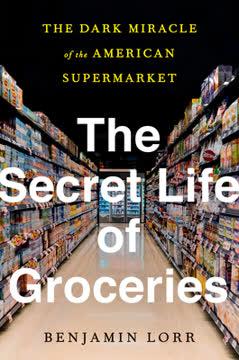
Get the complete 30-minute summary of The Secret Life of Groceries
Get the complete summary in the appThe grocery store is a mirror reflecting our society's values, desires, and contradictions.
The cheap food we enjoy often depends on labor exploitation, including modern slavery on fishing boats and debt bondage
The supply chain is designed to obscure its own workings, making traceability nearly impossible.
Audits and certifications often function as theater, creating the appearance of oversight without the reality.
Food choices are identity choices, signaling values, sophistication, and social position.
The modern supermarket evolved through specific innovations, including self-service and scale.
"The Secret Life of Groceries" is a strong fit if you want practical ideas around food, business, history, especially themes like the grocery store is a mirror reflecting our society's values, desires, and contradictions; the cheap food we enjoy often depends on labor exploitation, including modern slavery on fishing boats and debt bondage. The MinuteRead summary distills these concepts into a focused read, whether you're deciding whether to buy the book or applying its lessons at work.
Benjamin Lorr is an investigative journalist and author known for his immersive reporting style. For this book, he spent five years researching the grocery industry, embedding himself in various roles to gain firsthand experience. Lorr worked at Whole Foods, rode with truckers, and traveled to Thailand to investigate labor practices in the shrimp industry. His writing combines personal anecdotes with broader industry insights, often using a creative and descriptive prose style. Lorr's previous w…
View all summaries by Benjamin LorrContinue Reading
Access the complete 30-minute summary and thousands more nonfiction books in the MinuteRead app.

Continue reading the complete summary in the MinuteRead app.