MinuteRead
30 min
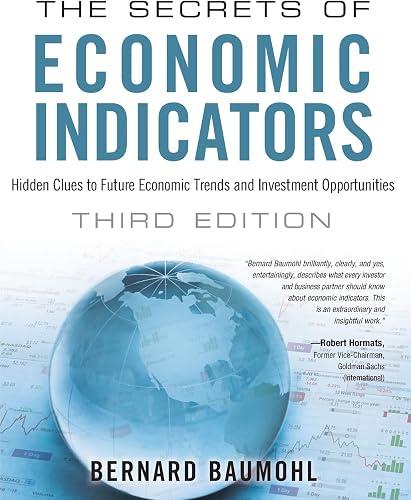
Book summary
by Bernard Baumohl
Premium summary · Opens in the app · 30 min read
Every month, a quiet ritual takes place in Washington, D.C. that sends ripples through financial markets around the world. In a secure room with no outside communication, journalists gather to receive economic data that will be released to the public at a precise moment. They are locked in, their phones confiscated, their internet connections severed. At exactly 8:30 a.m., the doors open, and within seconds, billions of dollars in trades are executed based on what those numbers reveal.
**Author:** Bernard Baumohl
**Estimated Reading Time:** 45 minutes
**What You'll Learn:**
- How to read and interpret the most important economic indicators that move financial markets - Why employment reports, inflation data, and housing numbers matter for your portfolio - How the Federal Reserve shapes economic conditions and what its signals mean - How to spot early warnings of recessions and recoveries - How to apply economic data to make better investment and business decisions
**Who This Book Is For:**
This book is for investors, business professionals, students, and anyone who wants to understand the economic forces that shape financial markets and daily life. If you have ever wondered why a single government report can send stock markets soaring or plunging, or why economists obsess over obscure statistics, this book will give you the tools to decode the numbers and see the economy clearly.
Every month, a quiet ritual takes place in Washington, D.C. that sends ripples through financial markets around the world. In a secure room with no outside communication, journalists gather to receive economic data that will be released to the public at a precise moment. They are locked in, their phones confiscated, their internet connections severed. At exactly 8:30 a.m., the doors open, and within seconds, billions of dollars in trades are executed based on what those numbers reveal. This is the world of economic indicators, and it is far more important to your financial life than most people realize. The economy is not an abstraction. It is the sum of millions of daily decisions: a family buying a home, a factory ordering raw materials, a retailer hiring seasonal workers, a central bank adjusting interest rates. Economic indicators are the measurements that capture these decisions and translate them into numbers that reveal where the economy has been, where it is now, and where it is heading. Bernard Baumohl has spent decades studying these indicators and teaching others how to interpret them. His central insight is both simple and profound: you do not need a PhD in economics to understand what these numbers mean. You need to know which indicators matter, how to read them, and what they signal about the future. The problem most people face is not a lack of information. We are drowning in economic data. Every day brings new reports on employment, inflation, manufacturing, housing, consumer confidence, and dozens of other measures. The challenge is knowing what to pay attention to and what to ignore. A single jobs report can matter more than a dozen lesser indicators combined. A shift in the yield curve can signal a recession months before it arrives. A change in the Federal Reserve's language can move markets more than…
Continue reading in the MinuteRead app
Get the complete 30-minute summary of The Secrets of Economic Indicators
Get the complete summary in the appThe employment report is the most important monthly economic indicator. Look beyond the headline to hours worked, wages,
Markets react to surprises, not to the numbers themselves. Know the consensus expectation before interpreting data.
Real figures are adjusted for inflation. Nominal figures are not. Real figures show true economic activity.
The ISM Manufacturing Survey is a leading indicator. The new orders component is the most forward-looking.
Housing is the most reliable leading indicator of economic activity. Housing starts and building permits lead the broade
The Federal Reserve's language matters. Changes in the FOMC statement signal shifts in policy.
"The Secrets of Economic Indicators" is a strong fit if you want practical ideas around economics, finance, business, especially themes like the employment report is the most important monthly economic indicator. look beyond the headline to hours worked, wages,; markets react to surprises, not to the numbers themselves. know the consensus expectation before interpreting data. The MinuteRead summary distills these concepts into a focused read, whether you're deciding whether to buy the book or applying its lessons at work.
Motivated to help readers with the daily flow of high-frequency economic indicators is the stuff that makes financial markets move and that, Bernard Baumohl wrote “The Secrets of Economic Indicators” to package those ideas for a fast, focused read. In “The Secrets of Economic Indicators”, Bernard Baumohl focuses on the daily flow of high-frequency economic indicators is the stuff that makes financial markets move and that. Through “The Secrets of Economic Indicators”, Bernard Baumohl distills th…
Continue Reading
Access the complete 30-minute summary and thousands more nonfiction books in the MinuteRead app.

Continue reading the complete summary in the MinuteRead app.