MinuteRead
30 min
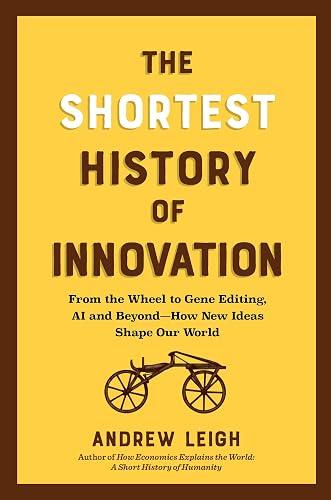
Book summary
by Andrew Leigh
Premium summary · Opens in the app · 30 min read
Imagine living your entire life within a few square miles. You grow your own food, sew your own clothes, build your own shelter, and treat your own illnesses. If the harvest fails, you starve. If raiders attack, you defend yourself. This was the human experience for roughly 290,000 of the 300,000 years our species has existed.
**Author:** Andrew Leigh
**Estimated Reading Time:** 52 minutes
**What You'll Learn:**
How humanity transformed from scattered bands of hunter-gatherers into a globally connected civilization. Why specialization, trade, and innovation have lifted billions out of poverty. Where markets fail and governments step in. What economic history reveals about our digital and climate-challenged future.
**Who This Book Is For:**
Anyone who wants to understand the economic forces that shaped our world without wading through dense academic textbooks. Readers curious about why some societies prosper while others stagnate, how ideas spread, and what the past teaches us about navigating tomorrow.
Imagine living your entire life within a few square miles. You grow your own food, sew your own clothes, build your own shelter, and treat your own illnesses. If the harvest fails, you starve. If raiders attack, you defend yourself. This was the human experience for roughly 290,000 of the 300,000 years our species has existed. Today, you probably do none of these things. You specialize in one narrow skill, trade your labor for money, and exchange that money for goods and services produced by strangers on the other side of the planet. Your phone contains components from dozens of countries. Your breakfast includes ingredients from multiple continents. You trust complete strangers with your health, your savings, and your safety every single day. How did this transformation happen? What forces allowed humanity to escape the grinding poverty that defined most of our existence? Why did some societies leap ahead while others fell behind? And what does this history tell us about the challenges we face today? These are the questions Andrew Leigh tackles in The Shortest History of Economics. But this is not a dry chronicle of dates and statistics. It is the story of how ordinary people, responding to incentives and opportunities, built the world we inhabit. It is a story of farmers and merchants, inventors and investors, politicians and philosophers. It is a story of triumph and tragedy, of brilliant innovations and catastrophic failures. The central insight running through this history is remarkably simple: humans prosper when we specialize and trade. A farmer who grows only wheat can produce far more wheat than a farmer who also makes tools, weaves cloth, and builds houses. But specialization only works if the wheat farmer can trade surplus wheat for tools, cloth, and houses. When trade flourishes, so does prosperity. When trade collapses, so does civilization. This insight explains why the agricultural revolution mattered so much. It explains why port cities became centers of wealth. It explains why the Industrial Revolution transformed living standards after millennia of stagnation. It explains why China's shift toward markets in 1978 lifted hundreds of millions out of poverty.…
Continue reading in the MinuteRead app
Get the complete 30-minute summary of The Shortest History of Economics
Get the complete summary in the appSpecialization and trade are the foundation of prosperity. When people focus on what they do best and exchange the resul
Incentives matter. People respond to rewards and penalties. Design systems that align individual incentives with social
Ideas are powerful. Unlike physical goods, ideas can be used by everyone simultaneously. The spread of knowledge drives
Institutions matter. Property rights, courts, and stable government are essential for economic development.
Markets can fail. Externalities, monopolies, and information asymmetry require government intervention.
Government can also fail. Bureaucracy and political incentives can produce poor outcomes. Be pragmatic, not ideological.
"The Shortest History of Economics" is a strong fit if you want practical ideas around economics, history, business, especially themes like specialization and trade are the foundation of prosperity. when people focus on what they do best and exchange the resul; incentives matter. people respond to rewards and penalties. design systems that align individual incentives with social. The MinuteRead summary distills these concepts into a focused read, whether you're deciding whether to buy the book or applying its lessons at work.
Motivated to help readers with where prehistoric people had to do everything, Andrew Leigh wrote “The Shortest History of Economics” to package those ideas for a fast, focused read. In “The Shortest History of Economics”, Andrew Leigh focuses on where prehistoric people had to do everything. Through “The Shortest History of Economics”, Andrew Leigh distills the core ideas on economics into lessons readers can absorb in a single short sitting. Readers turn to this work when they want Andrew Leigh…
View all summaries by Andrew LeighContinue Reading
Access the complete 30-minute summary and thousands more nonfiction books in the MinuteRead app.

Continue reading the complete summary in the MinuteRead app.