MinuteRead
30 min
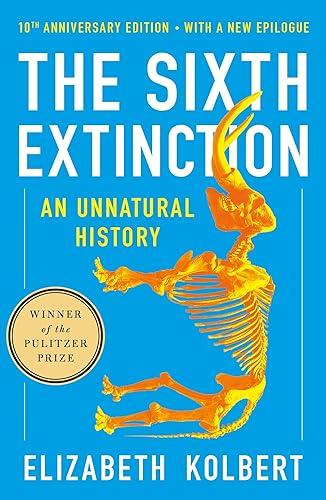
The Sixth Extinction summarizes how human activity has contributed to the mass extinction of species and points out ways to mitigate our biggest environmental problems.
The Sixth Extinction summarizes how human activity has contributed to the mass extinction of species and points out ways to mitigate our biggest environmental problems.
Where do I even start? Human activity, especially during the industrial era, has affected other species in so many ways, that it is challenging to wrap it all up in just a few paragraphs.
One way in which we are causing mass extinction is the profound reshaping of natural habitats. An example of this is deforestation. By cutting down vast areas of woodlands, we are fragmenting the living habitat of a multitude of animals.
Along with their habitats, populations of those animals become fragmented as well. This leads to weakening species’ capacity for breeding – hence, putting them at a greater risk of extinction.
Further, there is global warming that is largely caused by human activity. Through emitting enormous amounts of greenhouse gases into the atmosphere, we are raising the average global temperature. These rapid climate changes affect, in the first place, the survival of those species which haven’t developed much tolerance to aberrancies in their living conditions.
Finally, another way in which humans contribute to the mass extinction – and which may not be so obvious – is our transportation. Why? By traveling extensively across continents we are unintentionally mixing species between different habitats where they don’t belong. Over the years, this is causing the effect that Kolbert calls “second Pangea.”
This means that the migration barriers that are essential to maintaining biodiversity start to disappear. As a consequence, we are observing the unification of biosphere across the globe – which means fewer species can survive.
It is fairly easy to observe the human impact threatening Earth’s biodiversity today. But, as scientists are now finding out, our profound impact on the planet hasn’t started with the industrial revolution. In fact, the very nature of homo sapiens primes us to be a threat to the ecological balance. That’s because it is in our human nature to be restless, creative, solve problems, cooperate and take risks. All these evolutionary traits led us to transcend the natural limitations that no other species before us had. Unfortunately, they also turned out to be destructive to the world around us. For example, early humans were really fond of hunting. They engaged in it so aggressively, that it threatened the survival of some big animal species in the prehistoric era. As Kolbert says, due to the use of increasingly elaborate tools, early humans became dangerous to big mammals that otherwise didn’t have a natural predator – such as rhinoceros or mammoth. Due to their competitive nature, homo sapiens also had a hand in erasing their relative the Neanderthal. According to…
Continue reading in the MinuteRead app
Get the complete 5-minute summary of The Sixth Extinction
Get the complete summary in the appHuman activity contributes to the sixth mass extinction in several observable ways.
As soon as homo sapiens emerged, it started causing many species to go extinct.
There are many ways in which we can mitigate the sixth mass extinction – and that’s what we should be doing.
"The Sixth Extinction" is a strong fit if you want practical ideas around culture, environment, future, especially themes like human activity contributes to the sixth mass extinction in several observable ways; as soon as homo sapiens emerged, it started causing many species to go extinct. The MinuteRead summary distills these concepts into a focused read, whether you're deciding whether to buy the book or applying its lessons at work.
Elizabeth Kolbert is a staff writer at The New Yorker. She is the author of Field Notes from a Catastrophe: Man, Nature, and Climate Change. She lives in Williamstown, Massachusetts, with her husband and children.
View all summaries by Elizabeth KolbertContinue Reading
Access the complete 5-minute summary and thousands more nonfiction books in the MinuteRead app.

Continue reading the complete summary in the MinuteRead app.