MinuteRead
30 min
Book summary
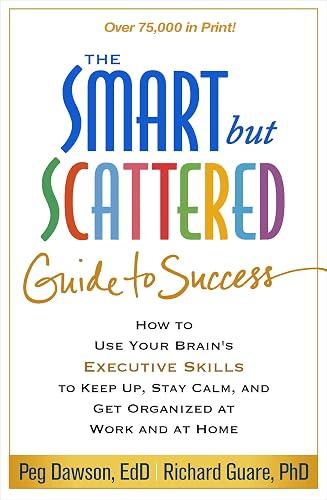
by Peg Dawson
Premium summary · Opens in the app · 30 min read
You are smart. You are capable. You have skills, talents, and knowledge that have carried you through school, into a career, and through countless challenges. Yet there are moments when you feel like you are failing at things that should be simple. You miss deadlines despite caring deeply about your work. You lose your keys, forget appointments, or find yourself paralyzed when facing a task you know how to do. You snap at someone you love and regret it instantly. You start projects with enthusia
**Author:** Peg Dawson, Ed.D.
**Estimated Reading Time:** 45 minutes
**What You'll Learn:**
- Why some tasks feel effortless while others feel impossible - How to identify your unique pattern of executive skill strengths and weaknesses - Practical strategies to work around weak skills and leverage strong ones - How to improve executive skills through targeted practice at any age - Ways to apply these insights to your career, home life, and relationships
**Who This Book Is For:**
This book is for anyone who has ever wondered why they struggle to stay organized, meet deadlines, control impulses, or follow through on goals despite being intelligent and capable. It is for professionals who feel overwhelmed by the demands of modern work, parents juggling multiple responsibilities, partners frustrated by recurring conflicts, and anyone who suspects their brain works differently than they wish it would.
You are smart. You are capable. You have skills, talents, and knowledge that have carried you through school, into a career, and through countless challenges. Yet there are moments when you feel like you are failing at things that should be simple. You miss deadlines despite caring deeply about your work. You lose your keys, forget appointments, or find yourself paralyzed when facing a task you know how to do. You snap at someone you love and regret it instantly. You start projects with enthusiasm and abandon them weeks later, not because you lost interest, but because you somehow lost the thread. If any of this sounds familiar, you are not broken. You are not lazy. You are not undisciplined. You are simply experiencing the reality of how your brain manages the complex demands of daily life. For decades, psychologists and educators have studied a set of cognitive abilities called executive skills. These are the brain's management functions, the mental processes that allow you to plan, organize, remember details, manage time, regulate emotions, and persist toward goals. They are housed primarily in the prefrontal cortex, the part of the brain just behind your forehead that serves as your personal command center. The term "executive" is deliberate. Think of what executives do in a company. They set goals, allocate resources, monitor progress, solve problems, and make adjustments when things go off track. They do not do all the work themselves, but they coordinate everything so the work gets done. Your brain's executive skills perform the same function for your life. They are the managers that make sure tasks get started, attention stays focused, emotions stay regulated, and goals stay in sight. Here is the crucial insight that most people miss: executive skills are not evenly distributed. Every person has a unique profile of strengths and weaknesses across these skills. You…
Continue reading in the MinuteRead app
Get the complete 30-minute summary of The Smart but Scattered Guide to Success
Get the complete summary in the appExecutive skills are the brain's management functions, and everyone has a unique profile of strengths and weaknesses acr
Executive skill weaknesses are not character flaws. They are cognitive patterns that can be managed.
The first strategy for managing weaknesses is environmental modification: change your environment, adjust tasks, or enli
The adult brain can change. Targeted practice can strengthen weak executive skills over time.
Start small. Five to ten minutes of daily practice is enough to begin.
Leverage your strengths to compensate for weaknesses. Use what you do well to navigate what you find hard.
"The Smart but Scattered Guide to Success" is a strong fit if you want practical ideas around adhd, self help, psychology, especially themes like executive skills are the brain's management functions, and everyone has a unique profile of strengths and weaknesses acr; executive skill weaknesses are not character flaws. they are cognitive patterns that can be managed. The MinuteRead summary distills these concepts into a focused read, whether you're deciding whether to buy the book or applying its lessons at work.
Motivated to help readers with wrapped inside the prefrontal cortex (the part of the brain just behind the forehead) is a set of skills, Peg Dawson wrote “The Smart but Scattered Guide to Success” to package those ideas for a fast, focused read. In “The Smart but Scattered Guide to Success”, Peg Dawson focuses on wrapped inside the prefrontal cortex (the part of the brain just behind the forehead) is a set of skills. Through “The Smart but Scattered Guide to Success”, Peg Dawson distills the cor…
Continue Reading
Access the complete 30-minute summary and thousands more nonfiction books in the MinuteRead app.

Continue reading the complete summary in the MinuteRead app.