MinuteRead
21 min
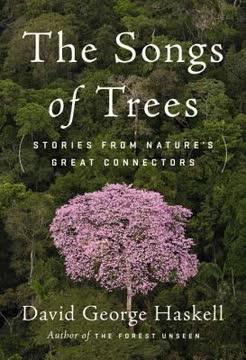
We are surrounded by songs we rarely hear. A tree on a city sidewalk, a towering ceibo in the Amazon, an ancient bristlecone pine on a windswept mountain, each is a nexus of relationship, a living intersection where the lives of fungi, bacteria, insects, birds, and humans converge. The problem is not that these songs are silent. The problem is that we have forgotten how to listen.
**Author:** David George Haskell **Estimated Reading Time:** 45 minutes
**What You'll Learn:** Trees are not solitary beings but living hubs in a vast, interconnected network. Through the stories of twelve individual trees around the world, you will discover how life is a conversation, a negotiation between cooperation and conflict. You will learn how trees communicate through underground fungal webs and airborne chemical signals, how urban forests purify air and bind communities, and how the evolutionary history encoded in ancient forests reveals the future of our changing planet. This book will change how you hear the natural world.
**Who This Book Is For:** Anyone who has ever paused beneath a tree and sensed there is more happening than meets the eye. Readers who want to understand ecology not as an abstract system but as a living, breathing community of relationships. Those seeking a deeper, more attentive way of being in the world.
We are surrounded by songs we rarely hear. A tree on a city sidewalk, a towering ceibo in the Amazon, an ancient bristlecone pine on a windswept mountain, each is a nexus of relationship, a living intersection where the lives of fungi, bacteria, insects, birds, and humans converge. The problem is not that these songs are silent. The problem is that we have forgotten how to listen. David George Haskell wrote this book to recover that capacity. He is a biologist who writes like a poet, and his method is deceptively simple. He visited twelve trees around the world, sat with them, observed them, and listened to the networks of life that pulse through and around them. What he found challenges the most basic assumptions of Western thought. We are taught to see trees as individuals, as discrete objects standing alone in a field or forest. This is a convenient illusion. A tree is not a single organism. It is a community, a process, a verb more than a noun. Its roots are fused with fungi that extend its reach through the soil. Its leaves host bacteria that shape the atmosphere. Its wood is home to insects that feed birds that disperse seeds. To remove a tree from its relationships is to misunderstand what a tree actually is. Why does this matter? Because the illusion of separation is not merely a scientific error. It is a cultural and spiritual wound. We treat forests as resources to be managed, trees as timber to be harvested, nature as something outside ourselves. But we are made of the same networks. The oxygen in our lungs passed through a leaf. The water in our cells cycled through roots. The bacteria in our gut share ancestry with those on bark. We are inside the…
Continue reading in the MinuteRead app
Get the complete 30-minute summary of The Songs of Trees
Get the complete summary in the appA tree is not an individual. It is a community, a node in a living network.
The wood wide web connects trees underground through fungi, enabling resource sharing and communication.
Trees send chemical warnings to each other about pests and diseases.
Cooperation and conflict both shape ecological networks. Neither alone defines nature.
Urban trees are real ecosystems. They clean air, reduce heat, and support life in cities.
Ancient forests preserve climate history. Their fossils teach us about resilience and extinction.
"The Songs of Trees" is a strong fit if you want practical ideas around nature, science, environment, especially themes like a tree is not an individual. it is a community, a node in a living network; the wood wide web connects trees underground through fungi, enabling resource sharing and communication. The MinuteRead summary distills these concepts into a focused read, whether you're deciding whether to buy the book or applying its lessons at work.
デイビッド・ジョージ・ハスケル は、詩的なアプローチで科学的な執筆を行うことで知られる、イギリス生まれのアメリカ人生物学者であり著者である。スワニー大学(The University of the South)の生物学教授として、ハスケルは学術的な専門知識と叙情的な散文の才能を融合させている。彼の作品はしばしば自然と人間社会の相互関係を探求し、生物学、生態学、哲学などのさまざまな分野からの知見を取り入れている。ハスケルの執筆スタイルは、科学的な厳密さと感動的な描写を融合させる能力によって特徴づけられ、複雑な生態学的概念を広い読者層にわかりやすく伝えている。彼の著書『The Songs of Trees』を含む作品は、その独自の自然界に対する視点で高い評価と賞を受けている。
View all summaries by David George HaskellContinue Reading
Access the complete 30-minute summary and thousands more nonfiction books in the MinuteRead app.

Continue reading the complete summary in the MinuteRead app.