MinuteRead
30 min
Book summary
by Christian Davenport
Premium summary · Opens in the app · 30 min read
For most of human history, the heavens belonged to gods and governments. Only superpowers could afford the staggering costs of escaping Earth's gravity. Only nations could marshal the resources, talent, and political will required to send humans beyond the atmosphere. The idea that private individuals might one day build rockets capable of reaching orbit seemed absurd, a fantasy confined to science fiction.
**Author:** Christian Davenport **Estimated Reading Time:** 45 minutes
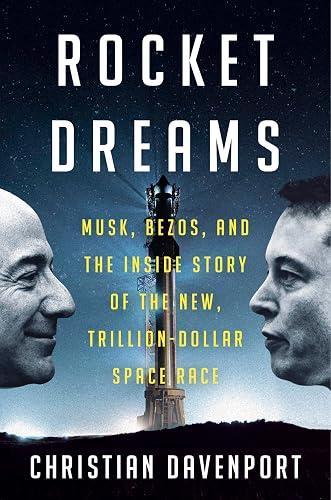
The inside story of how four billionaires ignited a new space race and transformed humanity's relationship with the cosmos. You'll discover the competing philosophies driving Elon Musk, Jeff Bezos, Richard Branson, and Paul Allen, understand the technological breakthroughs that made reusable rockets possible, and see how private enterprise reshaped an industry once dominated by governments alone.
This book is for anyone who has ever looked up at the night sky and wondered what it would take to get there. It's for entrepreneurs who want to understand how visionaries tackle seemingly impossible challenges. It's for students of innovation who want to see how disruption works in practice. And it's for readers who simply want to understand why rockets are suddenly landing upright on ships in the middle of the ocean.
For most of human history, the heavens belonged to gods and governments. Only superpowers could afford the staggering costs of escaping Earth's gravity. Only nations could marshal the resources, talent, and political will required to send humans beyond the atmosphere. The idea that private individuals might one day build rockets capable of reaching orbit seemed absurd, a fantasy confined to science fiction. Then everything changed. Between 2000 and 2015, a small group of extraordinarily wealthy men decided that space was no longer the exclusive domain of nation-states. They believed that private enterprise could do what governments had struggled to accomplish for decades: make spaceflight routine, affordable, and ultimately transformative for humanity's future. Elon Musk, the restless entrepreneur who made his fortune from PayPal, founded SpaceX with a singular obsession: making humans a multiplanetary species by colonizing Mars. Jeff Bezos, the architect of Amazon's global empire, quietly launched Blue Origin with a different vision: building the infrastructure that would allow millions of people to live and work in space. Richard Branson, the flamboyant British adventurer, saw space tourism as the ultimate customer experience. Paul Allen, the cerebral co-founder of Microsoft, dreamed of building the world's largest airplane to launch rockets from the sky. These men did not merely want to build better rockets. They wanted to fundamentally reshape humanity's relationship with space. They believed that the future of civilization depended on expanding beyond Earth, and they were willing to spend billions of their own dollars to make that happen. The challenges they faced were immense. Rockets are among the most complex machines ever created. They operate at the edge of physical possibility, where temperatures swing by hundreds of degrees in seconds, where materials are pushed to their breaking points, and where a single faulty valve or a misplaced decimal point can result in a spectacular explosion. The history of rocketry is littered with failures,…
Continue reading in the MinuteRead app
Get the complete 30-minute summary of The Space Barons
Get the complete summary in the appThe new space race is driven by individuals, not nations. Elon Musk, Jeff Bezos, Richard Branson, and Paul Allen investe
Reusability is the key to reducing launch costs. SpaceX and Blue Origin have demonstrated that rockets can be landed and
Failure is an essential part of innovation. The new space companies have embraced failure as a learning opportunity and
A clear long-term vision provides focus and motivation. Musk's Mars obsession has driven SpaceX's relentless pursuit of
There is more than one way to pursue ambitious goals. Musk's rapid iteration and Bezos's patient approach have both prod
Fixed-price contracts create better incentives than cost-plus contracts. The commercial approach to space has proven fas
"The Space Barons" is a strong fit if you want practical ideas around science, business, technology, especially themes like the new space race is driven by individuals, not nations. elon musk, jeff bezos, richard branson, and paul allen investe; reusability is the key to reducing launch costs. spacex and blue origin have demonstrated that rockets can be landed and. The MinuteRead summary distills these concepts into a focused read, whether you're deciding whether to buy the book or applying its lessons at work.
Motivated to help readers with "If achieving the impossible was the goal, Christian Davenport wrote “The Space Barons” to package those ideas for a fast, focused read. In “The Space Barons”, Christian Davenport focuses on "If achieving the impossible was the goal. Through “The Space Barons”, Christian Davenport distills the core ideas on science into lessons readers can absorb in a single short sitting. Readers turn to this work when they want Christian Davenport's perspective on the subject wit…
Continue Reading
Access the complete 30-minute summary and thousands more nonfiction books in the MinuteRead app.

Continue reading the complete summary in the MinuteRead app.