MinuteRead
30 min
Book summary
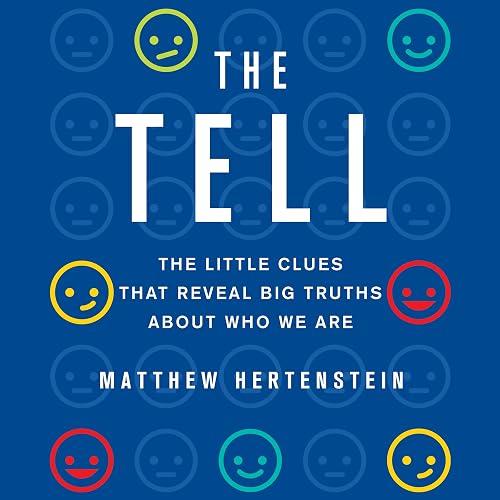
by Matthew Hertenstein
Premium summary · Opens in the app · 30 min read
We are all fortune tellers. Every day, without realizing it, you make predictions about the people you encounter. You decide whether a stranger seems trustworthy within seconds of meeting them. You form impressions about a coworker's competence before they have spoken a complete sentence. You sense whether a date is going well or poorly long before anyone says anything explicit. These predictions feel intuitive, almost automatic, but they are not random. They are based on tells: the subtle, ofte
**Author:** Matthew Hertenstein
**Estimated Reading Time:** 45 minutes
**What You'll Learn:**
- How fleeting behaviors and subtle physical cues reveal hidden truths about personality, intelligence, and future outcomes - Why first impressions carry surprising predictive power in contexts ranging from elections to corporate profits - How early childhood tells can forecast developmental trajectories, including autism and temperament - What science reveals about detecting deception, attraction, and attachment patterns - How to apply predictive humility while sharpening your observational skills
**Who This Book Is For:**
Anyone who has ever wondered what lies beneath the surface of human behavior. Whether you are a parent trying to understand your child, a professional navigating workplace dynamics, a leader seeking to communicate more effectively, or simply someone fascinated by the hidden language of nonverbal communication, this book will change how you observe the people around you.
We are all fortune tellers. Every day, without realizing it, you make predictions about the people you encounter. You decide whether a stranger seems trustworthy within seconds of meeting them. You form impressions about a coworker's competence before they have spoken a complete sentence. You sense whether a date is going well or poorly long before anyone says anything explicit. These predictions feel intuitive, almost automatic, but they are not random. They are based on tells: the subtle, often unconscious signals that leak from our bodies, faces, voices, and behaviors. Matthew Hertenstein, a psychology professor at DePauw University, has spent his career studying these tells and the remarkable predictive power they hold. What he has discovered challenges our assumptions about what we can know about others and how we come to know it. The signals we give off are not limited to obvious expressions like a smile or a frown. They extend to the way we walk, the shape of our faces, the pitch of our voices, the way we hold our bodies when we are uncomfortable. And these signals, it turns out, can predict outcomes that seem impossibly distant from the brief moments in which they appear. Consider a study that Hertenstein and his colleagues conducted. They showed participants photographs of CEOs and asked them to rate the faces on qualities like competence and dominance. The participants had never met these executives, knew nothing about their companies, and were making judgments based solely on a single image. Yet their ratings predicted the actual financial performance of the companies those CEOs led. A face, glimpsed for a moment, contained information about corporate profitability. This is the central insight of The Tell: the information we broadcast through our bodies and behaviors is far richer and more predictive than we typically assume. We are constantly transmitting data about who we are,…
Continue reading in the MinuteRead app
Get the complete 30-minute summary of The Tell
Get the complete summary in the appTells are observable behaviors and physical characteristics that reveal hidden information about personality, emotions,
Tells are probabilistic, not deterministic. They shift odds rather than guaranteeing outcomes.
Early tells in infancy, including reactions to novelty and social communication patterns, predict later developmental tr
Attachment patterns formed in infancy shape relationships throughout life, but they are tendencies, not destinies.
First impressions form within milliseconds and are influenced by both genuine signals and systematic biases.
Most people are no better than chance at detecting lies, but improvement is possible with training and practice.
"The Tell" is a strong fit if you want practical ideas around psychology, science, self help, especially themes like tells are observable behaviors and physical characteristics that reveal hidden information about personality, emotions,; tells are probabilistic, not deterministic. they shift odds rather than guaranteeing outcomes. The MinuteRead summary distills these concepts into a focused read, whether you're deciding whether to buy the book or applying its lessons at work.
Motivated to help readers with small clues, Matthew Hertenstein wrote “The Tell” to package those ideas for a fast, focused read. In “The Tell”, Matthew Hertenstein focuses on small clues. Through “The Tell”, Matthew Hertenstein distills the core ideas on psychology into lessons readers can absorb in a single short sitting. Readers turn to this work when they want Matthew Hertenstein's perspective on the subject without working through the entire original volume. Matthew Hertenstein wrote “The T…
Continue Reading
Access the complete 30-minute summary and thousands more nonfiction books in the MinuteRead app.

Continue reading the complete summary in the MinuteRead app.