MinuteRead
30 min
Book summary
Premium summary · Opens in the app · 30 min read
Every decision you make, every emotion you feel, and every relationship you build is shaped by an invisible force you rarely notice. That force is your relationship with time.
**Author:** Philip G. Zimbardo
**Estimated Reading Time:** 45 minutes
**What You'll Learn:** How your hidden attitudes toward time shape every decision you make, why some time perspectives lead to success while others lead to suffering, and how to rebuild your psychological clock for a richer, more balanced life.
**Who This Book Is For:** Anyone who has ever felt stuck in the past, overwhelmed by the present, or anxious about the future. This book is for people who want to understand why they make the choices they do and how to make better ones.
Every decision you make, every emotion you feel, and every relationship you build is shaped by an invisible force you rarely notice. That force is your relationship with time. You carry within you a psychological clock, a deeply ingrained way of perceiving the past, the present, and the future. This clock does not tick in seconds or minutes. It ticks in memories, impulses, hopes, and regrets. It determines whether you save for retirement or spend your paycheck the day it arrives. It decides whether you hold grudges or let go easily. It influences whether you take risks, play it safe, or feel paralyzed by forces you believe you cannot control. Philip Zimbardo, one of the most influential psychologists of the past half century, spent decades studying how ordinary people become capable of extraordinary good and extraordinary evil. His famous Stanford Prison Experiment revealed how situations can overwhelm character. But in the years that followed, Zimbardo became fascinated by a different kind of invisible force, one that operates not in prisons and institutions but inside every human mind. That force is time perspective. Time perspective is the process by which we automatically partition the flow of experience into mental categories: the remembered past, the experienced present, and the anticipated future. Some people live primarily in the past, replaying old memories and letting them color today. Others live in the present, seeking pleasure or feeling trapped by circumstance. Still others live in the future, always planning, always striving, always waiting for the next achievement. None of these orientations is inherently wrong. Each has strengths and weaknesses. The problem arises when one perspective dominates so completely that it blinds you to the others. A person who lives only for the future may achieve great success but never enjoy a single moment. A person who lives only in the present may experience great joy but leave behind a trail of broken commitments and unfulfilled potential. A person who lives only in the past may feel deeply connected to their roots but remain unable to move forward. Zimbardo's central insight is both simple and profound: the healthiest, most fulfilling lives are lived…
Continue reading in the MinuteRead app
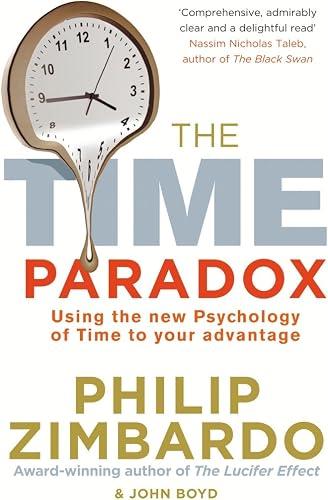
Get the complete 30-minute summary of The Time Paradox
Get the complete summary in the appYour time perspective shapes every decision you make, usually without your awareness.
There are six time perspectives: past-positive, past-negative, present-hedonistic, present-fatalistic, future, and trans
Each perspective has strengths and weaknesses. None is inherently good or bad.
The optimal profile combines high past-positive, moderately high future, and moderately high present-hedonistic orientat
Past-negative orientation is associated with depression and anxiety. It can be reduced through gratitude and reframing.
Present-fatalism is learned helplessness. It can be unlearned through small actions that demonstrate agency.
"The Time Paradox" is a strong fit if you want practical ideas around psychology, self help, science, especially themes like your time perspective shapes every decision you make, usually without your awareness; there are six time perspectives: past-positive, past-negative, present-hedonistic, present-fatalistic, future, and trans. The MinuteRead summary distills these concepts into a focused read, whether you're deciding whether to buy the book or applying its lessons at work.
Motivated to help readers with your attitudes toward time have a profound impact on your life and your world, Philip G. Zimbardo wrote “The Time Paradox” to package those ideas for a fast, focused read. In “The Time Paradox”, Philip G. Zimbardo focuses on your attitudes toward time have a profound impact on your life and your world. Through “The Time Paradox”, Philip G. Zimbardo distills the core ideas on psychology into lessons readers can absorb in a single short sitting. Readers turn to this …
View all summaries by Philip G. ZimbardoContinue Reading
Access the complete 30-minute summary and thousands more nonfiction books in the MinuteRead app.

Continue reading the complete summary in the MinuteRead app.