MinuteRead
30 min
Book summary
by Jack Schafer
Premium summary · Opens in the app · 30 min read
Every day, people lie to you. Some lies are small and harmless. Others carry real consequences. The colleague who says the project is on schedule when it is not. The teenager who claims the party was supervised when it was not. The salesperson who insists the car was never in an accident when it was. The contractor who swears the work will be done by Friday when he knows it will not.
**Author:** Jack Schafer
**Estimated Reading Time:** 45 minutes
**What You'll Learn:**
- How to extract truthful information from anyone without raising suspicion - The psychological principles that make people want to reveal what they know - Practical techniques used by FBI behavioral analysts to detect deception - How to protect yourself from others using these same methods on you - Ways to build genuine rapport that opens doors to honest communication
**Who This Book Is For:**
Anyone who needs to know the truth. Parents who want honest answers from their teenagers. Managers who need accurate information from employees. Salespeople who want to understand what customers really think. Negotiators who need to uncover hidden positions. And anyone who suspects they might be the target of information gathering themselves.
Every day, people lie to you. Some lies are small and harmless. Others carry real consequences. The colleague who says the project is on schedule when it is not. The teenager who claims the party was supervised when it was not. The salesperson who insists the car was never in an accident when it was. The contractor who swears the work will be done by Friday when he knows it will not. Most people do not want to lie. They want to tell the truth. But truth can be risky. Truth can be embarrassing. Truth can cost money, relationships, or status. So people hedge, deflect, omit, and sometimes outright deceive. The question is not whether people will try to mislead you. The question is whether you will be able to see through it. Jack Schafer spent his career in the FBI's Behavioral Analysis Program, where his job was to recruit spies and gather intelligence from people who had every reason not to cooperate. He learned something surprising during those years. The most effective way to get the truth is not through intimidation or aggressive interrogation. It is through a conversational technique called elicitation. Elicitation is the art of extracting information from people without them realizing they are being questioned. It works because it aligns with how humans naturally communicate. People want to talk. People want to be understood. People want to correct mistakes. People want to demonstrate what they know. When you create the right conditions, people will tell you almost anything. This book is not about manipulation in the dark sense of the word. It is about understanding the psychological principles that govern human communication and using them ethically. The same techniques that help an FBI agent recruit a foreign intelligence officer can help a parent understand a struggling child or a manager uncover a workplace problem before it becomes a crisis. The problem most people face is that they ask direct…
Continue reading in the MinuteRead app
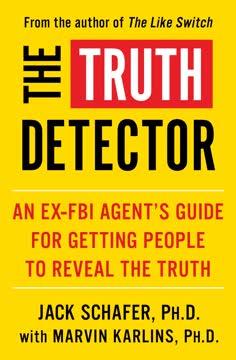
Get the complete 30-minute summary of The Truth Detector
Get the complete summary in the appMake people feel good about themselves, and they will open up to you.
Use statements instead of questions to bypass defensiveness.
People will correct your mistakes. Use this to gather information.
Ask about third parties to learn what people really think.
Present ranges to narrow down numbers and dates.
Compliment expertise to encourage people to demonstrate their knowledge.
"The Truth Detector" is a strong fit if you want practical ideas around psychology, business, self help, especially themes like make people feel good about themselves, and they will open up to you; use statements instead of questions to bypass defensiveness. The MinuteRead summary distills these concepts into a focused read, whether you're deciding whether to buy the book or applying its lessons at work.
Jack Schafer is a former FBI agent and author specializing in behavioral analysis and interpersonal communication. He has written multiple books on the subject, including "The Like Switch" and "The Truth Detector." Schafer's expertise stems from his experience in the FBI's Behavioral Analysis Program, where he developed techniques for eliciting information from individuals. He now shares this knowledge through his writing and teaching, focusing on practical applications of these methods in every…
View all summaries by Jack SchaferContinue Reading
Access the complete 30-minute summary and thousands more nonfiction books in the MinuteRead app.

Continue reading the complete summary in the MinuteRead app.