MinuteRead
30 min
Book summary
by Michael J. Casey
Premium summary · Opens in the app · 30 min read
Every day, you participate in thousands of small acts of trust. You trust that the money in your bank account will be there when you need it. You trust that the deed to your home proves you own it. You trust that the person on the other side of an online transaction is who they claim to be. You trust that the food labeled organic actually is organic. You trust that your vote counts.
**Author:** Michael J. Casey **Estimated Reading Time:** 45 minutes
**What You'll Learn:** - Why trust is the invisible foundation of all economic and social activity - How blockchain technology creates a new form of institutional trust - What Bitcoin's real innovation was and why it matters beyond currency - How smart contracts and tokens are reshaping ownership and value - What self-sovereign identity means for your digital future - How blockchain could transform industries from supply chains to energy - What governance challenges arise when power becomes decentralized - How the future of work and creativity might change in a token economy
**Who This Book Is For:** This book is for anyone who senses that something is broken in how our digital world manages value, identity, and trust. You don't need a technical background. You need curiosity about why institutions fail, how technology shapes society, and what might come next. If you've heard about blockchain but want to understand its deeper significance beyond price speculation, this is your guide.
Every day, you participate in thousands of small acts of trust. You trust that the money in your bank account will be there when you need it. You trust that the deed to your home proves you own it. You trust that the person on the other side of an online transaction is who they claim to be. You trust that the food labeled organic actually is organic. You trust that your vote counts. Most of the time, you don't think about this trust. It operates invisibly, like the electrical grid or the water supply. But when trust breaks down, everything stops working. Commerce freezes. Institutions crumble. People retreat into fear and suspicion. The 2008 financial crisis was a massive trust failure. Banks that were supposed to be pillars of stability turned out to be built on sand. The systems designed to verify and validate financial transactions had been gamed, obscured, and corrupted. When the truth emerged, the damage wasn't just economic. It was psychological. People lost faith in the entire machinery of modern finance. But the trust crisis extends far beyond banking. Social media platforms manipulate what we see while claiming neutrality. Data breaches expose our most personal information. Governments struggle to prove the integrity of elections. Supply chains conceal exploitation and environmental damage. In each case, the problem is the same: we depend on centralized institutions to tell us the truth, and those institutions have repeatedly failed us. This is not a new problem. Human societies have always struggled with the question of how to establish trust among strangers. For centuries, we solved it through intermediaries: banks, governments, courts, churches, and corporations. These institutions stood between parties and vouched…
Continue reading in the MinuteRead app
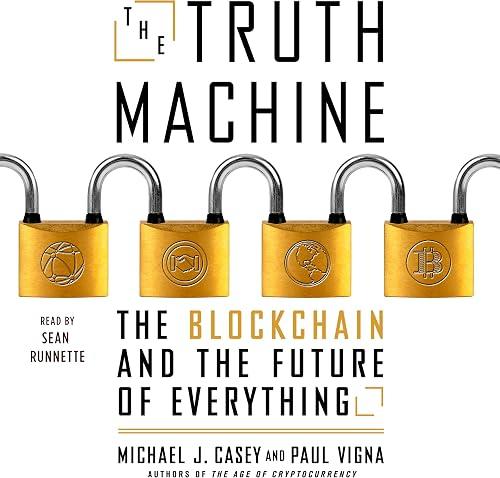
Get the complete 30-minute summary of The Truth Machine
Get the complete summary in the appTrust is the foundation of all economic and social activity, and it's eroding.
Blockchain creates a shared, immutable record of truth without relying on central authority.
Bitcoin's real innovation was solving the double-spend problem, making digital scarcity possible.
The Internet of Value will enable value to move as freely as information.
Smart contracts are self-executing agreements that automate transactions without intermediaries.
Tokenization enables fractional ownership and new forms of value creation.
"The Truth Machine" is a strong fit if you want practical ideas around economics, technology, business, especially themes like trust is the foundation of all economic and social activity, and it's eroding; blockchain creates a shared, immutable record of truth without relying on central authority. The MinuteRead summary distills these concepts into a focused read, whether you're deciding whether to buy the book or applying its lessons at work.
Motivated to help readers with blockchains point the entire digital economy toward something people are calling the Internet of Value, Michael J. Casey wrote “The Truth Machine” to package those ideas for a fast, focused read. In “The Truth Machine”, Michael J. Casey focuses on blockchains point the entire digital economy toward something people are calling the Internet of Value. Through “The Truth Machine”, Michael J. Casey distills the core ideas on economics into lessons readers can absorb in…
Continue Reading
Access the complete 30-minute summary and thousands more nonfiction books in the MinuteRead app.

Continue reading the complete summary in the MinuteRead app.