MinuteRead
30 min
Book summary
Premium summary · Opens in the app · 30 min read
You have probably been told that stress is a mental problem. That if you could just change your thinking, reframe your perspective, or practice more positive self-talk, everything would improve. This is the dominant message in most self-help literature. And it is only partially true.
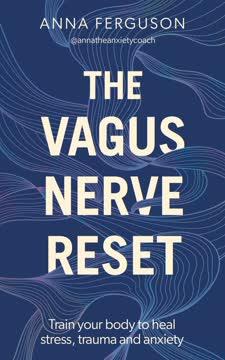
**Author:** Anna Ferguson
**Estimated Reading Time:** 42 minutes
**What You'll Learn:**
- How your nervous system shapes every experience you have - Why you react the way you do under stress - The three states your body moves through every day - How to recognize when your system is out of balance - Practical tools to reset and regulate your body - How to build lasting resilience through daily habits
**Who This Book Is For:**
Anyone who has ever felt anxious without knowing why. Anyone who struggles to relax even when life is going well. Anyone dealing with chronic stress, burnout, digestive issues, sleep problems, or a sense of disconnection from their own body. If you have tried to think your way out of stress and found it does not work, this book offers a different path. The answer is not in your thoughts. It is in your nervous system.
You have probably been told that stress is a mental problem. That if you could just change your thinking, reframe your perspective, or practice more positive self-talk, everything would improve. This is the dominant message in most self-help literature. And it is only partially true. The missing piece is your body. More specifically, it is your nervous system, the intricate electrical wiring that runs through every part of you, constantly scanning for danger, constantly adjusting your physiology, and constantly shaping how you think, feel, and behave. You cannot think your way out of a nervous system response. The body must be addressed directly. Anna Ferguson discovered this through her own journey of trauma and recovery. She spent years trying to heal her mind while ignoring the fact that her body was stuck in survival mode. No amount of positive thinking could override a nervous system that believed it was under threat. What finally worked was learning to work with her body rather than against it. This book is built on a simple but profound premise: your nervous system is the foundation of your experience. When it is regulated, you feel safe, present, and capable. When it is dysregulated, everything feels harder. Your thoughts race. Your body tenses. Your digestion suffers. Your sleep deteriorates. Your relationships strain. You may feel anxious, numb, exhausted, or all three at once. The good news is that the nervous system is not fixed. It is plastic. It can change. And you have more influence over it than you might think. The vagus nerve, the longest nerve in the body, acts as a bridge between your brain and your organs. It is a two-way communication channel that can be trained and toned, much like a muscle. By learning to stimulate and regulate this nerve, you can…
Continue reading in the MinuteRead app
Get the complete 30-minute summary of The Vagus Nerve Reset
Get the complete summary in the appYour nervous system, not your conscious mind, is the primary driver of your emotional state.
The nervous system has three states: social engagement, mobilization, and immobilization.
Neuroception is the subconscious process that determines which state you are in.
Dysregulation means your body is stuck in a survival state.
You cannot think your way out of dysregulation. The body must be addressed directly.
Self-trust is built through self-awareness, self-compassion, and consistent action.
"The Vagus Nerve Reset" is a strong fit if you want practical ideas around health & fitness, self help, psychology, especially themes like your nervous system, not your conscious mind, is the primary driver of your emotional state; the nervous system has three states: social engagement, mobilization, and immobilization. The MinuteRead summary distills these concepts into a focused read, whether you're deciding whether to buy the book or applying its lessons at work.
Anna Ferguson is an Australian author who has personal experience with trauma and healing. She developed the Vagus Nerve Reset program based on her own journey and research into neuroscience and holistic psychology approaches. Ferguson's writing style is described as engaging, relatable, and accessible, making complex scientific concepts easy to understand for a general audience. She emphasizes the importance of connecting with one's body and regulating the nervous system for overall well-being.…
View all summaries by Anna FergusonContinue Reading
Access the complete 30-minute summary and thousands more nonfiction books in the MinuteRead app.

Continue reading the complete summary in the MinuteRead app.