MinuteRead
30 min
Book summary
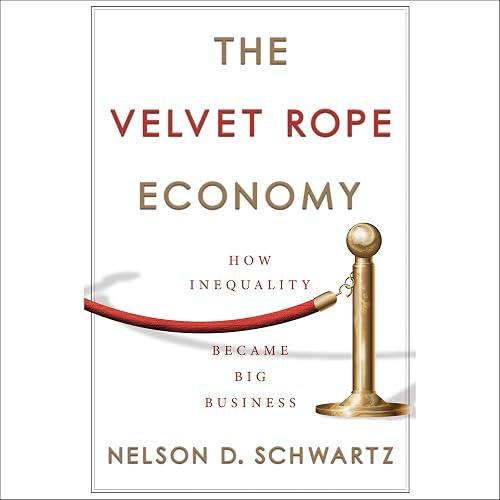
by Nelson D. Schwartz
Premium summary · Opens in the app · 30 min read
In the decades following World War II, the United States built something remarkable: a society where a factory worker and a corporate executive could sit in the same airplane cabin, send their children to reasonably comparable public schools, and share a sense of common destiny. The seats were not identical in comfort, but they were in the same room. The experience of being American was broadly shared.
**Author:** Nelson D. Schwartz **Estimated Reading Time:** 45 minutes
**What You'll Learn:**
- How American life has quietly separated into paid tiers of access and experience - Why the wealthiest citizens now inhabit a parallel world of private terminals, concierge doctors, and gated communities - How businesses weaponize envy to sell premium access - What happens to democracy when shared spaces disappear - Why Southwest Airlines proves a more egalitarian model can still win
**Who This Book Is For:**
Anyone who has stood in a long security line while watching a select few breeze past, wondered why a concert ticket costs more than a mortgage payment, or felt that the American promise of equal treatment is slipping away. This book is for readers who want to understand the hidden architecture of modern inequality.
In the decades following World War II, the United States built something remarkable: a society where a factory worker and a corporate executive could sit in the same airplane cabin, send their children to reasonably comparable public schools, and share a sense of common destiny. The seats were not identical in comfort, but they were in the same room. The experience of being American was broadly shared. That era is ending. Today, the wealthy glide through private airport terminals while everyone else removes their shoes in crowded security lines. They consult physicians who know their names and return their calls within minutes, while the rest of us wait weeks for a fifteen-minute appointment. Their children receive private college counseling that begins years before applications are due, while public school guidance counselors juggle hundreds of students. They watch sporting events from climate-controlled suites while fans in the upper deck bake in the sun. These differences are not accidental. They are the product of deliberate business strategies, changing social norms, and a growing comfort with visible inequality that would have shocked previous generations. Nelson D. Schwartz, an economics reporter for The New York Times, spent years documenting this transformation. What he found was not simply a story about rich people buying nicer things. That has always existed. What he discovered was something more profound: a systematic restructuring of American life around the principle that money should determine not just what you own, but how you experience nearly everything. The velvet rope, once reserved for exclusive nightclubs, has been extended across the entire economy. It now separates passengers at the airport, patients in the waiting room, students in the admissions process, and fans at the stadium. The rope is not always visible, but its effects are unmistakable. This book is about what happens when a society stops sharing experiences. When the wealthy no longer use the same airports, schools, hospitals,…
Continue reading in the MinuteRead app
Get the complete 30-minute summary of The Velvet Rope Economy
Get the complete summary in the appThe velvet rope economy is the increasing segmentation of products and services based on ability to pay, creating a new
Envy is the psychological fuel that powers the velvet rope economy. Premium experiences are designed to be visible, ensu
The monetization of convenience means that time itself is now allocated by income. The wealthy move through the world at
Healthcare and education are increasingly stratified by wealth, perpetuating the cycle of advantage across generations.
The privatization of safety severs the bond of shared vulnerability that underpins community and reduces support for pub
Economic segregation reduces empathy and understanding, undermining the social fabric that democracy depends on.
"The Velvet Rope Economy" is a strong fit if you want practical ideas around economics, business, sociology, especially themes like the velvet rope economy is the increasing segmentation of products and services based on ability to pay, creating a new; envy is the psychological fuel that powers the velvet rope economy. premium experiences are designed to be visible, ensu. The MinuteRead summary distills these concepts into a focused read, whether you're deciding whether to buy the book or applying its lessons at work.
Motivated to help readers with "The rise of the Velvet Rope Economy marks an end to the great democratization of American life in the, Nelson D. Schwartz wrote “The Velvet Rope Economy” to package those ideas for a fast, focused read. In “The Velvet Rope Economy”, Nelson D. Schwartz focuses on "The rise of the Velvet Rope Economy marks an end to the great democratization of American life in the. Through “The Velvet Rope Economy”, Nelson D. Schwartz distills the core ideas on economics into lesso…
Continue Reading
Access the complete 30-minute summary and thousands more nonfiction books in the MinuteRead app.

Continue reading the complete summary in the MinuteRead app.