MinuteRead
30 min
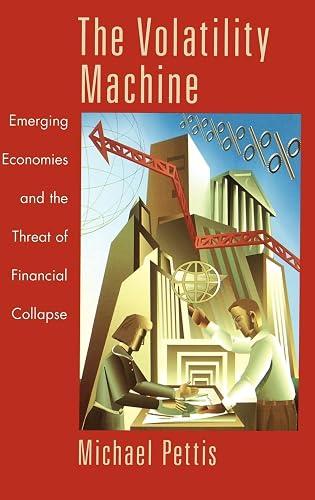
Book summary
by Michael Pettis
Premium summary · Opens in the app · 30 min read
In the early 1980s, Mexico announced it could no longer service its debt. The declaration triggered a cascade of defaults across Latin America, Africa, and Asia that took nearly a decade to resolve. In 1994, Mexico again found itself at the center of a crisis when a sudden reversal of capital flows forced a dramatic devaluation of the peso. Three years later, Thailand, Indonesia, and South Korea collapsed in sequence. Then came Russia in 1998, Brazil in 1999, Argentina in 2001, and Turkey in 200
**Author:** Michael Pettis **Estimated Reading Time:** 45 minutes
**What You'll Learn**
Why capital floods into and out of emerging markets with devastating regularity. How a country's financial structure, not its policies or luck, determines whether it survives economic shocks. What the history of financial crises from the 1820s to today reveals about the mechanics of global capital. How sovereign debt restructuring can be designed to restore market access quickly. Why the IMF and national finance ministries have been asking the wrong questions all along.
**Who This Book Is For**
Investors seeking to understand sovereign risk at a structural level. Policymakers and finance ministry officials responsible for national debt strategy. Students of international finance who want a framework that explains recurring crises. Anyone who has watched emerging market booms and busts and wondered why the same story repeats with such precision.
In the early 1980s, Mexico announced it could no longer service its debt. The declaration triggered a cascade of defaults across Latin America, Africa, and Asia that took nearly a decade to resolve. In 1994, Mexico again found itself at the center of a crisis when a sudden reversal of capital flows forced a dramatic devaluation of the peso. Three years later, Thailand, Indonesia, and South Korea collapsed in sequence. Then came Russia in 1998, Brazil in 1999, Argentina in 2001, and Turkey in 2002. Each crisis produced its own explanations. Economists blamed corruption in one country, political instability in another, current account deficits in a third. The International Monetary Fund prescribed austerity here, structural reform there, and currency pegs everywhere. Yet the crises kept coming, and they kept looking remarkably similar. Michael Pettis looked at this pattern and asked a different question. What if the problem was not the specific policies of each country but the way we understand capital flows altogether? The conventional story goes something like this. Countries that implement sound economic policies attract foreign investment. Countries that fail to reform, that tolerate corruption, that run unsustainable deficits, eventually lose investor confidence. Capital flight follows. Crisis ensues. The lesson is clear: good behavior is rewarded, bad behavior is punished. Pettis argues that this story is not just incomplete. It is fundamentally backward. The Volatility Machine presents an alternative framework for understanding international finance. At its core is a simple observation: global capital flows are driven primarily by liquidity conditions in the world's major financial centers, not by the economic conditions of the countries receiving the capital. When money is loose in New York, London, and Tokyo, capital pours into emerging markets regardless of what those markets are doing. When liquidity tightens, capital retreats regardless of how well those markets have behaved. This explains why countries with radically…
Continue reading in the MinuteRead app
Get the complete 30-minute summary of The Volatility Machine
Get the complete summary in the appCapital flows are driven by liquidity in financial centers, not by conditions in receiving countries.
Capital structure determines a country's vulnerability to financial crisis.
Inverted capital structures amplify shocks through mechanical feedback loops.
Crises do not require panic or irrationality; they can emerge from poorly designed structures.
The goal of debt restructuring is rapid return to markets, not minimizing immediate losses.
Credibility is about managing volatility, not rigid policy adherence.
"The Volatility Machine" is a strong fit if you want practical ideas around economics, finance, business, especially themes like capital flows are driven by liquidity in financial centers, not by conditions in receiving countries; capital structure determines a country's vulnerability to financial crisis. The MinuteRead summary distills these concepts into a focused read, whether you're deciding whether to buy the book or applying its lessons at work.
Motivated to help readers with "Unlike the liquidity model, Michael Pettis wrote “The Volatility Machine” to package those ideas for a fast, focused read. In “The Volatility Machine”, Michael Pettis focuses on "Unlike the liquidity model. Through “The Volatility Machine”, Michael Pettis distills the core ideas on economics into lessons readers can absorb in a single short sitting. Readers turn to this work when they want Michael Pettis's perspective on the subject without working through the ent…
Continue Reading
Access the complete 30-minute summary and thousands more nonfiction books in the MinuteRead app.

Continue reading the complete summary in the MinuteRead app.