MinuteRead
30 min
Book summary
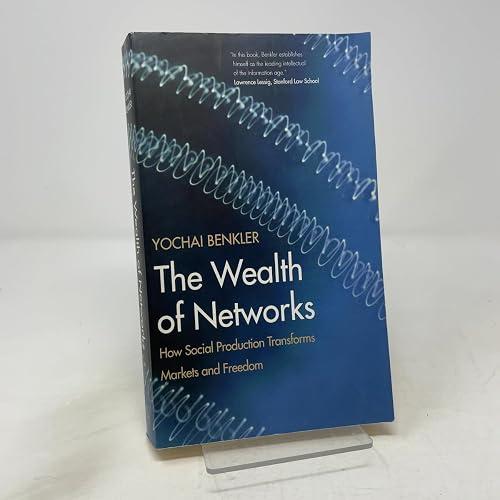
by Yochai Benkler
Premium summary · Opens in the app · 30 min read
For most of the twentieth century, the production of information, knowledge, and culture followed a familiar pattern. A small number of organizations owned the presses, the broadcast towers, the studios, and the distribution networks. They decided what news reached the public, which music got recorded, which films got made, and which scientific findings got published. To participate in the conversation of society, you needed access to capital, institutional backing, and permission from gatekeepe
**Author:** Yochai Benkler
**Estimated Reading Time:** 45 minutes
**What You'll Learn:** How the networked information economy is transforming the way we produce knowledge, culture, and information. You will understand why Wikipedia, open-source software, and citizen journalism are not anomalies but signals of a fundamental shift in how societies create value. You will see how decentralized collaboration challenges the dominance of markets and firms, and what this means for freedom, democracy, and human flourishing.
**Who This Book Is For:** Anyone who has wondered whether the internet truly changes anything deep about society, or whether it merely speeds up existing patterns. This book is for readers curious about the economics of information, the future of media, the politics of technology, and the quiet revolution happening whenever people collaborate without being paid or commanded to do so.
For most of the twentieth century, the production of information, knowledge, and culture followed a familiar pattern. A small number of organizations owned the presses, the broadcast towers, the studios, and the distribution networks. They decided what news reached the public, which music got recorded, which films got made, and which scientific findings got published. To participate in the conversation of society, you needed access to capital, institutional backing, and permission from gatekeepers. This industrial information economy shaped more than just media. It shaped how we understood creativity, productivity, and freedom itself. Creativity was something that happened inside firms. Productivity was measured by market transactions. Freedom was largely understood as freedom from government interference, with private corporations exercising enormous control over the cultural environment in which we all lived. Then something shifted. The rise of the internet and the widespread availability of cheap computing power changed the material conditions of information production. For the first time in modern history, the tools required to create and distribute information to a global audience became available to ordinary individuals. A teenager with a laptop could write software used by millions. A volunteer with an internet connection could contribute to an encyclopedia that would rival the great reference works of the past. A blogger could break a story that the mainstream media had missed. Yochai Benkler wrote *The Wealth of Networks* to explain what this shift means. His central claim is that we are witnessing the emergence of a new mode of production, one that operates alongside the market and the state. He calls it commons-based peer production, and he argues that it has profound implications for freedom, justice, and democracy. The book is not a celebration of technology for its own sake. Benkler is careful to acknowledge that the networked information economy is fragile, contested, and vulnerable to capture by powerful interests. The outcome is not predetermined. The choices…
Continue reading in the MinuteRead app
Get the complete 30-minute summary of The Wealth of Networks
Get the complete summary in the appThe networked information economy is a fundamental transformation in how information, knowledge, and culture are produce
Information is non-rival. Sharing it freely can increase social welfare without diminishing anyone's ability to benefit.
Commons-based peer production is a new mode of production that operates alongside the market and the firm.
Peer production relies on decentralized coordination, diverse motivations, and modular contributions.
The networked public sphere gives ordinary individuals the capacity to participate in democratic discourse.
Freedom is the capacity to act, create, associate, and participate, not merely the absence of government interference.
"The Wealth of Networks" is a strong fit if you want practical ideas around economics, technology, business, especially themes like the networked information economy is a fundamental transformation in how information, knowledge, and culture are produce; information is non-rival. sharing it freely can increase social welfare without diminishing anyone's ability to benefit. The MinuteRead summary distills these concepts into a focused read, whether you're deciding whether to buy the book or applying its lessons at work.
Motivated to help readers with the networked information economy improves the practical capacities of individuals along three dimensions:, Yochai Benkler wrote “The Wealth of Networks” to package those ideas for a fast, focused read. In “The Wealth of Networks”, Yochai Benkler focuses on the networked information economy improves the practical capacities of individuals along three dimensions:. Through “The Wealth of Networks”, Yochai Benkler distills the core ideas on economics into lessons read…
Continue Reading
Access the complete 30-minute summary and thousands more nonfiction books in the MinuteRead app.

Continue reading the complete summary in the MinuteRead app.