MinuteRead
30 min
Book summary
Premium summary · Opens in the app · 30 min read
Most people assume that human psychology is basically the same everywhere. We imagine that beneath surface differences in language, clothing, and food, all humans share the same core mental equipment. A mother in Tokyo loves her child the same way a mother in Nairobi does. A trader in New York feels guilt the same way a farmer in rural China does. A teenager in Berlin seeks independence the same way a teenager in rural India does.
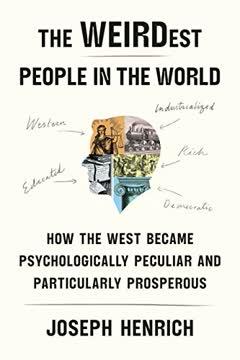
**Author:** Joseph Henrich
**Estimated Reading Time:** 45 minutes
**What You'll Learn:**
- Why people from Western societies think differently from most humans who have ever lived - How the Catholic Church's medieval policies accidentally created modern psychology - Why your sense of self, guilt, and fairness is historically unusual - How markets, wars, and voluntary groups rewired human brains over centuries - What this means for understanding yourself, your relationships, and your institutions
**Who This Book Is For:**
Anyone curious about why modern life feels the way it does. If you have ever wondered why people in some cultures seem more individualistic while others prioritize family above all, why guilt dominates some societies while shame rules others, or why democracy and markets emerged in particular places at particular times, this book provides the missing historical and psychological foundation. It is for readers who want to understand the deep roots of their own minds.
Most people assume that human psychology is basically the same everywhere. We imagine that beneath surface differences in language, clothing, and food, all humans share the same core mental equipment. A mother in Tokyo loves her child the same way a mother in Nairobi does. A trader in New York feels guilt the same way a farmer in rural China does. A teenager in Berlin seeks independence the same way a teenager in rural India does. This assumption feels obvious. It feels morally right. And according to a growing body of research, it is also wrong in profound and consequential ways. In 2010, Joseph Henrich and his colleagues published a paper that would become one of the most cited articles in the history of psychology. The paper pointed out something uncomfortable: the vast majority of psychological research had been conducted on a tiny, unusual slice of humanity. Researchers were drawing sweeping conclusions about human nature from studies of American college undergraduates, then assuming those conclusions applied to everyone. The researchers gave this population a name: WEIRD. Western, Educated, Industrialized, Rich, and Democratic. And they argued that WEIRD people are not just different in superficial ways. They are psychologically unusual on a fundamental level. WEIRD people are more individualistic than most humans. They care more about personal achievement and self-expression. They are more analytical in their thinking, breaking problems into parts rather than seeing wholes. They trust strangers more readily. They feel guilt more intensely and shame less intensely. They believe in universal moral rules that should apply to everyone, not just to family or tribe. They are more willing to punish unfairness, even at personal cost. They are more likely to see themselves as independent agents with unique inner selves. None of this is normal by the…
Continue reading in the MinuteRead app
Get the complete 30-minute summary of The Weirdest People in the World
Get the complete summary in the appWEIRD people are psychologically unusual. They are more individualistic, analytical, trusting of strangers, and driven b
The Catholic Church's medieval marriage policies accidentally created modern psychology by weakening kinship networks an
Kinship was the primary organizing principle of human societies for most of history. Its weakening was a radical break w
Voluntary associations emerged as alternatives to kin-based groups and required trust in strangers and cooperation with
Markets are psychological institutions that promote impersonal prosociality: fairness and trust toward strangers.
War creates selective pressure for effective institutions, and European warfare favored states that could mobilize resou
"The Weirdest People in the World" is a strong fit if you want practical ideas around psychology, history, science, especially themes like weird people are psychologically unusual. they are more individualistic, analytical, trusting of strangers, and driven b; the catholic church's medieval marriage policies accidentally created modern psychology by weakening kinship networks an. The MinuteRead summary distills these concepts into a focused read, whether you're deciding whether to buy the book or applying its lessons at work.
Joseph Henrich is an anthropologist and professor at Harvard University, chairing the Department of Human Evolutionary Biology. His research focuses on evolutionary approaches to psychology, decision-making, and culture, exploring topics such as cultural learning, cultural evolution, and culture-gene coevolution. Henrich's work examines human sociality, prestige, leadership, cooperation, religion, and the emergence of complex institutions. He employs a unique methodology that combines ethnograph…
View all summaries by Joseph HenrichContinue Reading
Access the complete 30-minute summary and thousands more nonfiction books in the MinuteRead app.

Continue reading the complete summary in the MinuteRead app.