MinuteRead
30 min
Book summary
Premium summary · Opens in the app · 30 min read
Most discussions about education begin with a question about methods. Which curriculum should we use? How many hours a day should we teach? What about socialization? These questions matter, but they skip past something more fundamental. Before you decide how to educate, you must decide what an educated person looks like.
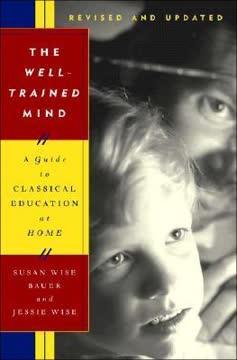
**A Guide to Classical Education at Home** By Susan Wise Bauer
**Estimated Reading Time:** 45 minutes
**What You'll Learn** How to give your child a rigorous, comprehensive education using the classical model. You will understand the three stages of cognitive development that shape all learning, discover why language training creates critical thinkers, and learn how to build a complete curriculum where history, literature, science, art, and mathematics reinforce one another. You will finish with a practical framework you can adapt to any educational setting.
**Who This Book Is For** Parents considering or already committed to homeschooling. Teachers seeking a deeper understanding of classical methods. Anyone who suspects that modern education has lost something vital and wants to know what a serious intellectual education looks like from the ground up.
Most discussions about education begin with a question about methods. Which curriculum should we use? How many hours a day should we teach? What about socialization? These questions matter, but they skip past something more fundamental. Before you decide how to educate, you must decide what an educated person looks like. Susan Wise Bauer wrote The Well-Trained Mind for parents who want to give their children more than basic competency. She wrote it for people who look at the educational landscape and see a system that often produces graduates who can pass tests but cannot think, who can consume information but cannot evaluate it, who can express opinions but cannot construct arguments. The problem is not new. For decades, educational theorists have shifted the focus away from content and toward process, away from knowledge and toward skills, away from the hard work of memorization and toward the easier path of passive learning. The result is a generation of students who have been taught how to learn but have learned very little, who have been encouraged to express themselves but have nothing substantive to express. Classical education offers a different path. It is not a new approach. It is the approach that produced the great minds of Western civilization for more than two thousand years. It educated Plato and Aristotle, Augustine and Aquinas, Galileo and Newton, Elizabeth I and Thomas Jefferson. It fell out of favor in the twentieth century, replaced by progressive models that promised to be more democratic, more relevant, more engaging. But the classical model has never disappeared entirely, and in recent decades it has experienced a quiet renaissance among parents who want something better for their children. The classical approach rests on a simple observation that has profound implications. Human beings develop cognitively in predictable stages. Young children absorb facts naturally and eagerly. Older children begin to question those facts and look for logical connections. Teenagers develop the…
Continue reading in the MinuteRead app
Get the complete 30-minute summary of The Well-Trained Mind
Get the complete summary in the appMatch education to cognitive development. Young children memorize, older children analyze, teenagers express. Work with
Build knowledge before demanding analysis. A mind needs raw material before it can think critically. Fill the grammar st
Place language at the center. Reading, writing, and speaking are thinking skills. Train them systematically from the ear
Study history chronologically in four-year cycles. Repeat the cycle three times with increasing depth. Connect everythin
Teach Latin for mental training. Its fixed rules build orderly thinking. Its vocabulary unlocks English.
Integrate subjects around history. Literature, art, music, and science should be studied in their historical context.
"The Well-Trained Mind" is a strong fit if you want practical ideas around education, parenting, reference, especially themes like match education to cognitive development. young children memorize, older children analyze, teenagers express. work with; build knowledge before demanding analysis. a mind needs raw material before it can think critically. fill the grammar st. The MinuteRead summary distills these concepts into a focused read, whether you're deciding whether to buy the book or applying its lessons at work.
Susan Wise Bauer is an accomplished author and educator known for her work in classical education. She teaches English writing and American literature at The College of William and Mary. Bauer founded Well-Trained Mind Press, formerly Peace Hill Press, which publishes educational materials. Her expertise in classical education and homeschooling has made her a prominent figure in these fields. Bauer's writings, including "The Well-Trained Mind," have influenced many parents and educators in their…
View all summaries by Susan Wise BauerContinue Reading
Access the complete 30-minute summary and thousands more nonfiction books in the MinuteRead app.

Continue reading the complete summary in the MinuteRead app.