MinuteRead
30 min
Book summary
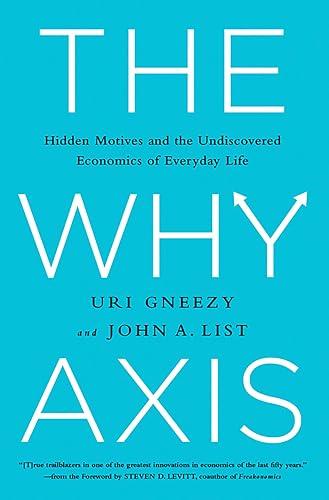
by Uri Gneezy
Premium summary · Opens in the app · 30 min read
We like to believe we understand why people do what they do. We tell ourselves stories about human behavior that feel true. We assume people respond to money. We assume discrimination comes from hatred. We assume women are less competitive than men for biological reasons. We assume people give to charity out of pure altruism.
**Author:** Uri Gneezy (with John A. List)
**Estimated Reading Time:** 45 minutes
**What You'll Learn:** How hidden incentives shape human behavior, why field experiments reveal truths that surveys and laboratories cannot, and how to design better systems for business, education, charity, and public policy.
**Who This Book Is For:** Anyone who wants to understand what actually motivates people: managers, marketers, policymakers, educators, nonprofit leaders, parents, and curious readers who suspect that what people say and what people do are often very different things.
We like to believe we understand why people do what they do. We tell ourselves stories about human behavior that feel true. We assume people respond to money. We assume discrimination comes from hatred. We assume women are less competitive than men for biological reasons. We assume people give to charity out of pure altruism. Then we run an experiment in the real world, and the stories fall apart. Uri Gneezy and John List have spent their careers doing something unusual in the world of economics. Instead of building mathematical models in university offices or running artificial experiments with college students in campus laboratories, they go into the world. They visit car dealerships, schools, factories, daycare centers, and charity fundraisers. They design experiments that unfold in the messy, complicated environments where real decisions happen. They watch what people actually do when they do not know they are being watched. The results are often surprising. Sometimes they are uncomfortable. Fining parents for picking up their children late from daycare makes lateness worse, not better. Paying people small amounts for tasks they would do for free makes them less motivated. Women in matrilineal societies are more competitive than men. Car dealers charge minorities higher prices not because they hate them but because they believe minorities are less likely to shop around. Charitable donors respond more powerfully to social recognition than to appeals to compassion. These findings matter far beyond academic curiosity. They reveal something fundamental about human nature: we are driven by a complex mix of financial incentives, social pressures, cultural norms, and psychological quirks. If you design policies, products, workplaces, or programs based on simplistic assumptions about motivation, you will fail. Sometimes you will make things worse. The central method of this book is the field experiment. Unlike laboratory studies, which control every variable but create artificial conditions, field experiments test ideas in the real world. Unlike surveys, which capture what people say, field experiments capture what people do. The gap between saying and doing is often enormous. People claim they would never discriminate, but they do. People claim they care about a cause, but they only donate when someone is watching. People claim they want to save…
Continue reading in the MinuteRead app
Get the complete 30-minute summary of The Why Axis
Get the complete summary in the appField experiments reveal what people actually do, not what they say they will do.
Poorly designed incentives can backfire. The daycare fine increased lateness.
Discrimination is often driven by economics, not animus.
Competitiveness is shaped by culture, not biology.
The achievement gap can be closed with well-designed incentives.
Charitable giving is motivated by social recognition, reciprocity, and the warm glow effect.
"The Why Axis" is a strong fit if you want practical ideas around economics, psychology, business, especially themes like field experiments reveal what people actually do, not what they say they will do; poorly designed incentives can backfire. the daycare fine increased lateness. The MinuteRead summary distills these concepts into a focused read, whether you're deciding whether to buy the book or applying its lessons at work.
Motivated to help readers with to get at the real underbelly of human motivation, Uri Gneezy wrote “The Why Axis” to package those ideas for a fast, focused read. In “The Why Axis”, Uri Gneezy focuses on to get at the real underbelly of human motivation. Through “The Why Axis”, Uri Gneezy distills the core ideas on economics into lessons readers can absorb in a single short sitting. Readers turn to this work when they want Uri Gneezy's perspective on the subject without working through the entir…
Continue Reading
Access the complete 30-minute summary and thousands more nonfiction books in the MinuteRead app.

Continue reading the complete summary in the MinuteRead app.