MinuteRead
30 min
Book summary
Premium summary · Opens in the app · 30 min read
Economics has long aspired to be a science of precision. For decades, the discipline built increasingly sophisticated mathematical models on a simple foundation: the belief that people behave rationally. Given enough information and the right incentives, the theory went, humans will consistently make choices that maximize their own well-being. Markets will clear. Prices will reflect true value. Anomalies will disappear.
**Author:** Richard H. Thaler
**Estimated Reading Time:** 45 minutes
**What You'll Learn:** Why perfectly rational economic models fail to explain real human behavior, how psychological forces shape markets and decisions, and what behavioral economics reveals about the hidden anomalies in everyday life.
**Who This Book Is For:** Anyone who has ever wondered why people make seemingly irrational financial choices, why markets behave unpredictably, or how psychology and economics intersect in ways that affect us all.
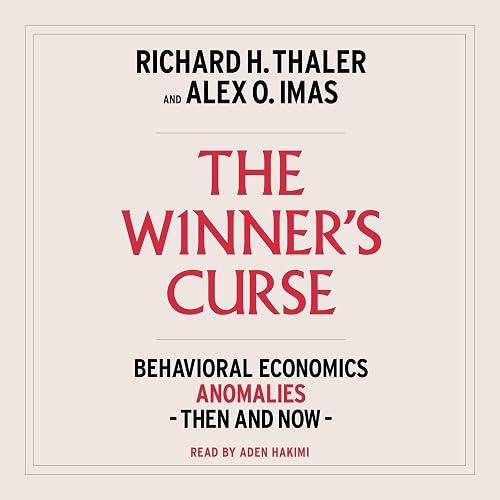
Economics has long aspired to be a science of precision. For decades, the discipline built increasingly sophisticated mathematical models on a simple foundation: the belief that people behave rationally. Given enough information and the right incentives, the theory went, humans will consistently make choices that maximize their own well-being. Markets will clear. Prices will reflect true value. Anomalies will disappear. There is only one problem. None of this happens in the real world. Richard Thaler spent his career noticing what traditional economists preferred to ignore. He observed that people leave tips at restaurants they will never visit again. They refuse to sell losing stocks while eagerly selling winners. They bid too much at auctions and then regret winning. They treat a dollar of found money differently from a dollar of earned money, even though both spend the same. They cooperate with strangers when pure self-interest would dictate otherwise. They make decisions that no rational economic agent would ever make. These observations were not mere quirks. They were systematic. They repeated across cultures, across income levels, across decades. And they pointed to a fundamental flaw in the way economics understood human nature. Traditional economics built its models around a fictional character often called Homo economicus, a being of pure calculation who cares only about maximizing wealth and utility. This character never gets angry, never feels envy, never succumbs to temptation, never makes a mistake. Homo economicus is a useful abstraction, but he bears little resemblance to the people who actually buy groceries, trade stocks, bid at auctions, and save for retirement. Thaler's insight was both simple and revolutionary. Instead of assuming that people are rational and then treating their deviations as noise to be ignored, why not study the deviations themselves? Why not build economics around the way people actually behave? This book, The Winner's Curse, collects the evidence that changed economics. It examines the anomalies that traditional theory could not explain: why winners at auctions often lose money, why people prefer fairness over profit, why the same stock can sell at different prices in different markets, why risk perception bears little relationship to actual risk. Each anomaly is a crack in the edifice of rational choice theory. Together, they form a compelling case for a…
Continue reading in the MinuteRead app
Get the complete 30-minute summary of The Winner's Curse
Get the complete summary in the appThe winner's curse: Winning an auction often means you overpaid.
Mental accounting: People treat money differently based on its source and intended use.
Loss aversion: Losses hurt more than equivalent gains feel good.
The endowment effect: Ownership increases perceived value.
Fairness matters: People sacrifice their own gain to punish unfairness.
Risk perception is distorted: Dramatic risks feel more dangerous than mundane risks.
"The Winner's Curse" is a strong fit if you want practical ideas around economics, psychology, business, especially themes like the winner's curse: winning an auction often means you overpaid; mental accounting: people treat money differently based on its source and intended use. The MinuteRead summary distills these concepts into a focused read, whether you're deciding whether to buy the book or applying its lessons at work.
Motivated to help readers with "Would you rather be elegant and precisely wrong, Richard H. Thaler wrote “The Winner's Curse” to package those ideas for a fast, focused read. In “The Winner's Curse”, Richard H. Thaler focuses on "Would you rather be elegant and precisely wrong. Through “The Winner's Curse”, Richard H. Thaler distills the core ideas on economics into lessons readers can absorb in a single short sitting. Readers turn to this work when they want Richard H. Thaler's perspective on t…
View all summaries by Richard H. ThalerContinue Reading
Access the complete 30-minute summary and thousands more nonfiction books in the MinuteRead app.

Continue reading the complete summary in the MinuteRead app.