MinuteRead
30 min
Book summary
Premium summary · Opens in the app · 5 min read
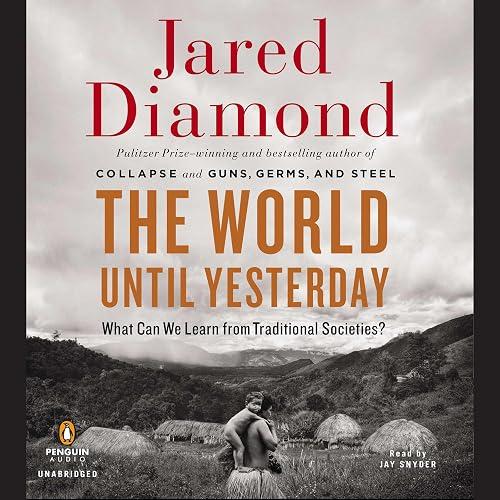
The World Until Yesterday identifies some of the most valuable lessons we can learn from societies of the past like hunter-gatherers, including how to resolve conflicts better, more effective ways to raise children, how to stay healthier for longer, and much more.
The World Until Yesterday identifies some of the most valuable lessons we can learn from societies of the past like hunter-gatherers, including how to resolve conflicts better, more effective ways to raise children, how to stay healthier for longer, and much more.
When we talk about hunter-gatherer peoples, you might think this kind of society is long gone. But actually, there are several traditional societies still living with this sort of lifestyle, and they are still living mostly as they did 11,000 years ago.
Hunter-gatherer tribes still around to this day include the Siriano Indians of South America and the Andaman Islanders in the Bay of Bengal. They have bands of less than a hundred people and are typically egalitarian and democratic. They don’t need a formal type of leadership since everyone knows each other, and they can make decisions as a group in face-to-face discussions.
There are also tribes that are made up of a few hundred people such as the Inupiat in Alaska. Some of these tribes practice farming or herding, but it’s usually on a smaller and simpler scale.
Lastly, there are chiefdoms, such as the Chumash Indians of North America. They are made up of thousands and even hundreds of thousands of people and are closer to modern society. They have a centralized form of leadership that collects funds from members and redistributes them around the community. In a chiefdom, the chief’s family is at the highest level of society.
The difference between all of these shows that there is an entire continuum that spans from hunter-gatherers to modern states like our own. The author chooses to focus mainly on hunter-gatherers because they are the most different from our society, so we stand to learn the most from them.
When there is a dispute in a traditional society, they emphasize the importance of restoring a peaceful relationship between two parties. This way, they can continue to live together in a close-knit society. To do this, the offending party shows they sincerely regret what they’ve done. They also typically offer something for compensation. They give this a validation of their regret. In contrast, in modern societies, disputes that aren’t resolved in private end up in court. When you look at the court system, you can see that it isn’t about re-establishing a peaceful relationship, rather, most of the time relations get worse after court. The main thing we can learn here is that our modern court system should try harder to help parties reconcile after a dispute. We can also see fundamental differences in child-rearing. Kids in traditional societies typically receive more care from people who aren’t parents. They can be aunts, uncles, grandparents, siblings, or even…
Continue reading in the MinuteRead app
Get the complete 5-minute summary of The World Until Yesterday
Get the complete summary in the appIf you want to get an idea of what a traditional society functioned like, you can look to the ones that are still around today.
If we look to traditional societies, we can learn important lessons on how to resolve conflicts and more.
Modern lifestyles have given rise to a variety of health problems that traditional societies never knew.
"The World Until Yesterday" is a strong fit if you want practical ideas around culture, environment, health, especially themes like if you want to get an idea of what a traditional society functioned like, you can look to the ones that are still around today; if we look to traditional societies, we can learn important lessons on how to resolve conflicts and more. The MinuteRead summary distills these concepts into a focused read, whether you're deciding whether to buy the book or applying its lessons at work.
Jared Diamond is the Pulitzer Prize-winning author of Guns, Germs, and Steel, which was named one of TIME’s best non-fiction books of all time, the number one international bestseller Collapse and most recently The World Until Yesterday. A professor of geography at UCLA and noted polymath, Diamond’s work has been influential in the fields of anthropology, biology, ornithology, ecology and history, among others.
View all summaries by Jared DiamondContinue Reading
Access the complete 5-minute summary and thousands more nonfiction books in the MinuteRead app.

Continue reading the complete summary in the MinuteRead app.