MinuteRead
30 min
Book summary
Premium summary · Opens in the app · 30 min read
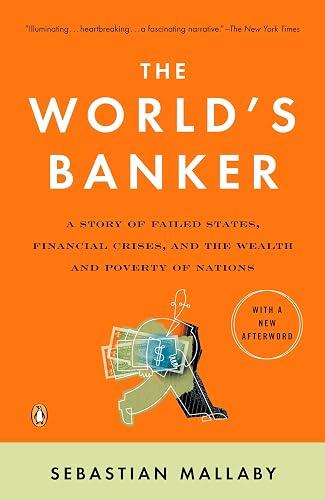
In the spring of 1995, a sixty-one-year-old Australian investment banker walked into the headquarters of the World Bank in Washington, D.C., and took charge of the most powerful development institution on earth. He had no background in development economics. He had never run a large public bureaucracy. He had spent his career advising wealthy clients and turning around failing corporations. Yet James Wolfensohn arrived with something that had been missing from the Bank for years: a consuming, al
**Author:** Sebastian Mallaby
**Estimated Reading Time:** 45 minutes
**What You'll Learn:** How James Wolfensohn transformed the World Bank, why the fight against global poverty became inseparable from global security, and what the inner workings of the world's most powerful development institution reveal about the possibilities and limits of international cooperation.
**Who This Book Is For:** Readers interested in global economics, international development, institutional leadership, and the complex intersection of money, power, and poverty. Anyone who wants to understand how multilateral institutions actually work, not just how they are supposed to work.
In the spring of 1995, a sixty-one-year-old Australian investment banker walked into the headquarters of the World Bank in Washington, D.C., and took charge of the most powerful development institution on earth. He had no background in development economics. He had never run a large public bureaucracy. He had spent his career advising wealthy clients and turning around failing corporations. Yet James Wolfensohn arrived with something that had been missing from the Bank for years: a consuming, almost obsessive passion for the fight against global poverty. "It's all I think about," he said early in his tenure. "I wake up in the morning thinking about it and I go to bed thinking about it." This was not the language of a typical bureaucrat. It was the language of a man who saw poverty not as a policy problem to be managed but as a moral outrage to be confronted. Wolfensohn believed that the two-thirds of humanity struggling to cross the threshold of modernization represented the central drama of our times. He believed that the World Bank, for all its flaws, was the only institution capable of mobilizing the resources and expertise needed to address that drama. And he believed that his own improbable journey, from a modest childhood in Sydney to the pinnacle of global finance, had prepared him for this moment. The World Bank he inherited was in trouble. Founded in 1944 at the Bretton Woods conference, the Bank had spent half a century lending money to developing countries for infrastructure projects, economic reforms, and social programs. It had achieved remarkable successes, helping to rebuild Europe after World War II and financing the Green Revolution that saved millions from starvation. But by the 1990s, the institution was under siege. Environmental activists accused it of funding deforestation and dam projects that displaced indigenous peoples. Development economists questioned whether its structural adjustment programs were doing more harm than good. Conservative critics in the U.S. Congress saw it as a bloated, ineffective bureaucracy. Even its own staff admitted that morale had collapsed. Wolfensohn's appointment was itself a surprise. The Clinton administration had wanted an American to run the Bank, but European…
Continue reading in the MinuteRead app
Get the complete 30-minute summary of The World's Banker
Get the complete summary in the appPoverty and insecurity are intimately connected. Helping poor countries develop is not just the right thing to do; it is
The World Bank was created to address both humanitarian suffering and strategic instability. Its mission has evolved in
Corruption is a cancer on development. It undermines growth, scares away investment, and deprives the poor of essential
Local ownership is essential for effective development. Programs imposed from outside often fail; programs driven by loc
The World Bank's power is limited. It can make a difference, but it cannot work miracles. Recognizing its limits is esse
Leadership is about more than vision. It is about temperament, relationships, and the discipline to follow through on co
"The World's Banker" is a strong fit if you want practical ideas around economics, finance, history, especially themes like poverty and insecurity are intimately connected. helping poor countries develop is not just the right thing to do; it is; the world bank was created to address both humanitarian suffering and strategic instability. its mission has evolved in. The MinuteRead summary distills these concepts into a focused read, whether you're deciding whether to buy the book or applying its lessons at work.
Motivated to help readers with “It’s all I think about, Sebastian Mallaby wrote “The World's Banker” to package those ideas for a fast, focused read. In “The World's Banker”, Sebastian Mallaby focuses on “It’s all I think about. Through “The World's Banker”, Sebastian Mallaby distills the core ideas on economics into lessons readers can absorb in a single short sitting. Readers turn to this work when they want Sebastian Mallaby's perspective on the subject without working through the entire orig…
View all summaries by Sebastian MallabyContinue Reading
Access the complete 30-minute summary and thousands more nonfiction books in the MinuteRead app.

Continue reading the complete summary in the MinuteRead app.