MinuteRead
30 min
Book summary
Premium summary · Opens in the app · 30 min read
In the months after September 11, 2001, American intelligence agencies faced an unprecedented challenge. Somewhere in the world, Osama bin Laden was hiding. The most powerful surveillance apparatus in human history was devoted to finding him. Satellites scanned the earth. Intercepts monitored communications. Analysts pored over every fragment of information.
**Author:** Malcolm Gladwell
**Estimated Reading Time:** 45 minutes
**What You'll Learn:**
- Why some problems require more information while others require better judgment - How to distinguish between puzzles and mysteries in your own life - Why experts sometimes fail spectacularly despite having abundant data - How information overload can obscure rather than reveal truth - Why the people in the middle of an organization often understand problems best
**Who This Book Is For:**
Anyone who makes decisions under uncertainty. Whether you lead a team, analyze data, practice medicine, manage investments, or simply want to think more clearly about complex problems, this book offers a framework for understanding why we get things wrong and how to get them right more often.
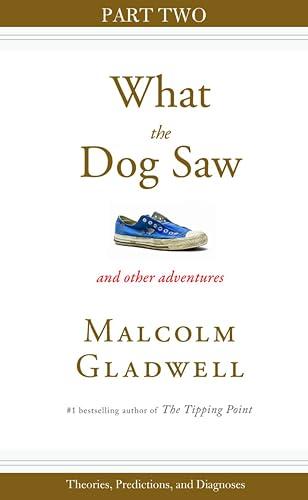
In the months after September 11, 2001, American intelligence agencies faced an unprecedented challenge. Somewhere in the world, Osama bin Laden was hiding. The most powerful surveillance apparatus in human history was devoted to finding him. Satellites scanned the earth. Intercepts monitored communications. Analysts pored over every fragment of information. Yet for nearly a decade, bin Laden remained elusive. The problem seemed obvious: we didn't have enough information. If we could just find the right source, intercept the right message, follow the right lead, we would locate him. The hunt for bin Laden was treated as a puzzle, a problem of missing pieces. But what if that framing was wrong? Malcolm Gladwell's exploration of theories, predictions, and diagnoses challenges our most basic assumptions about how we solve problems. Drawing on examples from intelligence failures, medical diagnoses, sports psychology, and corporate scandals, he reveals a fundamental distinction that most of us miss. Some problems are puzzles. They have clear answers. The challenge is gathering enough information to find those answers. Where is the enemy hiding? What is the chemical composition of this compound? Which key opens this lock? Puzzles yield to persistence and resources. Other problems are mysteries. They are complex, uncertain, and resist simple solutions. The information is already available, often in overwhelming abundance. The challenge is not finding more data but making sense of what we already have. What will happen in Iraq after the regime falls? Is this company financially sound? Will this patient develop cancer? The distinction matters because the two types of problems require fundamentally different approaches. Puzzles require more information. Mysteries require better judgment. When we confuse the two, we waste resources gathering data that doesn't help while neglecting the analytical skills that would. This book examines what happens when we misunderstand the nature of the problems we face. It explores why experts with decades of experience sometimes fail catastrophically. It investigates why seeing a problem is not the same as understanding it. It…
Continue reading in the MinuteRead app
Get the complete 30-minute summary of Theories, Predictions, and Diagnoses
Get the complete summary in the appSome problems are puzzles that require more information. Others are mysteries that require better judgment. Know the dif
For mysteries, too much information can be as harmful as too little. The signal is buried in noise.
The people in the middle often understand problems better than those at the top. Seek out their perspectives.
Many problems follow a power-law distribution. A few cases drive most of the problem. Target your resources there.
Seeing a problem and understanding it are two different things. Understanding requires context and analysis.
Pictures are not objective. They require interpretation, and interpretation is subjective.
"Theories, Predictions, and Diagnoses" is a strong fit if you want practical ideas around psychology, sociology, business, especially themes like some problems are puzzles that require more information. others are mysteries that require better judgment. know the dif; for mysteries, too much information can be as harmful as too little. the signal is buried in noise. The MinuteRead summary distills these concepts into a focused read, whether you're deciding whether to buy the book or applying its lessons at work.
Motivated to help readers with osama bin Laden’s whereabouts are a puzzle, Malcolm Gladwell wrote “Theories, Predictions, and Diagnoses” to package those ideas for a fast, focused read. Through “Theories, Predictions, and Diagnoses”, Malcolm Gladwell distills the core ideas on psychology into lessons readers can absorb in a single short sitting. Readers turn to this work when they want Malcolm Gladwell's perspective on the subject without working through the entire original volume. The book is s…
View all summaries by Malcolm GladwellContinue Reading
Access the complete 30-minute summary and thousands more nonfiction books in the MinuteRead app.

Continue reading the complete summary in the MinuteRead app.