MinuteRead
30 min
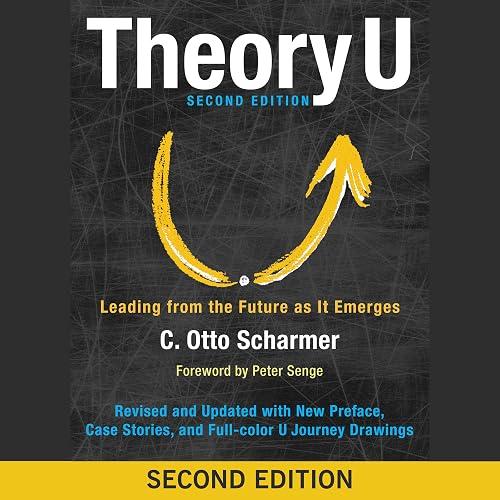
Theory U helps leaders act based on the future, not the past, and allows them to create organizational change at a global level through creative and agile methodologies.
Theory U helps leaders act based on the future, not the past, and allows them to create organizational change at a global level through creative and agile methodologies.
The underlying idea of U-theory is that any person can progress either from the future or past. It focuses on the notion that each of us has two selves: past and future.
To describe each of these personas, Scharmer tells his story of how one day, as a child, he came back from school to discover that his parents’ house had burnt down. He suddenly realized that all the objects and spaces he was attached to were no more. His old self was “dead,” so to speak.
At that moment Scharmer realized that he also had a future self or the personality that he could bring to life by his actions-the Otto Scharmer he ultimately wanted to become. Because his prior self died in the fire, he naturally embraced the possibility of learning from the future version of himself.
This is exactly what creative leaders ought to do. They should drop learning from history, which, in Scharmer’s nomenclature, means “reproducing old behaviors to deal with new challenges.” Instead, the actions of a truly innovative leader should focus on the possibility found in the future.
Now we get to the technical side of how to get through the “U process” as a leader. Theory U divides this into three major steps: Going down the U. Tapping into your blind spot at the bottom of the U. Going back up the U to implement your ideas. Going down the U is about gathering information in a non-judgmental and accepting way. It requires an “attitude of a beginner,” a state of mind which allows you to be open to whatever others bring to the table. You need to hear them out without trying to impose your point of view. This is not a passive process. It requires you to actively approach relevant people and ask for their opinion. An excellent example of how this works is agile software development. In agile teams, the practice of reaching out to users for feedback on new products is well-established and extremely valued. The second step of the U-process is tapping into your blind spot. This is the moment when a person intentionally enters the unknown. A leader needs to let go of all past and future knowledge and attune herself to what her gut tells her in the present. Scharmer argues that listening to the blind spot is even more important than gathering information while “going down the U.” When you really tap into it, the right answers present themselves. Finally, there is the third step of going…
Continue reading in the MinuteRead app
Get the complete 5-minute summary of Theory U
Get the complete summary in the appLearn from the future as it emerges instead of looking to the past.
Tap into the “blind spot” to access your full creative potential.
Adopt the approach used in software development: prototype, test, iterate.
"Theory U" is a strong fit if you want practical ideas around culture, entrepreneurship, leadership, especially themes like learn from the future as it emerges instead of looking to the past; tap into the “blind spot” to access your full creative potential. The MinuteRead summary distills these concepts into a focused read, whether you're deciding whether to buy the book or applying its lessons at work.
Motivated to help readers with theory U helps leaders act based on the future, Otto Scharmer is about leading based on the future, not the past wrote “Theory U” to package those ideas for a fast, focused read. In “Theory U”, Otto Scharmer is about leading based on the future, not the past focuses on theory U helps leaders act based on the future. Through “Theory U”, Otto Scharmer is about leading based on the future, not the past distills the core ideas on entrepreneurship into lessons readers c…
View all summaries by Otto ScharmerContinue Reading
Access the complete 5-minute summary and thousands more nonfiction books in the MinuteRead app.

Continue reading the complete summary in the MinuteRead app.