MinuteRead
30 min
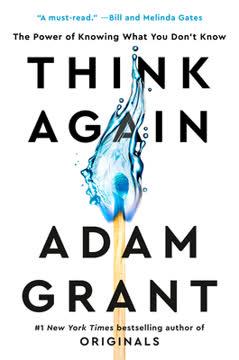
We live in a world that celebrates certainty. The person who speaks with conviction gets the promotion. The leader who never wavers earns our trust. The expert who delivers definitive answers commands the highest fees. We admire strength, decisiveness, and unwavering confidence.
**The Power of Knowing What You Don't Know**
By Adam M. Grant
**Estimated Reading Time:** 45 minutes
**What You'll Learn**
Why intelligence is not about what you know but about how quickly you can update your beliefs. How to develop the mindset of a scientist rather than a preacher, prosecutor, or politician. Why the most confident people are often the most wrong. How to change other people's minds without arguing with them. Why rethinking your career, your relationships, and your identity leads to a richer life.
**Who This Book Is For**
Anyone who has ever been certain they were right and later discovered they were wrong. Anyone who wants to make better decisions, have more productive disagreements, and build teams and relationships where truth wins over ego. Anyone tired of a world where everyone digs in and nobody reconsiders.
We live in a world that celebrates certainty. The person who speaks with conviction gets the promotion. The leader who never wavers earns our trust. The expert who delivers definitive answers commands the highest fees. We admire strength, decisiveness, and unwavering confidence. But there is a problem with certainty. It is often wrong. Most of us spend our mental energy trying to confirm what we already believe. We search for evidence that supports our views. We surround ourselves with people who agree with us. We treat our opinions like possessions we must defend. When someone challenges our beliefs, we react as if we are being physically threatened. Our heart rate increases. Our muscles tense. We prepare for battle. This is not a recipe for being right. It is a recipe for staying wrong. Adam Grant, an organizational psychologist at Wharton, has spent his career studying how people think, persuade, and grow. In Think Again, he argues that intelligence is not a matter of what you know. It is a matter of how willing you are to reconsider what you know. The ability to rethink and unlearn is more valuable than the ability to accumulate knowledge. The problem is that most of us operate in one of three unhelpful mental modes. We slip into preacher mode when our sacred beliefs are threatened, defending our views with moral fervor. We shift into prosecutor mode when we spot flaws in someone else's reasoning, building a case to prove them wrong. We enter politician mode when we want to win over an audience, saying whatever will earn approval. What we rarely do is think like a scientist. A scientist treats opinions as hypotheses. A scientist designs experiments to test those hypotheses. A scientist actively seeks out evidence that might prove them wrong. A scientist feels a thrill, not a threat, when discovering an error because…
Continue reading in the MinuteRead app
Get the complete 30-minute summary of Think Again
Get the complete summary in the appThink like a scientist. Treat your opinions as hypotheses and seek evidence that might prove them wrong.
Cultivate confident humility. Believe in your ability to learn while accepting that you do not have all the answers.
Find joy in being wrong. Every error is an opportunity to become less wrong than before.
Ask questions before giving answers. Understanding someone's perspective is more powerful than attacking it.
Help people find their own reasons to change. Motivational interviewing works better than argument.
Build psychological safety. Make it safe for people to admit mistakes, ask questions, and challenge ideas.
"Think Again" is a strong fit if you want practical ideas around psychology, self help, business—especially themes like think like a scientist. treat your opinions as hypotheses and seek evidence that might prove them wrong; cultivate confident humility. believe in your ability to learn while accepting that you do not have all the answers. The MinuteRead summary distills these concepts into a focused read, whether you're deciding whether to buy the book or applying its lessons at work.
Adam Grant is a renowned organizational psychologist and professor at Wharton Business School. He has authored six bestselling books, including Think Again, which have been translated into 45 languages. Grant is recognized as a leading expert on motivation, creativity, and rethinking assumptions. He hosts popular TED podcasts and has given widely viewed TED talks. Grant's work has been featured in major publications, and he consults for prominent organizations. With a significant social media fo…
View all summaries by Adam M. GrantContinue Reading
Access the complete 30-minute summary and thousands more nonfiction books in the MinuteRead app.

Continue reading the complete summary in the MinuteRead app.