MinuteRead
30 min
Book summary
Premium summary · Opens in the app · 5 min read
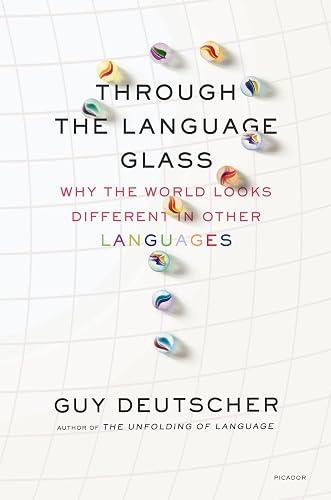
Through The Language Glass explains how the language you speak fundamentally alters your reality and how nature, culture and language have all been intertwined all throughout history.
Through The Language Glass explains how the language you speak fundamentally alters your reality and how nature, culture and language have all been intertwined all throughout history.
It’s impossible to say whether one language is more difficult to learn than another. German and Chinese, for example, have a reputation of being hard to pick up, but in reality, this highly depends on what languages you already speak.
A lot of Dutch people speak excellent German, for example, because it’s not that different from their native language, and it’s sure easier for Asians to learn Chinese, than for Americans, who haven’t even got similar sounds that they’re used to in English.
What you can say though, is how complex an aspect of a certain language is, for example its grammatical structure. When Guy did this, he found out that the complexity of a given language’s grammar often reflects its social structure.
In general, the more complex a society gets, the simpler its word and grammatical structure becomes.
This happens because as societies get bigger, more interactions between strangers occur, and people often have to pass on information without having much context about who they’re talking to. More words, specific phrases, dialects and accents are the consequence of this, to make it easier to establish that context with a targeted set of words.
For example, in the sentence “the two went back there” the word “there” refers to a physical location 99% of the time. But in the language of a small island society, “there” might be used not just for places, but also for events, people or even a certain time. If everyone knows each other and the shared context and information is huge, it’s easy to infer which of the four meanings the word takes on, but if you’re talking to a stranger, that might not be specific enough.
These grammatical rules not just affect how easily we can pass on information, but also how we think in the first place, because they change the requirements the words we speak have to meet. For example, it’s absolutely normal to say “it rains” in English, but in Hebrew, there’s no verb for “raining” as an activity. They just say the equivalent of “the rain falls.” Similarly, the ancient Nootka tribe of Vancouver Island has no way of saying “the stone falls.” Instead, they have a verb for that, saying “it stones down.” The rules of a language change how you express ideas and how you express ideas changes how you think. Take German, Spanish, or French, for example, all languages in which the gender of nouns for living things is specified within the noun. If I say “mein Mitbewohner” (my roommate)…
Continue reading in the MinuteRead app
Get the complete 5-minute summary of Through The Language Glass
Get the complete summary in the appYou can see how close-knit a society is, based on the grammatical complexity of its language.
Depending on what language requires us to say, our thinking changes.
People, who speak languages with gendered nouns, perceive the world a lot differently, depending on those genders.
"Through The Language Glass" is a strong fit if you want practical ideas around culture, history, psychology, especially themes like you can see how close-knit a society is, based on the grammatical complexity of its language; depending on what language requires us to say, our thinking changes. The MinuteRead summary distills these concepts into a focused read, whether you're deciding whether to buy the book or applying its lessons at work.
Motivated to help readers with through The Language Glass explains how the language you speak fundamentally alters your reality and how, Guy Deutscher wrote “Through The Language Glass” to package those ideas for a fast, focused read. In “Through The Language Glass”, Guy Deutscher focuses on through The Language Glass explains how the language you speak fundamentally alters your reality and how. Through “Through The Language Glass”, Guy Deutscher distills the core ideas on history into lessons r…
View all summaries by Guy DeutscherContinue Reading
Access the complete 5-minute summary and thousands more nonfiction books in the MinuteRead app.

Continue reading the complete summary in the MinuteRead app.