MinuteRead
30 min
Book summary
Premium summary · Opens in the app · 30 min read
There is a moment that nearly everyone recognizes. Your heart pounds. Your chest tightens. Your mind races through every possible catastrophe. Or perhaps the opposite happens. You go numb. You check out. You stop feeling anything at all. In that moment, you might think something is deeply wrong with you. You might wonder why you cannot simply calm down, think clearly, or respond the way other people seem to respond.
**Author:** Faith G. Harper, PhD
**Estimated Reading Time:** 45 minutes
**What You'll Learn:** - Why your brain reacts the way it does to trauma and stress - How understanding neuroscience can transform your relationship with your own mind - Practical tools for managing anxiety, depression, addiction, and grief - Why self-compassion is not optional but essential for healing - How to build a recovery path that actually works
**Who This Book Is For:** Anyone who has ever felt betrayed by their own brain. Anyone who has wondered why they react so intensely to small things. Anyone who has been told to "just get over it" and found that advice spectacularly useless. Anyone who wants to understand what is happening inside their skull and what to do about it.
There is a moment that nearly everyone recognizes. Your heart pounds. Your chest tightens. Your mind races through every possible catastrophe. Or perhaps the opposite happens. You go numb. You check out. You stop feeling anything at all. In that moment, you might think something is deeply wrong with you. You might wonder why you cannot simply calm down, think clearly, or respond the way other people seem to respond. Here is the truth that changes everything: your brain is doing exactly what it was designed to do. Faith G. Harper wrote this book for a simple reason. Most people walking around with anxiety, depression, trauma responses, addiction struggles, and grief have been told their entire lives that they are broken. They have been told to try harder, think more positively, or simply move on. They have been medicated, pathologized, and made to feel ashamed of reactions that are, in fact, completely normal responses to abnormal circumstances. The problem is not that your brain is malfunctioning. The problem is that your brain is functioning perfectly according to ancient survival programming that does not always match the demands of modern life. When you understand this, everything shifts. You stop asking "What is wrong with me?" and start asking "What happened to me, and how do I work with my brain instead of against it?" This matters because mental health struggles are not rare. They are not signs of weakness. They are the predictable result of a nervous system that evolved to keep you alive in a dangerous world. When that system gets stuck in survival mode, it creates the symptoms we label as anxiety, depression, trauma, and addiction. Understanding the mechanics of this system is not academic trivia. It is the foundation of genuine healing. Most people struggle with this challenge because they have been given the wrong map. They have been told that mental health problems are purely chemical imbalances requiring only…
Continue reading in the MinuteRead app
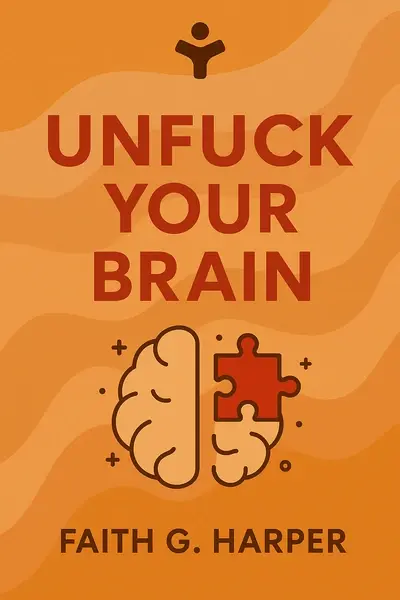
Get the complete 30-minute summary of Unfuck Your Brain
Get the complete summary in the appYour brain is doing its best to protect you, even when its strategies cause problems.
Trauma changes the brain, but the brain can change again through neuroplasticity.
Anxiety is a threat response, not a personal failing.
Depression is a shutdown response, not laziness.
Addiction is a coping mechanism, not a moral failing.
Grief requires time and space. It cannot be rushed.
"Unfuck Your Brain" is a strong fit if you want practical ideas around health & fitness, self help, psychology, especially themes like your brain is doing its best to protect you, even when its strategies cause problems; trauma changes the brain, but the brain can change again through neuroplasticity. The MinuteRead summary distills these concepts into a focused read, whether you're deciding whether to buy the book or applying its lessons at work.
Faith G. Harper, PhD, LPC-S, ACS, ACN is a licensed professional counselor, certified sexologist, and applied clinical nutritionist based in San Antonio, TX. She has a private practice and consulting business, and has been an adjunct professor and TEDx presenter. Harper identifies as a woman of color and intersectional feminist. She is known for her no-nonsense approach to mental health topics, as evidenced in her book "Unfuck Your Brain" and other publications on anxiety, depression, and grief.…
View all summaries by Faith G. HarperContinue Reading
Access the complete 30-minute summary and thousands more nonfiction books in the MinuteRead app.

Continue reading the complete summary in the MinuteRead app.