MinuteRead
30 min
Book summary
by Charles Harrington Elster
Premium summary · Opens in the app · 30 min read
There is a quiet assumption many people make about language: that by the time you finish school, your vocabulary is essentially complete. You know the words you know, and the rest is just a matter of arranging them. This assumption is not only wrong, it is costly.
**Author:** Charles Harrington Elster
**Estimated Reading Time:** 45 minutes
**What You'll Learn:** How to build a powerful, precise, and lasting vocabulary through systematic study, strategic reading, dictionary mastery, and attention to pronunciation and usage.
**Who This Book Is For:** Anyone who wants to communicate with greater clarity and confidence, advance professionally, or simply take genuine pleasure in the richness of the English language.
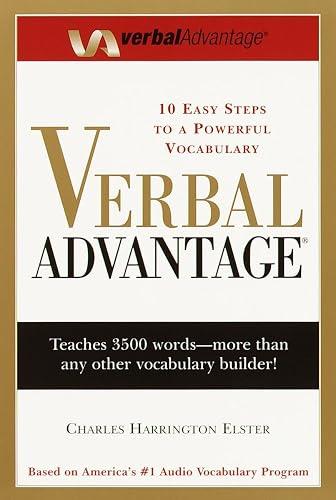
There is a quiet assumption many people make about language: that by the time you finish school, your vocabulary is essentially complete. You know the words you know, and the rest is just a matter of arranging them. This assumption is not only wrong, it is costly. Words are the tools of thought. Every idea you have, every argument you make, every feeling you try to express passes through the filter of language. When your vocabulary is limited, your thinking is limited too. You cannot grasp a concept you have no word for. You cannot make a distinction you cannot articulate. You cannot persuade, inspire, or lead with words you do not possess. Charles Harrington Elster wrote *Verbal Advantage* to address a simple but profound problem: most intelligent, educated people have vocabularies far smaller than they need, and far smaller than they could easily achieve. The gap between the words people know and the words they could know represents lost opportunity. It represents the job interview that went poorly because the candidate could not express a nuanced thought. It represents the memo that failed to persuade because the language was imprecise. It represents the conversation where someone remained silent because they lacked the confidence to speak. The correlation between vocabulary and success is one of the most consistent findings in educational research. Study after study has shown that people with larger vocabularies tend to earn more, advance further, and hold positions of greater responsibility. This is not because knowing fancy words impresses people. It is because a strong vocabulary reflects a strong mind. It enables clearer thinking, more precise communication, and greater confidence in every professional and social setting. But building a powerful vocabulary is not something that happens by accident. It requires intention, routine, and a willingness to engage with language actively rather than passively. Most people stop learning new words after college because they stop paying attention to words. They read the same kinds of material, watch the same kinds of shows, and have the same kinds of conversations. Their linguistic world becomes comfortable and static. Elster's approach is different. He treats vocabulary building not as a chore but as an intellectual adventure. He argues that learning words is one of the most rewarding forms of self-education because it pays dividends in every area of…
Continue reading in the MinuteRead app
Get the complete 30-minute summary of Verbal Advantage
Get the complete summary in the appYour vocabulary is not fixed. It is a skill that can be developed through deliberate practice.
Only about 3,500 words separate the high-vocabulary person from the low. The verbal advantage is achievable.
Reading widely and strategically is the single most powerful tool for vocabulary growth.
Develop the dictionary habit. Read full entries, including etymology, pronunciation, and usage notes.
Use the right word, not its second cousin. Precision in language matters.
Pronunciation is the audible dimension of word mastery. Mispronouncing words undermines your credibility.
"Verbal Advantage" is a strong fit if you want practical ideas around language, self help, writing, especially themes like your vocabulary is not fixed. it is a skill that can be developed through deliberate practice; only about 3,500 words separate the high-vocabulary person from the low. the verbal advantage is achievable. The MinuteRead summary distills these concepts into a focused read, whether you're deciding whether to buy the book or applying its lessons at work.
Motivated to help readers with throughout the Verbal Advantage program I will be your personal guide on a tour of the English language, Charles Harrington Elster wrote “Verbal Advantage” to package those ideas for a fast, focused read. In “Verbal Advantage”, Charles Harrington Elster focuses on throughout the Verbal Advantage program I will be your personal guide on a tour of the English language. Through “Verbal Advantage”, Charles Harrington Elster distills the core ideas on language into less…
Continue Reading
Access the complete 30-minute summary and thousands more nonfiction books in the MinuteRead app.

Continue reading the complete summary in the MinuteRead app.