MinuteRead
30 min
Book summary
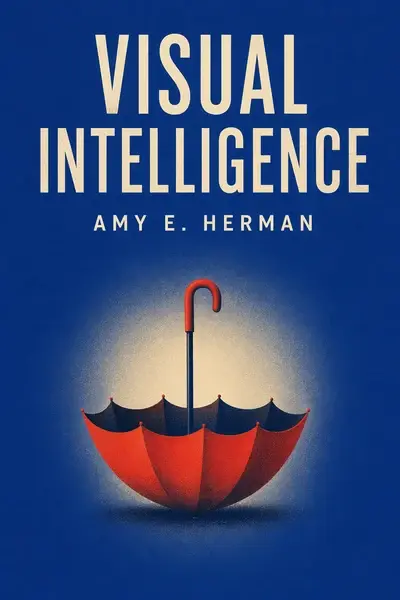
by Amy E. Herman
Premium summary · Opens in the app · 30 min read
In 1995, four men were convicted of a murder they did not commit. They had been identified by eyewitnesses who were absolutely certain of what they saw. The witnesses described the perpetrators in detail. They pointed to the defendants in court with confidence. They were wrong.
### by Amy E. Herman
**Estimated Reading Time:** 45 minutes
**What You'll Learn:**
- Why seeing is not the same as observing - How to notice what others miss in any situation - How to communicate what you see with precision and clarity - How to overcome the mental filters that distort your perception - How to apply the skills of art analysis to real-world problems
**Who This Book Is For:**
This book is for anyone who wants to see more clearly, think more accurately, and communicate more effectively. Whether you are a professional making high-stakes decisions, a leader trying to understand your team, or simply someone who wants to be more present and perceptive in daily life, the skills in this book will change how you experience the world.
In 1995, four men were convicted of a murder they did not commit. They had been identified by eyewitnesses who were absolutely certain of what they saw. The witnesses described the perpetrators in detail. They pointed to the defendants in court with confidence. They were wrong. How could this happen? How could multiple people look directly at a crime and misidentify the perpetrators? The answer lies in a fundamental misunderstanding most of us share: we believe that seeing is the same as observing. We assume that our eyes record the world accurately, like a camera, and that our memories preserve those recordings faithfully. Nothing could be further from the truth. Amy E. Herman discovered this gap between seeing and observing through an unexpected path. Trained as an art historian and a lawyer, she began teaching medical students how to analyze paintings as a way to improve their diagnostic skills. The results were striking. Students who learned to look carefully at works of art became better at noticing subtle changes in patients. They asked better questions. They made fewer assumptions. Word spread. Soon Herman was teaching police officers, FBI agents, intelligence analysts, and corporate executives. Her program, called The Art of Perception, uses fine art to train people in the skills of careful observation, precise communication, and objective analysis. The core insight is simple but profound: the skills used to analyze a painting are the same skills needed to solve crimes, diagnose illnesses, and make sound decisions in any field. The problem Herman addresses is universal. Most of us move through life on autopilot. We see enough to navigate our environment, but we do not truly observe. We miss details that matter. We make snap judgments based on incomplete information. We confuse what we actually saw with what we expected to see, what we wanted to see, or what we feared to see. Consider a simple experiment Herman often conducts. She…
Continue reading in the MinuteRead app
Get the complete 30-minute summary of Visual Intelligence
Get the complete summary in the app**Seeing is not observing.** Active observation requires intention, focus, and practice.
**Your perception is filtered.** You see the world through the lens of your experiences, beliefs, and expectations.
**You are missing things.** Inattentional blindness causes you to miss visible objects when your attention is focused el
**Seek multiple perspectives.** No single viewpoint captures the full truth.
**Prioritize consciously.** Your attention is limited. Focus on what actually matters.
**Communicate with precision.** Use specific, objective language. Distinguish facts from interpretations.
"Visual Intelligence" is a strong fit if you want practical ideas around psychology, self help, art, especially themes like **seeing is not observing.** active observation requires intention, focus, and practice; **your perception is filtered.** you see the world through the lens of your experiences, beliefs, and expectations. The MinuteRead summary distills these concepts into a focused read, whether you're deciding whether to buy the book or applying its lessons at work.
Motivated to help readers with "Most people see but do not observe." Active observation is a skill that can be developed through practice, Amy E. Herman wrote “Visual Intelligence” to package those ideas for a fast, focused read. In “Visual Intelligence”, Amy E. Herman focuses on "Most people see but do not observe." Active observation is a skill that can be developed through practice. Through “Visual Intelligence”, Amy E. Herman distills the core ideas on psychology into lessons readers can abs…
Continue Reading
Access the complete 30-minute summary and thousands more nonfiction books in the MinuteRead app.

Continue reading the complete summary in the MinuteRead app.